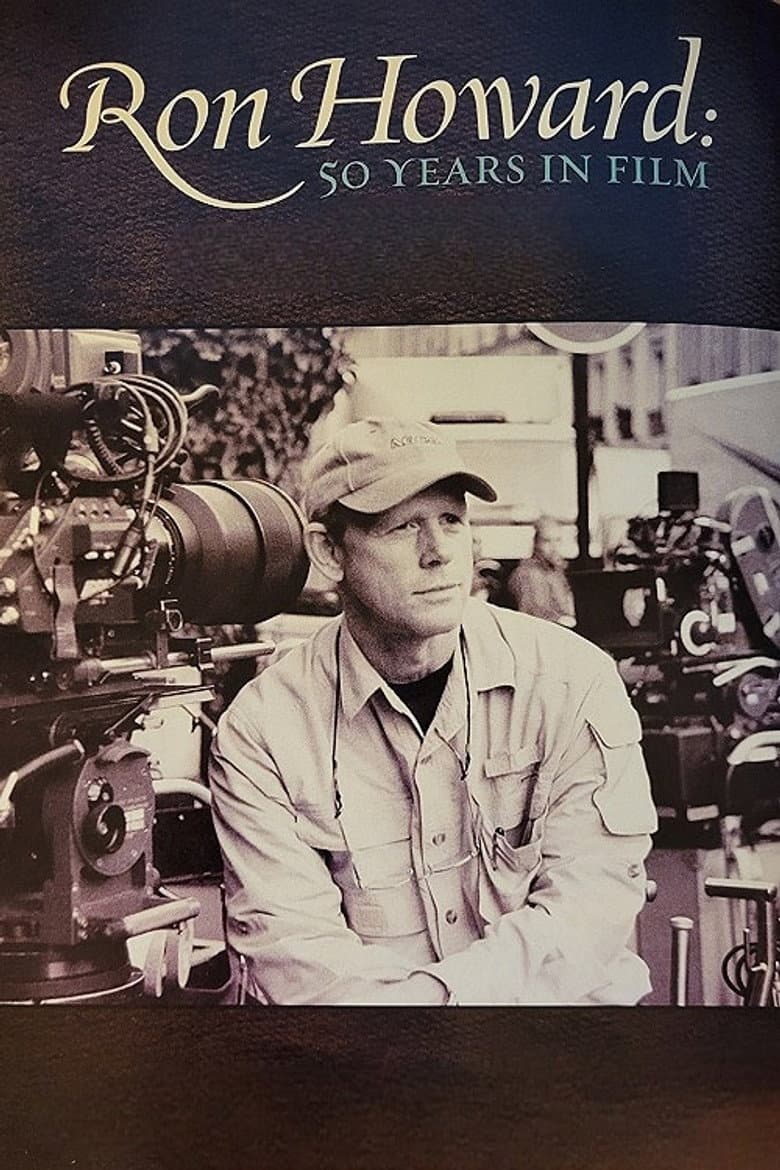
The Critics Choice Association will turn its documentary spotlight on one of Hollywood's most commercially successful filmmakers this fall, naming Ron Howard as an honoree at the 2026 Critics Choice Documentary Awards. The recognition places the Oscar-winning director in a celebratory lane alongside the nonfiction filmmakers the organization exists to champion, a pairing that might raise eyebrows until you remember that Howard has spent much of his post-Happy Days career oscillating between studio spectacle and fact-based storytelling.
Howard's documentary bona fides rest largely on his work behind the camera for The Beatles: Eight Days a Week - The Touring Years, which chronicled the band's frantic years on the road and earned him a Grammy for best music film. That project showcased a director more interested in archival excavation and firsthand testimony than in the kind of glossy mythmaking that often defines celebrity-approved music documentaries. He followed a similar instinct with Pavarotti, a portrait of the Italian tenor that leaned on interviews and performance footage rather than hagiography. Both films demonstrated that Howard, whatever his blockbuster pedigree, understands how to let real people and real material carry a narrative.
The honoree designation also nods to Howard's habit of anchoring dramatic features in documented events, a practice that has kept him adjacent to the documentary world even when he's working with actors on sets. Apollo 13 turned a nail-biting NASA rescue into a procedural thriller. A Beautiful Mind wrestled with mental illness through the life of mathematician John Nash. Rush staged the combustible rivalry between Formula One drivers James Hunt and Niki Lauda. Thirteen Lives recreated the 2018 cave rescue in Thailand with an almost journalistic attention to the mechanics of the operation. In each case, Howard's approach - research-heavy, resistant to easy villains, focused on process - mirrors the instincts of nonfiction filmmakers more than it does those of a typical studio journeyman.
Documentaries Have Become a Second Act for Established Directors
Howard's path reflects a broader shift in the industry, where directors with long fiction careers increasingly migrate toward documentary work as a way to recharge. The reasons vary. Nonfiction offers faster turnaround, smaller crews, and a kind of creative freedom that few big-budget productions can match. For a director who has spent decades navigating studio notes and franchise expectations, the appeal is easy to see. It also gives established figures a way to stay in the conversation during a moment when theatrical releases for mid-budget dramas have grown scarcer.
The Critics Choice Documentary Awards, which the association has staged annually, typically honors filmmakers in categories spanning features, shorts, and limited series, with additional special awards for career achievement and contribution to the form. Honoring a figure like Howard fits the ceremony's recent pattern of reaching beyond the documentary bubble to recognize people whose visibility can raise the profile of the entire field. Whether purists grumble about a Hollywood heavyweight taking a slot is almost beside the point; the organization's calculus is usually about attention, and Howard brings plenty of it.
There's also a personal thread running through the honor. Howard grew up in front of cameras, and his transition to directing began with low-budget productions before he graduated to studio tentpoles. That trajectory - from performer to storyteller, from fiction to fact - gives him a perspective that resonates with documentarians who often describe their work as a kind of performance-free performance. He has spoken in the past about the discipline required to build a film around material you can't control, a challenge documentarians face every day.
The ceremony will give Howard a platform to reflect on that overlap, and it will give the documentary community a familiar face to put in front of cameras. It's a mutually beneficial arrangement, the kind of pairing that awards bodies have leaned on increasingly as they compete for media coverage in a crowded calendar. For Howard, the recognition arrives at a point when his interests appear to be drifting further toward real-world subjects than toward the franchises that once defined his commercial identity.
Expect the tribute to touch on his music documentaries, his fact-based dramas, and the through-line connecting them: a preference for stories that already happened, told with as much craft as any scripted feature. For an industry that sometimes treats documentary as a stepping stone or a side project, that message is worth hearing from someone who has nothing left to prove at the box office.
Source: Hollywood Reporter