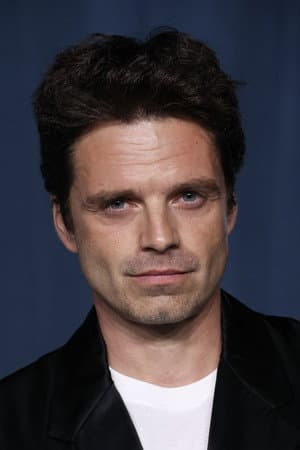
Sebastian Stan has never been shy about saying what he thinks, and this week the actor turned his attention to something bigger than any single role: the tone of public conversation itself. In remarks that have already begun circulating widely online, Stan argued that the constant pull toward cynicism and negativity in modern society is not a grassroots phenomenon but something actively encouraged from above. His verdict on the whole dynamic was blunt. "It's just so lazy," he said, describing what he characterized as an open "invitation to be negative" that "starts at the top."
The actor's point, as he framed it, is less about any one political faction or media outlet than about a broader cultural default. Negativity, in his telling, is cheap. It requires no homework, no nuance, and no real engagement with the messy business of being alive alongside other people. Optimism, by contrast, demands effort - and effort is precisely what a culture steeped in outrage incentives tends to punish. Stan's phrasing suggests he sees the negativity not as an organic mood but as a top-down directive, something modeled by people in positions of influence and then absorbed, almost passively, by everyone downstream.
That framing is worth sitting with, because it cuts against the usual way celebrities talk about online toxicity. The standard celebrity response is to plead with fans to "be kind," a plea aimed squarely at the audience. Stan appears to be aiming higher up the chain. If the invitation to be negative originates with those who hold power - political, corporate, or cultural - then lecturing ordinary people about their attitudes is treating a symptom while ignoring the source. Whether or not one agrees with the diagnosis, it is a more interesting argument than the usual platitudes, and it explains why the comment has traveled as far as it has.
Stan's career has given him an unusual vantage point on this question. He spent years inside one of the largest and most scrutinized franchises in entertainment, playing Bucky Barnes across the Marvel Cinematic Universe, a role that made him a fixture of fan culture and, by extension, of the discourse that surrounds it. More recently he has gravitated toward smaller, thornier projects and toward performances that invite argument rather than easy affection. That trajectory - from blockbuster fixture to character actor willing to take on uncomfortable material - has coincided with a public persona that seems increasingly willing to say the unpopular thing.
There is also an economic dimension to what Stan is describing, even if he did not spell it out. Negativity performs. It drives clicks, engagement, and the algorithmic rewards that follow. Platforms built to maximize attention will inevitably amplify the most inflammatory voices, and those voices, once amplified, set the temperature for everyone else. When Stan says the invitation starts at the top, he may be gesturing at this machinery as much as at any individual leader. The people who benefit most from a permanently aggrieved public are not the people scrolling.
None of this makes Stan a naïf about criticism. Actors in his position understand better than most that scrutiny is part of the job, and he has weathered his share of it. His complaint seems to be about something distinct: the reflexive, low-effort cynicism that greets nearly everything, the assumption of bad faith as a default setting. That stance is "lazy" precisely because it forecloses thought. You do not have to investigate a person or an idea if you have already decided it is worthless.
Whether Stan's comments will change any minds is another matter. Celebrity observations about the culture tend to have a short half-life, enjoyed or mocked for a news cycle and then forgotten. But the underlying question he raises - who benefits when a society trains itself to expect the worst - is not going away, and it is not confined to Hollywood. It touches journalism, politics, and the daily experience of anyone who has opened a comment section lately.
For now, Stan has said his piece, and the piece is characteristically direct. The invitation to be negative may start at the top, but the choice of whether to accept it still belongs to everyone else. That, at least, is the implication of his argument - and it is a harder challenge than it first appears.
Source: Hollywood Reporter