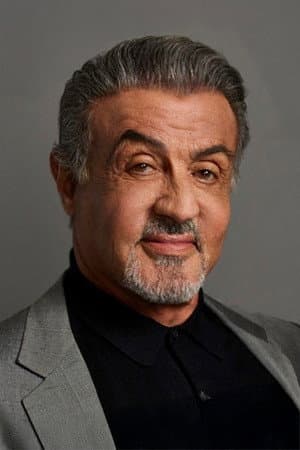
Sylvester Stallone has revealed that his pursuit of the physically imposing body that defined the Rocky franchise came at a serious cost, disclosing that he developed bulimia and turned to steroids during the years he played the iconic Philadelphia boxer.
The actor and filmmaker made the admission in a wide-ranging conversation about his career and the extremes he went to in order to embody the role, confirming long-standing speculation about his use of performance-enhancing drugs while offering a new and more painful detail about the disordered eating that accompanied it.
Stallone described the bulimia as a direct byproduct of the pressure he felt to maintain a shredded, camera-ready physique across multiple installments. According to his account, the cycle of bingeing and purging became part of his routine as he fought to keep pace with the physical demands of a character whose body was itself a central part of the story.
A Confession Decades in the Making
The revelation lands differently now than it would have during the 1970s and 1980s, when Stallone first rose to global fame. At that time, discussion of eating disorders among men was rare, and the notion that a Hollywood action star - the very picture of discipline and toughness - might be struggling privately with one ran against the era's carefully managed public images.
Stallone's willingness to speak plainly about both the steroid use and the eating disorder marks a notable shift. For years, he largely sidestepped direct questions about how he built his body, offering general talk about training and diet rather than specifics. His latest comments close that gap, acknowledging that the methods he employed were neither healthy nor sustainable.
His candor also arrives at a moment when the entertainment industry is being asked harder questions about the physical expectations placed on performers, particularly men who are cast in physically demanding roles and then pressured to repeat those transformations across sequels.
Steroids and the Cost of the Rocky Physique
Steroid use has long been an open secret within bodybuilding and action cinema, and Stallone's acknowledgment puts him among a number of stars from his generation who have eventually confirmed what fans suspected. What distinguishes his account is the pairing of drug use with an eating disorder - two distinct problems that, in his telling, grew out of the same fixation on appearance.
The Rocky series required its star to look like a fighter, not merely an actor playing one. That demand intensified as the franchise progressed and audiences expected each new chapter to present a leaner, harder version of the character. Stallone has previously spoken about the toll of those transformations, but the bulimia disclosure adds a dimension that goes beyond muscle and training into clinical territory.
Bulimia is a serious psychiatric condition characterized by cycles of binge eating followed by compensatory behaviors such as purging. It affects men as well as women, though it is frequently underdiagnosed in men because of the stigma attached to it and because it is often stereotyped as a women's illness. Stallone's public acknowledgment may help erode some of that stigma.
What the Admission Means
Stallone's statement carries weight in part because of who he is. He built his career on a kind of self-made grit - writing the screenplay that made him a star, refusing to surrender the lead role, and shaping a character whose persistence became shorthand for resilience itself. Revisiting that creation story through the lens of disordered eating and drug use complicates the legend without necessarily diminishing it.
The disclosure also invites fresh scrutiny of the broader culture that produced so many similarly extreme transformations during the 1980s and 1990s, when action heroes were marketed on their bodies as much as their performances. Many of those transformations have been romanticized in retrospect as evidence of dedication. Stallone's account suggests the reality was messier.
He has not framed his remarks as a formal warning to younger actors, and there is no indication he is seeking sympathy. The tone, as described, is reflective - an older man looking back at what he put himself through and naming it honestly.
Representatives for Stallone have not issued additional comment beyond what he himself has said.
For an actor whose signature character repeatedly rose after being knocked down, the admission is a reminder that some of the hardest fights happen away from the cameras - and that they are not always resolved by the final bell.
Source: Hollywood Reporter