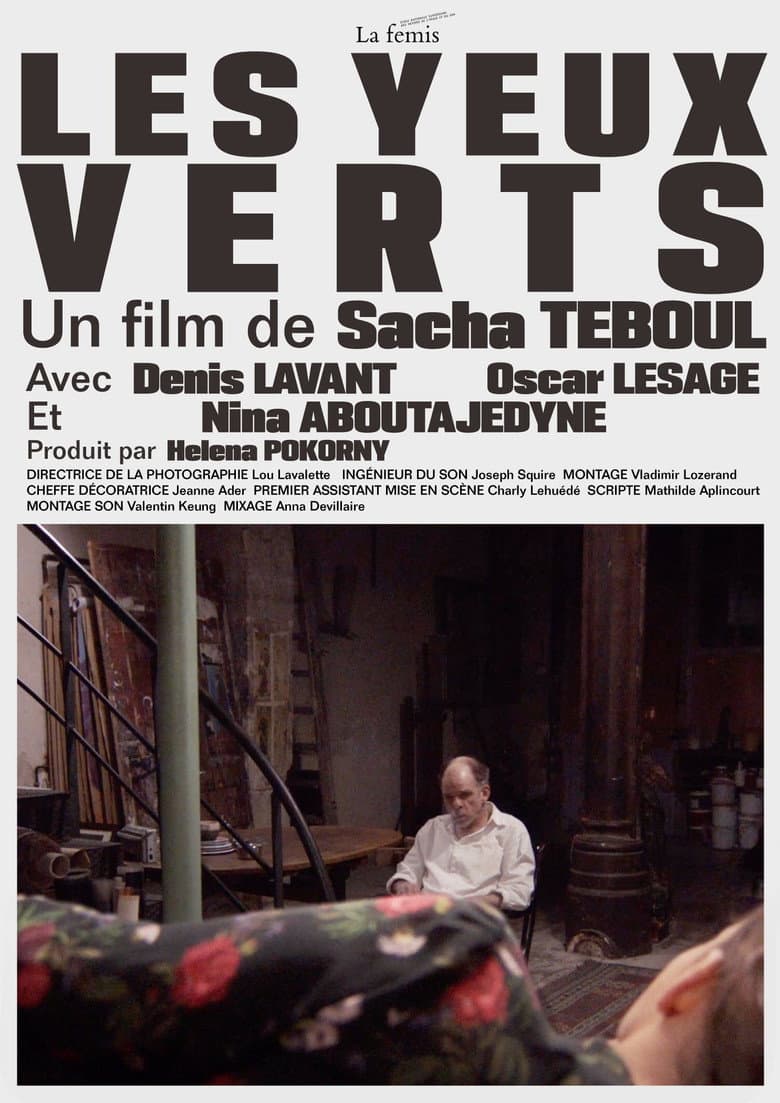
The Locarno Film Festival has long been a destination for films that challenge audiences, and this year’s lineup is no exception. Premiering with a quiet but urgent force is The Green Eyes, a 29-minute short that uses the surreal premise of a grieving sculptor to explore the very real and harrowing phenomenon of resignation syndrome among refugee children. The film, which screened in the festival’s competitive section, aims to do more than tell a story; its director says the goal is nothing less than to "try to revive empathy" in a world numbed by distant tragedy.
Directed by Sacha Teboul, the film centers on Yuri, a man who has spent seventeen years trying to reconstruct his deceased wife. He has labored over sculptures, painstakingly recreating every feature he can recall, save for one detail: the eyes. That all changes when he encounters Andreas, a young refugee child. The meeting is a shock of recognition - Andreas possesses the exact gaze Yuri has been chasing for nearly two decades. What follows is a delicate, unsettling collision of an artist’s obsession and a child’s trauma, framed less as a conventional narrative and more as a study of how grief can blind us to the suffering of others.
The connection to resignation syndrome is the film's anchor. The condition, documented primarily in Sweden, affects refugee children who have been denied asylum. Faced with overwhelming stress and hopelessness, they can slip into a state of profound withdrawal, sometimes appearing nearly unconscious for months or even years. Teboul does not depict this medical state literally. Instead, he transposes it into Yuri’s world, where a man’s inability to move on from personal loss mirrors a society’s failure to fully see the humanity of those displaced by war and violence. Yuri’s fixation on a single pair of eyes becomes a metaphor for selective vision - how we project our own desires onto others while missing their actual pain.
The casting is crucial to the film’s impact. Oscar Lesage takes on the role of Andreas, the child whose gaze shatters Yuri’s isolation, while the reliably formidable Denis Lavant plays the sculptor with a worn, weary physicality that has become his trademark. Lavant, known for his ferocious performances in works like Holy Motors, here dials down the manic energy, offering instead a portrait of a man hollowed out by ritual. Nina Aboutajedyne rounds out the principal cast, adding a layer of tension to the charged encounters between the two leads. The film’s short runtime demands precision, and Teboul uses the 29 minutes to build a mood that is both intimate and discomfiting, avoiding easy sentimentality.
In a statement accompanying the premiere, Teboul framed the film as a direct response to the modern crisis of attention. With news cycles flooded by images of suffering, he argued, our capacity to truly feel for others has eroded. The film is not an argument about policy or a political screed; it is an attempt to re-sensitize the viewer on a primal, visual level. By filtering a real-world catastrophe through the lens of a personal, almost fable-like story, the director hopes to bypass intellectual defenses and land somewhere more visceral. The choice of a child refugee as the catalyst for the sculptor’s awakening is deliberate; it asks the audience to look at a familiar subject - the refugee crisis - through the unvarnished eyes of a child, rather than through the jargon of newscasts or the slogans of protest.
The film arrives at Locarno after a quiet path through the festival circuit, with its release date listed as September 2023. It is a work that feels designed for the contemplative atmosphere of a festival rather than the multiplex. There is no grand score or sweeping cinematography; the visual language is restrained, almost clinical at times, which makes the moments of emotional breakthrough all the more startling. The choice to center on a sculptor is no accident - it allows the film to meditate on the act of creation and preservation, on what we choose to immortalize and what we allow to decay.
Reviews from the premiere have been muted but respectful, with critics praising Lavant’s committed performance and Teboul’s refusal to spell out the connection between Yuri’s quest and Andreas’s condition. The film trusts its audience to draw the parallels, which may frustrate some viewers seeking a more overt humanitarian statement. But Teboul’s approach is clearly more poetic than literal. The question the film leaves hanging over the audience is not whether Yuri will finish his sculpture, but whether he - and by extension, we - can truly look at another person without first imposing our own ghosts onto them.
As Locarno continues its run, The Green Eyes stands out as a smaller, stranger entry in a lineup often dominated by larger productions. It is a film that asks for patience and offers little in the way of tidy resolution. But for those willing to sit with its discomfort, it may deliver on its promise: a small, quiet push toward seeing the stranger in the room not as a projection, but as a person. Whether that revives empathy remains to be seen, but the attempt itself is the film’s raison d’être.
Source: Hollywood Reporter