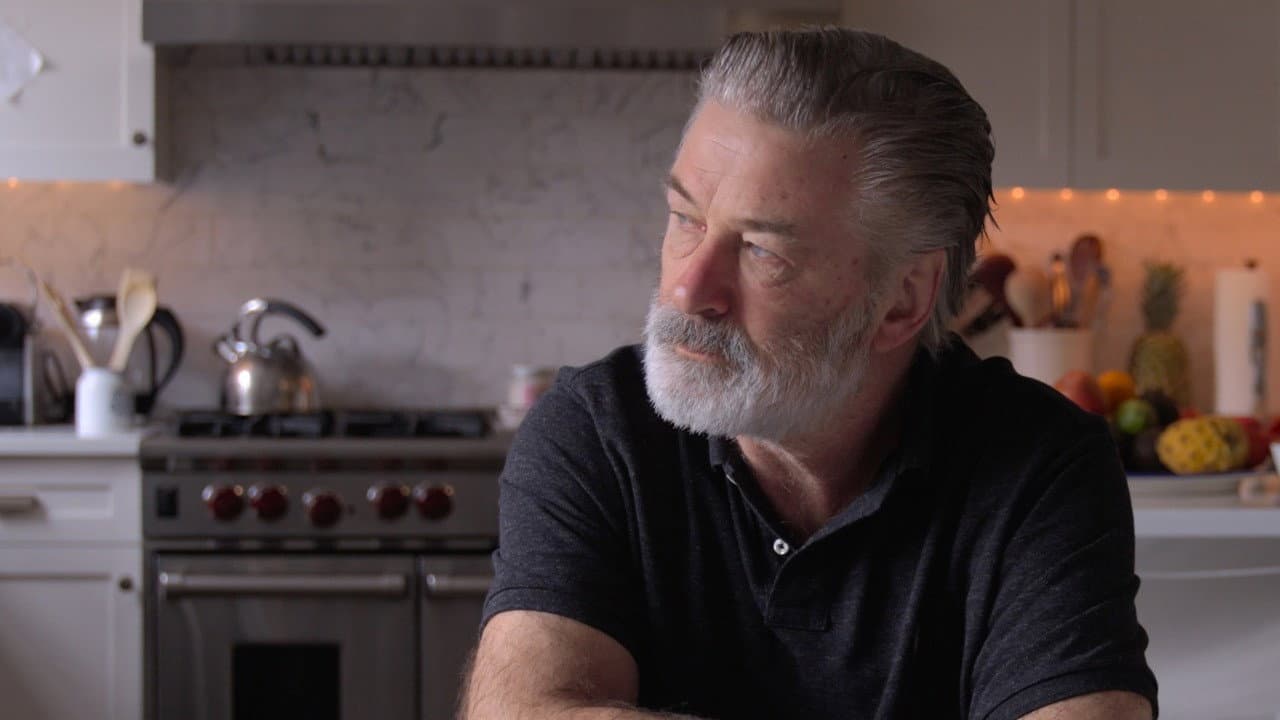
Rory Kennedy turns her camera on one of the most scrutinized legal sagas in recent American memory with "The Trial of Alec Baldwin," a documentary that arrives in theaters on October 1, 2026. The first trailer, released this week, frames the film as less a celebrity profile than a procedural autopsy - an unflinching, verité-style examination of the actor as he confronts a manslaughter charge and the machinery of justice that surrounds him.
Clocking in at 111 minutes, the documentary carries an official synopsis that promises "a provocative examination" of Baldwin "as he faces charges of manslaughter, with a cross-examination of the American legal system and the court of public opinion." Baldwin appears as himself. The film is in English and produced within the Hollywood studio system.
A Verité Approach to a Media Circus
Kennedy, who has built a reputation over three decades for embedding with subjects in moments of institutional pressure, resists the talking-head format that typically defines true-crime coverage. The trailer suggests her camera stays close to Baldwin - in hallways, cars, and the quieter interstitial moments that rarely make it to air - while also training its lens on the courtroom itself.
That dual focus gives the project its structure. One strand follows the legal defense as it navigates a manslaughter prosecution stemming from the 2021 shooting on the set of the Western film "Rust," in which cinematographer Halyna Hutchins was killed and director Joel Souza was wounded. The other strand examines the broader ecosystem of cable punditry, social media verdicts, and tabloid speculation that enveloped the case long before a jury was ever seated.
The trailer does not shy away from the paradox at the film's center: a defendant who spent decades playing figures who command courtrooms, now sitting at the defense table in one of his own.
A Legal Battle Refracted Through Celebrity
Kennedy's previous work has often found its tension in the gap between public narrative and private reality. Here, that gap is the subject. The documentary's synopsis explicitly invokes "the court of public opinion," signaling that the film is as interested in how the case was tried outside the courthouse as inside it.
For Baldwin, the stakes are existential rather than merely reputational. A manslaughter conviction carries the possibility of prison time, and the case has already outlasted several news cycles, shifting from a breaking-news tragedy to a slow-burning legal drama to, now, a subject of documentary inquiry. The film's October release places it squarely in the fall awards corridor, though no festival premiere or distribution details beyond the theatrical date have been announced.
The decision to release in early October also means the documentary will arrive while legal proceedings remain a live subject of public interest, rather than as a retrospective. That timing is unusual for a project of this kind, which typically waits for resolution before offering a definitive account. Kennedy appears to be betting that the unresolved status is precisely the point.
What the Trailer Reveals, and What It Withholds
The preview leans on ambient sound and long takes rather than a driving score. There are glimpses of Baldwin in conversation, apparently unguarded, and cutaways to the exterior of a courthouse surrounded by satellite trucks. The trailer offers no narrator and no on-screen date stamps, giving the material a you-are-there quality that aligns with the verité label attached to the project.
Notably absent from the trailer is any explicit argument about Baldwin's guilt or innocence. Kennedy seems less interested in adjudicating the case than in documenting what the process does to the people inside it - including, and perhaps especially, the defendant. Whether that restraint holds across 111 minutes is the open question the marketing is deliberately leaving unanswered.
The film's metadata lists a TMDb rating of 0/10, reflecting a title that has not yet been scored by audiences - standard for a release still weeks away.
A Documentary Entering Crowded Terrain
"The Trial of Alec Baldwin" joins a growing wave of documentaries that treat active legal proceedings as their subject matter in real time, blurring the line between journalism and cinema. Kennedy's pedigree - she is the youngest child of Robert F. Kennedy and has directed films on subjects ranging from mental illness to the AIDS epidemic - lends the project a seriousness that a lesser treatment might lack.
For Hollywood, the film also functions as a test case: can a documentary about an ongoing, emotionally charged legal matter find an audience without being subsumed by the same polarizing dynamics it claims to examine? The answer will arrive when the film opens on October 1. Until then, the trailer offers a controlled, deliberately unresolved introduction to a story most viewers think they already know.
Source: Hollywood Reporter