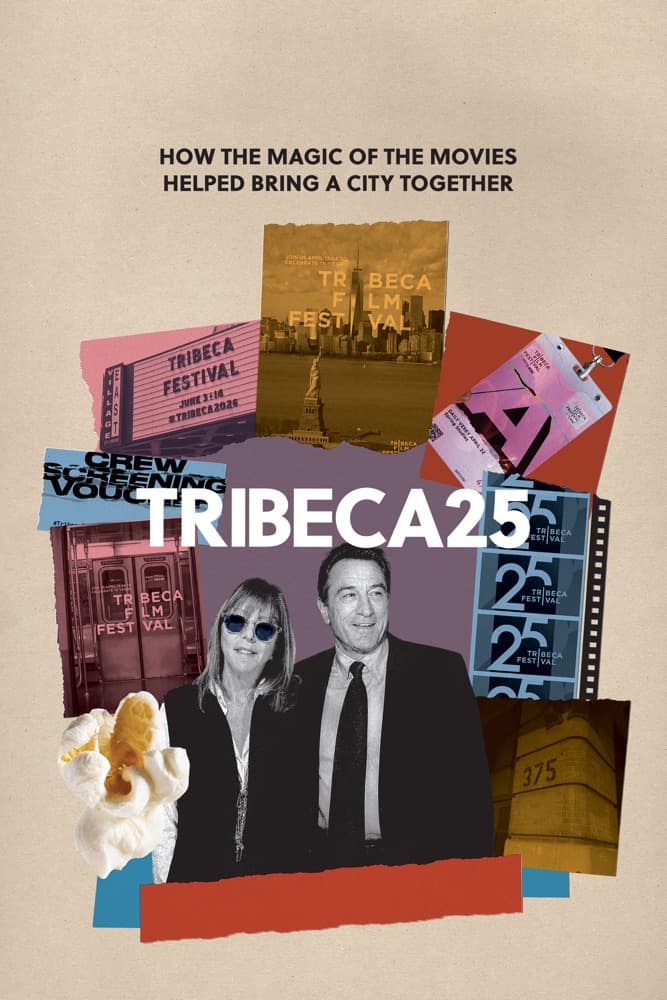
Tribeca 25 Doc Trailer: Post-9/11 Festival Origins
Advertisement
Watch the exclusive trailer for 'Tribeca 25,' a documentary exploring the festival's founding amid 9/11 devastation downtown and its legacy.
The upcoming documentary Tribeca 25 is set to offer an intimate look back at the festival’s unlikely birth, and a newly released trailer is already drawing attention to the raw, emotional landscape of Lower Manhattan in the months following the September 11 attacks. The exclusive footage, shared with Hollywood Buzz News, frames the event not as a glamorous cultural celebration, but as a direct response to devastation - a community’s attempt to reclaim a neighborhood that had been shattered both physically and psychologically.
The trailer opens with stark, archival imagery of downtown streets still coated in ash and dust, a visual reminder of the scene that greeted residents and business owners in late 2001. Narrators and early festival organizers reflect on the eerie quiet that had settled over the area, noting how foot traffic had vanished and restaurants and theaters sat empty. This is the context the documentary’s creators clearly want to underscore: that the Tribeca Film Festival was never conceived as a mere industry showcase, but rather as an urgent act of civic repair.
According to the material featured in the preview, the idea emerged from a simple but powerful observation - people were afraid to come back to the neighborhood. Residents were staying indoors, workers were avoiding the district, and the cultural life that had once defined the area had evaporated. In response, a small group of founders, including names long associated with the festival’s identity, decided to use film as a magnet. They believed that if they could draw crowds downtown for screenings, the simple act of gathering could begin to heal the deep wounds left by the attacks.
The documentary’s title, Tribeca 25, signals a reflective milestone - twenty-five years since that first, improvised festival took shape. The trailer is careful to emphasize how far the event has come, cutting between shaky, early footage of makeshift venues and more polished, recent shots of packed red carpets. But the emotional weight of the preview remains fixed on the origin story, with one participant describing the feeling of walking through the neighborhood during those first months as walking through a ghost town, where every familiar corner carried a sense of loss.
This particular angle is likely to resonate strongly with audiences who remember the post-9/11 era, but the documentary also appears to aim for a broader, historical perspective. By positioning the festival’s founding within a larger narrative of urban resilience, Tribeca 25 seems to ask a more universal question: what does it take for a community to rebuild its cultural heartbeat after a catastrophic event? The footage suggests that the answer involved equal parts pragmatism and hope - organizers had to solve logistical nightmares while also convincing people that it was safe, even necessary, to gather again.
The trailer does not shy away from the darker aspects of that period. There are shots of boarded-up storefronts and interviews with locals who admit they initially questioned the festival’s viability. Some are heard expressing doubt about whether anyone would actually show up, or whether the area could support such an ambitious undertaking while still in the grip of grief. That skepticism is presented not as an obstacle to be dismissed, but as an honest part of the record. The documentary appears to celebrate the fact that the festival happened at all, given how many reasons there were for it to fail.
In terms of structure, the trailer suggests the full documentary will interweave archival material with present-day interviews from a range of participants. Notably, the preview includes commentary from ordinary residents alongside the expected voices of filmmakers and organizers. This choice underscores the documentary’s thesis: the festival was not a top-down initiative but a collective effort, one that relied on the participation of local business owners, volunteers, and audiences who took a chance on the idea during a fragile time.
There is also a subtle acknowledgment in the trailer that the festival’s identity has evolved over the decades since. What started as a crisis response grew into one of the most prominent film events in the country, a transformation that the documentary’s subjects seem to view with a mixture of pride and wonder. The preview hints at a bittersweet tone, celebrating the extraordinary journey while never letting viewers forget the tragedy that necessitated it.
As the trailer reaches its closing moments, the tone shifts from somber to determined. The final images pair a young child watching a film in a pop-up venue with the voice of an organizer explaining that the goal was never just to show movies, but to remind people that they had a home here. It is a powerful closing note, one that reinforces the idea that the festival’s legacy is not measured solely in premieres or awards, but in the improbable act of bringing life back to a place that had seen so much death.
While no specific release date for the full documentary has been confirmed in the provided materials, the trailer itself is already generating conversation among festival alumni and New Yorkers who lived through the period. For a city that has often marked anniversaries of the September 11 attacks with solemn remembrance, Tribeca 25 offers a different kind of tribute - one that frames the creation of a cultural institution as an act of defiance against despair. And based on the evidence of the trailer, it is a story that remains as urgent and moving as ever.
Source: Hollywood Reporter
Advertisement
Advertisement