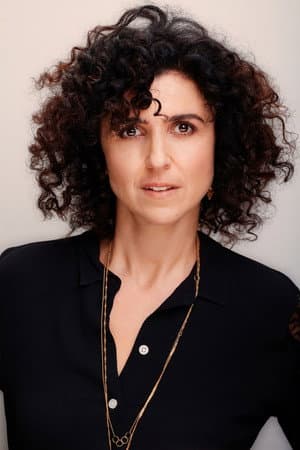
May el-Toukhy, the sole female director in the main competition at this year’s Venice Film Festival, used her platform on the Lido to call out an enduring double standard in how the industry rewards its filmmakers. Speaking to journalists ahead of her film’s premiere, the Danish director said she has never heard a woman described as a genius in the way male auteurs routinely are.
"I've never heard a female director being called a genius," el-Toukhy said, addressing the persistent gender gap that leaves women underrepresented in top festival lineups and in the broader canon of celebrated filmmakers. Her observation arrives at a festival where she stands as the only woman among the directors vying for the Golden Lion, a statistic that underscores how slowly the profession’s most visible honors are changing.
El-Toukhy, known for her sharp character studies and unflinching examinations of power dynamics, did not frame her comment as a personal grievance. Instead, she positioned it as a systemic issue that shapes who gets funded, who gets praised, and whose work is deemed worthy of serious critical adulation. The word "genius," she suggested, remains a gendered label - reserved almost exclusively for men, regardless of the ambition or originality of the work.
Her presence in Venice’s competition is itself notable. While festivals have made incremental progress in showcasing women directors over the past decade, the main slots remain heavily male-dominated. El-Toukhy’s selection, while a credit to her craft, also highlights how isolated female filmmakers still are at the highest tier of the festival circuit. She did not shy away from that irony, acknowledging that her own inclusion does not signal broader parity.
The director’s remarks echo a broader conversation that has simmered across the industry for years, from awards-season campaigns to festival juries. Critics and scholars have long noted that male filmmakers are more likely to be granted the language of artistic mystique - visionary, bold, masterful - while their female counterparts are more often praised for their sensitivity, their handling of actors, or their emotional intelligence. El-Toukhy’s comment cuts to the heart of that disparity, suggesting that recognition itself is a form of gatekeeping.
She also turned her attention to the practical consequences of that gap. When women are not hailed as geniuses, she implied, they are less likely to be trusted with large budgets, ambitious projects, or the kind of creative freedom that allows a director to take risks. The label, in other words, is not just flattery; it is currency. And without it, women must work harder to prove they belong in the room at all.
El-Toukhy’s career itself offers a counterpoint to the stereotype she critiques. Her previous work has been praised for its precise psychological insight and its willingness to sit with moral discomfort, qualities that would mark any male director as a major international voice. Yet the acknowledgment she receives often stops short of the hagiographic terms applied to her male peers. That discrepancy, she suggested, is not an accident of taste but a reflection of who is allowed to be canonized.
The Venice gathering, as ever, is a microcosm of the wider industry. Stars walk the red carpet, publicists manage schedules, and journalists scramble for interviews. But beneath the glamour, the festival remains a marketplace of reputations. Where a director lands in the lineup, how their film is framed in the press notes, and what adjectives reviewers reach for can shape a career for years. El-Toukhy’s pointed observation lands at a moment when that machinery is under fresh scrutiny.
She stopped short of offering easy solutions, and she did not name the men she believes benefit from the genius tag. But her frustration was clear. The term, she said, is loaded with assumptions about authorship and authority that women are rarely granted, even when their track records rival or exceed those of their male contemporaries. It is a subtle but persistent form of exclusion, one that operates even when overt discrimination has faded.
Her comments also resonate with the broader reckoning that has swept the film world since the #MeToo movement and subsequent campaigns for gender parity. While harassment and pay inequity have dominated headlines, el-Toukhy points to a quieter, more insidious bias: the way language itself distributes prestige unevenly. Calling someone a genius is not merely a compliment; it is an act of elevation that can determine who gets the next big project and who gets relegated to the margins.
As Venice continues its packed schedule, el-Toukhy’s film will now be judged on its own merits, as it should be. But her remarks ensure that the conversation around it will extend beyond plot and performance to the very structures that allow certain directors to be celebrated as singular talents while others are merely considered competent. Whether her words will prompt change remains uncertain. But by naming the double standard so plainly, she has done what the best filmmakers do: she has made the invisible visible.
Source: Hollywood Reporter