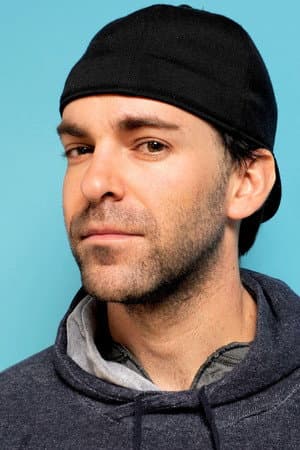
Filmmaker Vincent Grashaw has spent enough time on the festival circuit to know that not every event leaves a mark on a director's career. Oldenburg, in his telling, is one of the exceptions. The German festival, which has quietly built a reputation for championing independent and boundary-pushing cinema far from the glare of the studio marketing machine, occupies a particular place in the hearts of directors who bring their work there. Grashaw is among them, and his perspective on what the festival offers filmmakers says as much about the state of independent distribution as it does about one regional event on the European circuit.
Grashaw's career has been defined by restlessness rather than formula. He has moved between producing, editing and directing, often on projects that sit at the margins of conventional genre categories. That instinct for the unclassifiable has made him a natural fit for Oldenburg, a festival that has long positioned itself as a home for films that major markets tend to overlook. For a director working outside the traditional studio pipeline, that alignment is not incidental. It is the whole point.
A Festival Built for Filmmakers, Not Just Buyers
What distinguishes Oldenburg in Grashaw's view is the emphasis it places on the filmmakers themselves rather than on the transaction culture that dominates larger festivals. Many international film events function primarily as marketplaces, where screenings are staged to attract distributors and the creative team is often secondary to the dealmaking. Oldenburg, by contrast, has cultivated an atmosphere in which directors and audiences interact directly, with Q&A sessions and informal conversations treated as central rather than obligatory.
For a filmmaker who has navigated both the independent production grind and the pressures of commercial storytelling, that distinction matters. Grashaw has spoken about the value of screening work for audiences who are there because they are genuinely curious, not because they are scouting a catalog. That kind of reception can be clarifying for a director, particularly when a film resists easy summary. Oldenburg audiences, he has suggested, tend to arrive with fewer preconceptions and more willingness to meet a movie on its own terms.
The Independence Question
Grashaw's relationship with independence is more complicated than a simple rejection of the mainstream. He has worked within systems that demand commercial viability while also pursuing projects that prioritize artistic risk. That duality gives his take on Oldenburg additional weight. The festival is not, in his framing, a refuge for filmmakers who could not succeed elsewhere. It is a venue where a certain kind of ambitious, difficult work gets the attention it deserves.
That argument has become more urgent as the independent film landscape has shifted. Streaming platforms that once promised a broad home for mid-budget, director-driven cinema have increasingly retreated toward safer bets. Theatrical distribution for smaller films has narrowed. In that climate, festivals that remain committed to programming work outside the algorithm serve a function that goes beyond exhibition. They help keep a particular tradition of filmmaking visible.
Grashaw's enthusiasm for Oldenburg fits that larger picture. He has been candid about the challenges of getting unconventional projects made and seen, and festivals that prioritize curation over commerce offer a counterweight. The relationships formed at such events, he has noted, often outlast the festival itself, shaping future collaborations and opening doors that a cold pitch never would.
What Directors Take Home
Beyond the screenings and the awards, the practical value of a festival like Oldenburg lies in the conversations it generates. Grashaw's account of his time there emphasizes the informal exchanges, the chance to sit with other filmmakers and compare notes on the shared difficulties of the profession. Those moments rarely make headlines, but they are frequently what directors remember.
That perspective offers a useful corrective to the way festival coverage usually works. Trade press tends to focus on acquisitions, premieres and red-carpet moments. The actual experience of a director at a smaller, curatorially driven festival is quieter and, in Grashaw's telling, more sustaining. It is about finding an audience that shows up without a marketing hook and responding to it in real time.
As the festival circuit continues to stratify, with a handful of mega-events absorbing most of the attention, the role of regional and niche festivals becomes more important, not less. Oldenburg's durability rests on its willingness to remain a place where filmmakers like Grashaw can present work that does not fit neatly into a box. For a director whose career has been built on resisting easy categorization, that is not a small thing. It is the reason the festival stays on his map, and the reason its reputation among independent filmmakers continues to hold.
Source: Hollywood Reporter