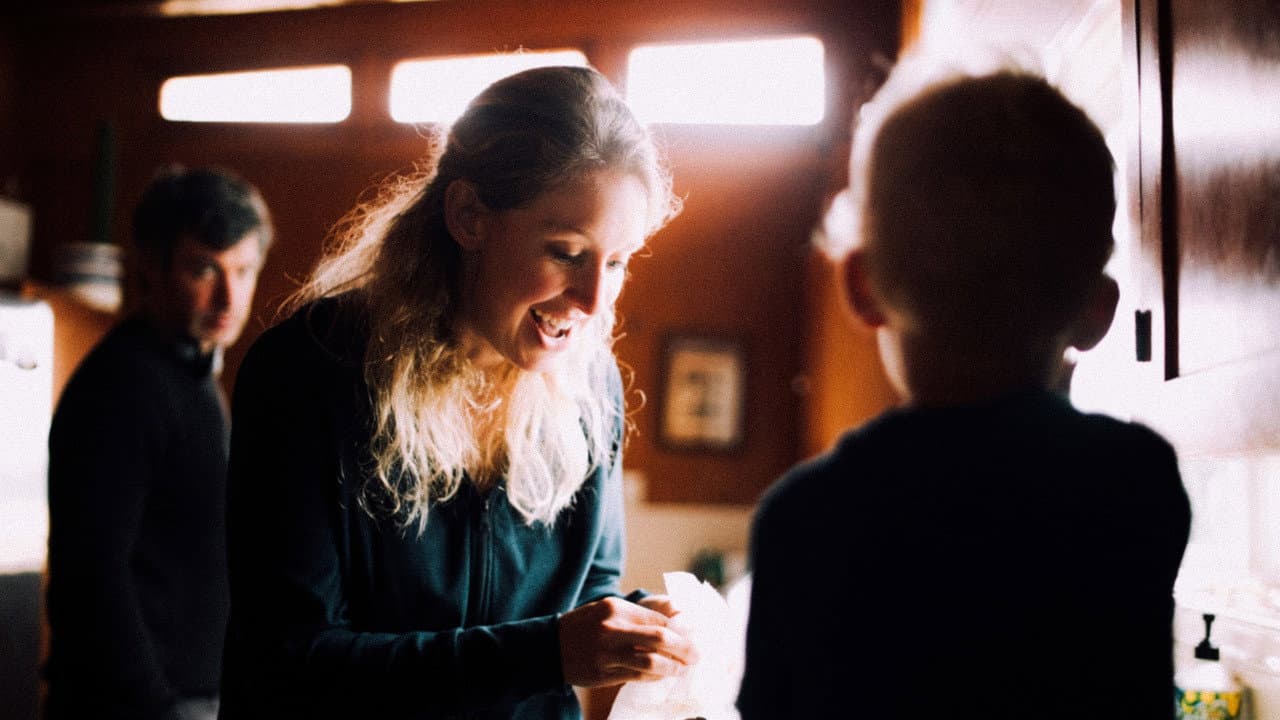
The first wave of reactions is in for You Can See Everything, the new documentary from Nathan Fielder and Lance Oppenheim, and they paint a picture of a film that defies easy categorization. The project, which premiered at a festival on September 6, 2026, follows convicted Theranos founder Elizabeth Holmes in the thirty-four days leading up to her prison sentence. What sounds like a straightforward chronicle of a fall from grace has reportedly morphed into something far stranger, with early viewers describing a three-year descent that blurs the line between documentary, psychological study, and unscripted performance art.
According to the production notes, Holmes invited a skeptical film crew to document her final weeks of freedom, ostensibly for an intimate portrait. Fielder, known for his discomfort-comedy and audacious social experiments, serves as director and also appears on camera alongside Holmes. The official synopsis promises that the project becomes a "mind-bending three-year journey into the abyss," and early reactions suggest that is not hyperbole. The film's runtime of 174 minutes has been a talking point, with some critics noting that the length feels earned given the sprawling, unconventional narrative that unfolds.
TMDb currently lists no user score for the film, which is typical for a title this fresh out of its premiere. But the informal buzz from attendees at the screening paints a more complex picture than a standard true-crime reckoning. Multiple reactions have highlighted Fielder's signature approach - his deadpan interrogation of reality and his willingness to let situations curdle into profound awkwardness. Here, that method is turned on a subject who built an entire career on curated image, and the result is reportedly as much about the mechanics of watching as it is about Holmes herself.
The timeline is a key element of the intrigue. Initial filming was meant to capture a brief, defined period - the month before Holmes reported to federal custody. Yet the project did not wrap there. Fielder and Oppenheim continued filming for three additional years, following Holmes through the early stages of her incarceration and beyond. Early observers are questioning what exactly changed during that window to make the filmmakers extend their scope, and the narrative reportedly shifts from a countdown to something more sprawling and unsettling. One reaction, shared on social media, called it "a documentary that eats itself," while another praised Fielder for "weaponizing his own persona in a way that makes you question every single frame."
Holmes, serving as herself, is described as a magnetic and deeply unreliable narrator. The documentary does not appear to offer easy redemption or a clean villain narrative. Instead, early word suggests the film explores complicity, self-deception, and the strange intimacy that develops between subject and observer. Fielder's presence is not passive; he actively engages with Holmes, and their exchanges are reportedly tense, revealing, and occasionally darkly comic. The film's title, You Can See Everything, seems to carry a bitter irony, as viewers are given unprecedented access to a figure who spent years obscuring the truth.
The critical conversation is already framing the project as a challenge to the conventions of the true-crime documentary genre. Rather than presenting a polished argument with a moral conclusion, Fielder and Oppenheim have reportedly leaned into disorientation, lingering on contradictions and refusing to settle on a single interpretation. This approach has divided some early viewers, with a vocal contingent calling it brilliant and a smaller group expressing frustration with the lack of conventional payoff. There is no TMDb consensus yet, but the intensity of the debate suggests the film will be a major talking point as it moves toward wider distribution.
The involvement of Oppenheim, whose previous work includes immersive, stylized looks at fringe communities, signals a visual approach that is far from verité-style realism. Combined with Fielder's background in constructed scenarios, viewers are left unsure how much of what they are seeing is spontaneous and how much is being quietly staged. This ambiguity is reportedly the point, forcing the audience to confront their own desire for authenticity in a story about a woman who sold fabrication as fact.
You Can See Everything is an English-language production from the Hollywood industry, with a runtime of two hours and fifty-four minutes. As the initial reactions settle, the documentary is poised to be one of the most debated nonfiction releases of the year. Whether it is a work of genius or a spectacular misfire remains an open question, but early consensus holds that it is impossible to look away.
Source: Hollywood Reporter