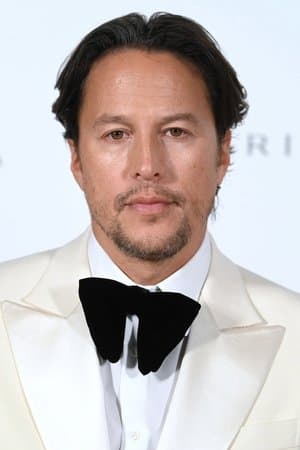
The Zurich Film Festival has tapped two filmmakers with distinctly global resumes to lead its jury corps this year, naming Cary Joji Fukunaga as president of the feature film jury and Sine Plambech as president of the documentary jury. The twin appointments give the Swiss festival a pair of presiding figures whose work straddles narrative and non-fiction traditions, and whose careers have unfolded largely outside the studio mainstream.
Fukunaga, the American director and cinematographer, is best known for a filmography that moves between literary adaptation and large-scale franchise work. His 2009 debut "Sin Nombre" won the directing award at Sundance and the cinematography prize at the Cannes Film Festival. He followed it with a celebrated adaptation of "Jane Eyre" in 2011, then the war drama "Beasts of No Nation" in 2015, which earned Idris Elba a supporting actor nomination at the Academy Awards. More recently, Fukunaga directed the James Bond entry "No Time to Die," released in 2021 after pandemic delays, and served as director and executive producer on the first season of HBO's "True Detective," for which he won an Emmy for outstanding directing. He also wrote and directed the Netflix western "Maniac" and has worked as a cinematographer on several projects, including the 2014 thriller "The Alienist." The Zurich post puts him at the helm of the festival's main competition jury, which hands out its top prize to a narrative feature.
Plambech, a Danish anthropologist and documentary filmmaker, brings a different kind of authority to the festival's documentary side. She has spent much of her career working at the intersection of ethnography and film, with a focus on migration, sex work, and transnational family life. Her documentaries include "Becky's Journey," co-directed with Kim Longinotto, which follows a Nigerian woman who leaves her children behind in Nigeria to work in Italy and tries to reunite with them years later. The film premiered at the International Documentary Film Festival Amsterdam and screened widely on the festival circuit. Plambech has also directed "Between Two Worlds" and "Trafficking," both of which grew out of her long-term fieldwork in Nigeria and Italy. Her academic writing has been published in journals and anthologies, and she has held research positions at the Danish Institute for International Studies. Zurich's documentary competition has become a key launchpad for non-fiction features in recent years, and Plambech's appointment signals the festival's continued emphasis on documentary as a serious artistic category rather than a sidebar.
The Zurich Film Festival, founded in 2005, takes place annually in the fall and has grown into one of the larger film events in the German-speaking world, with a program that mixes international premieres, gala screenings, and industry events. Its main competition focuses on first, second, and third features, and past jury presidents have included directors and producers from Europe, Asia, and the Americas. The festival's separate documentary competition runs alongside the feature section and has awarded films that went on to secure theatrical distribution and awards attention. By naming two presidents rather than one, Zurich also follows a structure that has become more common at European festivals, where documentary and fiction juries deliberate independently and award separate prizes.
For Fukunaga, the Zurich role comes at a moment when his directing career is again in flux. He has been attached to several high-profile projects in development, though none have been confirmed for release. His last feature as director remains "No Time to Die." The Zurich jury presidency does not require him to be in production, and the position typically involves several days of screenings and deliberations during the festival. He has served on juries before, including at Sundance, but Zurich marks his first time presiding over a major European competition jury.
Plambech's appointment is notable for a different reason: she is primarily known as a researcher as much as a filmmaker, and her selection places an anthropologist at the head of a documentary jury at a time when non-fiction cinema is increasingly engaged with questions of representation and consent. Her own films have been praised for their long-term embedded approach, and she has spoken publicly about the ethical obligations of filming subjects over many years. At Zurich, she will lead a jury that decides the festival's top documentary prize, a decision that can shape a film's distribution prospects in Europe.
The two presidents will oversee juries whose members are typically announced closer to the festival's opening. Zurich has not yet released the full jury lineups or the competition slates. What is clear is that the festival has chosen two figures whose careers resist easy categorization: Fukunaga, a narrative director with a documentarian's eye, and Plambech, a documentarian with an anthropologist's patience. Together they give the event a presiding pair whose interests overlap more than their separate categories might suggest.
Source: Hollywood Reporter