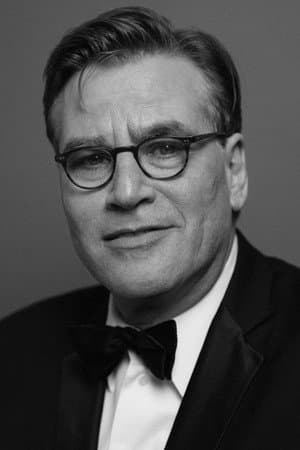
Aaron Sorkin has never been shy about admitting what he doesn't know, and that candor now extends to his own work behind the camera. In a new interview pegged to his latest film, The Social Reckoning, the writer-turned-director says he remains uneasy about the craft of directing - not because he can't identify his weak spots, but because he suspects some of them can't be fixed through study or repetition.
"I'm very worried that the parts of directing that I'm not good at are those parts that you can't learn," Sorkin said.
The remark captures a tension that has followed Sorkin through his second career. He arrived on set as one of Hollywood's most celebrated screenwriters, the pen behind A Few Good Men, The West Wing and The Social Network, and has directed four features since 2017's Molly's Game. Each of those films has drawn praise for their dialogue and structure, and each has reignited the same debate: how much of a director's job is simply an extension of writing, and how much depends on instincts that no mentor can hand over?
A Craftsman's Inventory of What Can and Can't Be Taught
Sorkin's concern is specific. Directing, as he describes it, breaks down into skills with wildly different learning curves. Blocking a scene, staging coverage, working with a cinematographer and managing a schedule are all teachable, and he has spoken in the past about approaching them the way a student would, leaning on experienced collaborators and asking questions. What troubles him is the residue - the intuitive side of the job.
That includes the ability to feel, in the moment, whether a performance is alive or merely correct. It includes knowing how long to hold a shot before an audience's attention drifts. It includes the temperament to lead a large crew without either retreating from conflict or inflaming it. These are qualities that resist a syllabus. A director can read every book on the subject and still not sense when a scene is secretly dead.
For a writer whose entire reputation rests on precision - on the rhythm of an exchange, the placement of a comma - that uncertainty must be uncomfortable. Sorkin has described writing as something closer to a compulsion than a choice, and he has been rewarded for it with an Academy Award, multiple Emmys and a place in the cultural conversation that few screenwriters attain. Directing offers no such guarantee. A line of dialogue either lands or it doesn't, and the writer can hear it in their head. A shot either moves an audience or it doesn't, and the director may not know until the room goes quiet.
A Familiar Anxiety for a Generation of Writer-Directors
Sorkin's confession places him in a long line of writers who stepped behind the camera and then publicly wondered whether they belonged there. Some, like Billy Wilder and Preston Sturges, made the transition look seamless. Others found that the skill set they had spent decades sharpening covered only part of the job. The anxiety is heightened in an era when directors are expected to be auteurs - to possess a visual signature as distinctive as their voice on the page - and when the internet stands ready to assess that signature frame by frame.
There is also the matter of how Sorkin's films are received. Reviews of his directing work have generally been respectful of the writing and mixed on the filmmaking, with critics often praising individual performances while questioning the visual imagination. That pattern may be what makes his worry so persistent. A filmmaker who believed the gap could be closed with effort would presumably keep quiet and keep working. Sorkin, characteristically, says the quiet part aloud.
His newest film, The Social Reckoning, arrives with the usual attention that greets anything bearing his name, and with the usual questions about whether the words outshine the images. The title alone invites comparison to The Social Network, the 2010 film that won him an Oscar and became a kind of cultural reference point for how technology reshapes human behavior. But Sorkin has consistently declined to treat his directing as a referendum on his writing. He seems to regard it as a separate, unfinished education.
That may be the most useful thing about his remark. It reframes the director's chair not as a throne but as a classroom with no graduation date - a place where a decorated writer still shows up hoping to be taught, and still worries sometimes that the lesson he needs most has no instructor. Sorkin hasn't said whether he plans to keep directing. But the tone of the comment suggests a man who intends to keep showing up, if only to find out whether the parts he can't learn are truly unlearnable.
Source: Hollywood Reporter