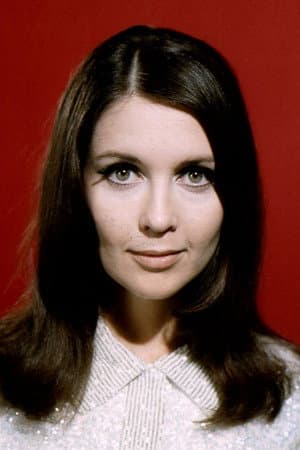
Anjanette Comer, the actress whose brief but memorable Hollywood career spanned the mid-1960s into the early 1970s, has died at the age of 86. News of her passing was confirmed in a statement from her family, which said she died peacefully at her home in Los Angeles. No cause of death was disclosed.
Comer arrived in Hollywood at a moment when the studio system was fracturing and a new generation of actors - more naturalistic, less formally trained - was beginning to populate American screens. She belonged to neither the old guard nor the counterculture, and that in-between quality may explain why her filmography is short but stubbornly difficult to forget.
A Texas upbringing and a fast rise
Born in Dawson, Texas, Comer grew up in a part of the country that rarely produced movie stars. She studied acting at the University of Texas before moving to New York, where she found work in television and on the stage. By the mid-1960s she had relocated to Los Angeles and begun landing small roles in series television, the standard apprenticeship for young actors of her era.
Her breakthrough came in 1965 with "The Loved One," Tony Richardson's acid adaptation of Evelyn Waugh's satirical novel about the Southern California funeral industry. Comer played Aimee Thanatogenos, an earnest young mortuary cosmetician caught between two suitors and a world of grotesque commercialism. The film was a critical lightning rod - some reviewers found its tone cruel, others exhilarating - but nearly everyone singled out Comer's performance as the movie's emotional anchor. In a cast that included Robert Morse, Jonathan Winters, Rod Steiger and Liberace, she was the one playing it straight, and she made it work.
The role earned Comer a Golden Globe nomination for most promising newcomer. It also typecast her, at least in the eyes of casting directors, as an ingénue with a tragic streak.
A working actress in a changing industry
Over the next several years Comer worked steadily, if not always in projects worthy of her. She appeared opposite Marlon Brando in "The Appaloosa" (1966), a Western set along the Mexican border in which she played a woman held captive by a bandit. The film was a modest box-office success and gave Comer her most prominent leading role. Critics noted that she held her own against Brando, no small feat for an actress still in her twenties.
Other credits followed: "The Loved One" had established her as a talent to watch, and she appeared in films including "The Happening" and "Gunfight in Abilene," as well as dozens of television guest spots on series such as "The Fugitive," "Bonanza" and "The F.B.I." In 1967 she was cast in "The Graduate," but the role of Elaine Robinson ultimately went to Katharine Ross - a near-miss that has since become a piece of Hollywood trivia.
By the early 1970s, Comer's film work had slowed. She took a memorable turn in the 1976 horror film "The Baby," playing a social worker who becomes dangerously obsessed with a grown man still treated as an infant. The movie was barely released theatrically and critics were unkind at the time, but it has since developed a cult following, and Comer's performance - by turns tender and unnerving - is now regarded as one of the more interesting things she did.
A quiet later life
Comer largely withdrew from acting in the 1980s, though she made occasional television appearances. She lived quietly in Los Angeles, rarely gave interviews, and did not attend many industry events. In a rare 1990s interview, she described her career with characteristic understatement, saying she had been lucky to work with the people she did and that she never regretted stepping away when she did.
She is survived by two children and several grandchildren. A private memorial is planned.
For a generation of filmgoers, Anjanette Comer remains a face from a particular kind of 1960s movie - beautiful, slightly melancholic, and oddly ill at ease in the world around her. She was never a superstar, and she seemed to know it. But in "The Loved One" and a handful of other roles, she left behind something more durable than fame: the sense of a real person caught on camera, thinking and feeling in real time.
Source: Hollywood Reporter