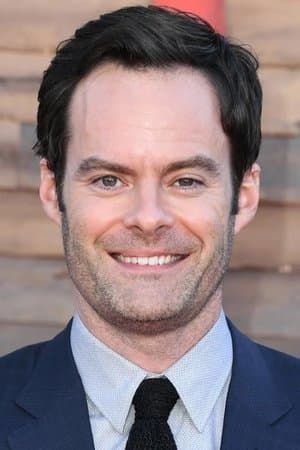
Bill Hader is set to voice the Cat in the Hat, a character he previously played on "Saturday Night Live," but the performer is signaling that audiences should not expect a rerun of the sketch-comedy take. In comments surrounding the project, Hader has characterized the new interpretation as a "much different version" than the one he brought to late-night television, drawing a deliberate line between his sketch work and the animated feature now in the works.
The distinction matters because Hader's earlier Cat was built for the rhythms of live sketch comedy - broad, quick, and designed to land a joke in a matter of seconds. A feature-length animated film operates under different rules, with a sustained narrative, a full character arc, and a vocal performance that has to carry an audience's attention far longer than a single sketch ever could. Hader's framing suggests he is approaching the role with that difference squarely in mind rather than simply porting over a familiar persona.
For Hader, the casting also extends a career arc that has moved steadily from sketch performance toward voice work and character acting. He spent years as one of the most versatile performers on "SNL," where the Cat in the Hat sketch became a recurring fixture, and he has since built a substantial résumé in animation and in projects that lean on his range as a vocal chameleon. Returning to a character he once played on television, but in an entirely new format, gives him a chance to revisit familiar material without repeating himself.
A Sketch Character Rebuilt for a Feature
The creative challenge in adapting the Cat lies in the character's literary roots. Dr. Seuss's original Cat is a mercurial figure who arrives uninvited and turns a quiet afternoon into controlled chaos, and the source material's rhymes and rhythms have made it a fixture of children's reading for generations. Translating that into a feature requires expanding a story that was never built for long-form running time, which means adding structure, stakes, and an emotional throughline while keeping the spirit of the original intact.
Hader's remarks that the new version is "much different" from his sketch portrayal point toward a production that intends to establish its own identity rather than lean on nostalgia for a television bit. That could mean a different comedic register, a different visual and vocal style, or a different understanding of who the Cat is when he is not simply the engine of a five-minute joke. The actor's willingness to draw the contrast publicly also suggests the filmmakers want audiences to arrive with fresh expectations.
There is a practical reason for that positioning as well. An "SNL" sketch built around a children's book character and a live studio audience lives in a very specific comedic world, one that includes audience laughter as a built-in laugh track and a host of recurring jokes that depend on familiarity with the show. A standalone animated film has no such scaffolding; its humor has to travel on its own and appeal to viewers who may never have seen the sketch at all.
Voice Work as a Career Throughline
Hader's move into the role fits a broader pattern in his post-"SNL" career. Voice acting has become a significant part of his professional identity, and animation offers performers a kind of freedom that live-action work does not - the ability to disappear into a character without the baggage of a familiar face. For an actor known for his protean impressions and character work, that is a natural fit, and revisiting the Cat in a new register is consistent with the way he has approached his career since leaving the show.
The project also lands at a moment when animated features built around established children's properties are a well-worn path in Hollywood, though the success of such adaptations depends heavily on whether they offer something beyond a familiar title. Casting an actor with a genuinely funny and distinctive voice is one way to signal that a production intends to bring its own personality to well-known material.
For now, the specific shape of Hader's Cat remains to be seen, and the actor has not revealed how the character will sound or behave in the new format. What is clear is that he intends the performance to stand apart from the sketch version, and that he is treating the transition from television to feature animation as a genuine creative shift rather than a repeat engagement. Audiences who remember the "SNL" Cat will have to wait to discover exactly how different this one turns out to be.
Source: Hollywood Reporter