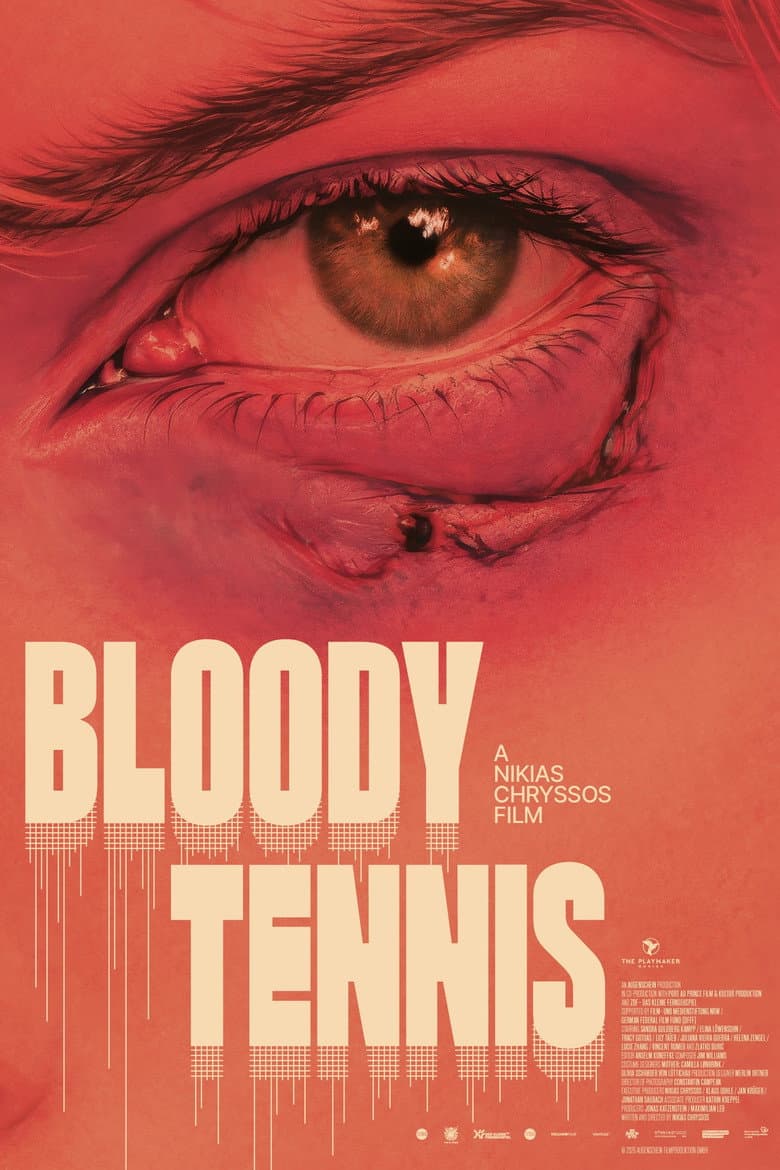
Bloody Tennis, Tunisian Horror: Locarno's Quirky Films
Advertisement
Discover quirky Locarno films: 'Bloody Tennis', Tunisian horror, and a surgeon with kleptomania.
The Locarno Film Festival has long been a haven for filmmakers who operate outside mainstream conventions, and this year’s edition is doubling down on that tradition with a selection of titles that defy easy categorization. Among the films generating early buzz are a bloody tennis horror-comedy, a Tunisian supernatural thriller rooted in folklore, and a darkly comic drama about a surgeon who cannot stop stealing. These projects, each arriving from a different corner of the global indie scene, promise to make Locarno 2026 one of the festival’s most eccentric lineups in recent memory.
Blood, Racquets, and Body Horror
In a festival known for genre-bending surprises, “Bloody Tennis” looks to be the most gonzo entry of the bunch. The film, directed by an emerging European filmmaker whose previous work blended slapstick with visceral terror, takes the genteel world of competitive tennis and turns it into a blood-soaked battlefield. Early plot details suggest a group of estranged siblings reuniting at a remote country club for a high-stakes tournament, only to discover that the court itself has a malevolent will. Pre-festival rumors have described the movie as “Hereditary meets Challengers,” though festival programmers are careful to note that the film is more of a pitch-black comedy than a straight horror piece. The director has cited Italian giallo films and the absurdist tradition of late-20th-century French cinema as key influences. Given Locarno’s history of platforming audacious genre work - the festival launched the careers of auteurs like Jim Jarmusch and Claire Denis - “Bloody Tennis” may well emerge as the breakout midnight-movie sensation of the year.
A Tunisian Horror Rooted in the Past
On the more haunting end of the spectrum, Locarno’s lineup includes a Tunisian horror film that draws directly from North African folklore. The movie, whose working title has been reported as “The Sand’s Mouth,” follows a young woman in a coastal town who begins to experience terrifying visions after her grandmother’s death. Rather than relying on jump scares or Western horror tropes, the director - a first-time feature filmmaker from Tunis - builds dread through atmosphere, slow-burn pacing, and the uneasy integration of supernatural elements into the mundane rhythms of daily life. The story is reportedly inspired by real oral traditions about djinn and spirit possession in rural Tunisia, filtered through a contemporary lens that also examines generational trauma and the pressures of modernization. The film was shot in a small fishing village near Sfax, using a mostly non-professional cast. Festival insiders say the movie has already drawn comparisons to recent international horror successes like “The Wailing” and “Tigers Are Not Afraid,” though its political subtext - touching on class divides and colonial legacy - sets it apart. Locarno has a strong track record of championing genre cinema from regions overlooked by Hollywood, and this Tunisian entry could be its most potent discovery this year.
The Surgeon Who Cannot Stop Taking
Rounding out this trio of offbeat offerings is a character study that sounds almost too strange to be true: a drama about a renowned vascular surgeon who suffers from kleptomania. The film, tentatively titled “The Eighth Art,” was written and directed by a Swiss-Italian auteur known for exploring moral ambiguity in clinical settings. It stars a veteran European actor in the lead role, following the surgeon as his compulsion to steal increasingly small, meaningless objects begins to unravel both his personal life and his professional reputation. The director has described the film as “a tragedy about perfectionism and the lie of control.” Early reviews from private screenings in Zurich have praised the lead performance for its quiet complexity, noting that the script never reduces the protagonist’s condition to a joke or a gimmick. Instead, the film treats kleptomania as a symptom of a deeper existential crisis - a need to possess something tangible in a life that otherwise feels like a long, sterile series of operations. Locarno audiences, accustomed to slow-burn psychological dramas that ask uncomfortable questions, should connect strongly with this one.
A Festival Built on Quirky Foundations
Taken together, these three films illustrate exactly why Locarno remains a vital destination for adventurous cinephiles. While bigger festivals often lean on star power or prestige awards bait, Locarno’s programming team under artistic director Giona A. Nazzaro has deliberately curated a selection that prizes originality over marketability. The festival’s main competition, as well as its sidebar sections like “Fuori Concorso” and the experimental “Semaine de la Critique,” consistently give space to films that might struggle to find distribution elsewhere. This year’s edition is no exception: alongside the horror and oddball dramas, the lineup also includes a documentary about an all-female punk band in post-revolution Bucharest, an essay film constructed entirely from archival footage of shopping malls, and a silent black-and-white reimagining of an Aesop fable set in contemporary Tokyo. For journalists and programmers alike, the challenge will be to separate the daring from the merely bizarre. But if past Locarno editions are any guide, at least a few of these quirkiest offerings will go on to find cult audiences - and perhaps even legitimate accolades - in the months ahead. The festival runs from early August through mid-August, and early ticket sales suggest that “Bloody Tennis,” in particular, has already become the most sought-after screening of the entire event.
Source: Hollywood Reporter
Advertisement
Advertisement