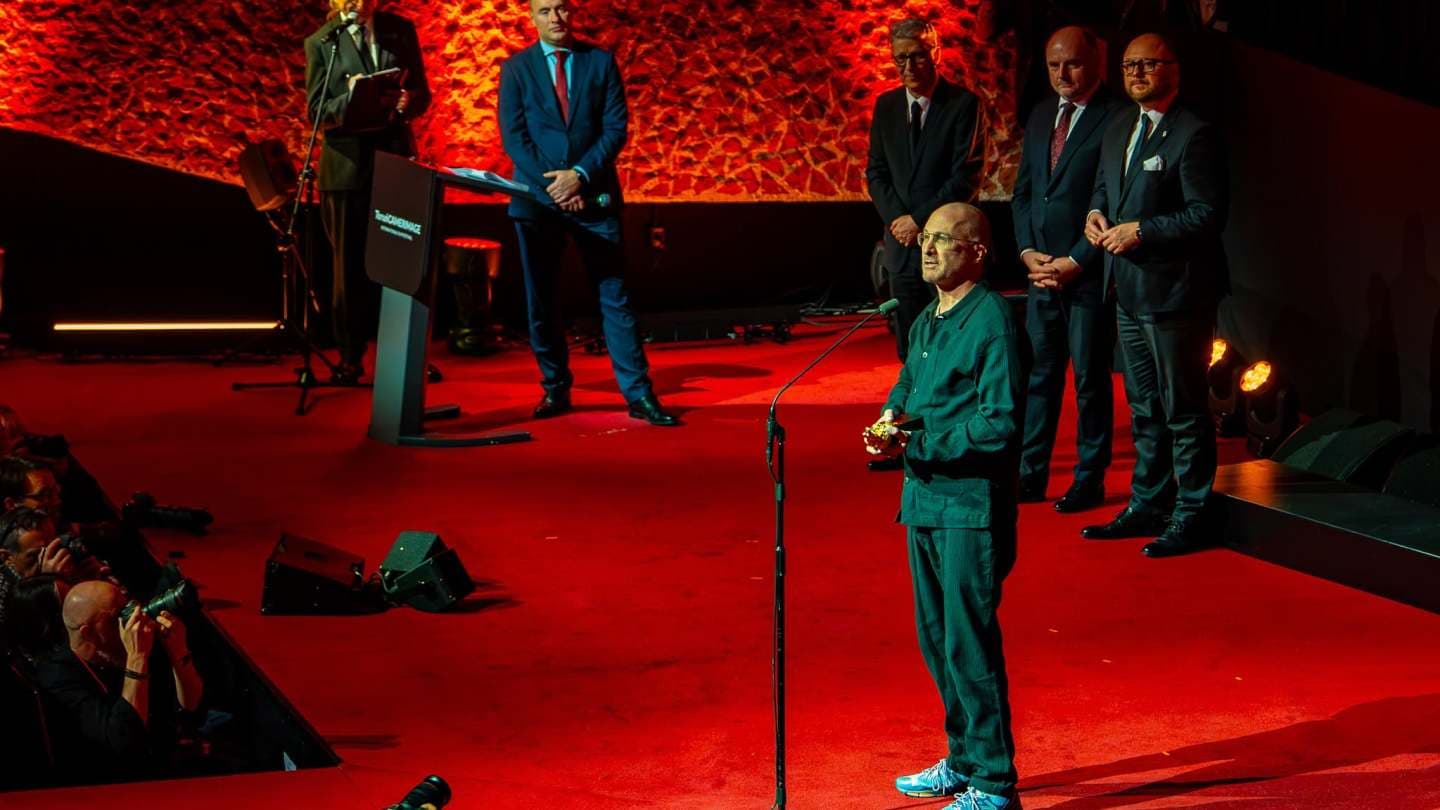
The EnergaCAMERIMAGE International Film Festival opened its latest edition with an unusual pairing of spectacle and solemnity: a robot on stage, a pointed debate about artificial intelligence in cinematography, and a moment of silence honoring Kraków. The Polish festival, long regarded as the premier global gathering for the craft of the moving image, launched its program with a ceremony that seemed determined to confront the industry's unsettled future while also acknowledging the weight of the present.
The opening night's mix of themes reflected a festival trying to hold two conversations at once. One is about technology - specifically, whether machine learning tools will reshape how films are lit, framed, and finished. The other is about grief and remembrance, tied to the city that has hosted the event and the people who make it possible. That the two could share a stage without feeling discordant was, by most accounts, part of the point.
A Robot as a Symbol, Not a Gimmick
The robot's appearance during the opening proceedings was framed less as a stunt than as a visual argument. Camerimage has built its reputation on the idea that cinematography is a human craft - the product of a trained eye, physical stamina, and collaborative instinct on set. Bringing a machine into that space was a way of asking aloud what, exactly, distinguishes the two.
Festival organizers have consistently positioned the event as a defense of authorship in image-making. The robot served as a tangible prompt for that discussion, a physical stand-in for the algorithms that increasingly touch everything from pre-visualization to color grading. It was, in essence, a conversation starter that happened to have servos.
The AI Reckoning Arrives at the Festival Circuit
The AI discussion at the opening was not abstract. Across the industry, cinematographers, colorists, and visual effects supervisors are grappling with tools that can generate imagery, suggest lighting setups, and automate tasks once handled by crews. The festival's decision to foreground that debate on day one signals that Camerimage intends to treat the technology as a central creative question rather than a side panel.
That stance carries some risk. Camerimage's audience is famously devoted to analog craft and practical technique - the festival grew out of a passion for the photochemical image and the discipline of on-set lighting. Confronting AI head-on could alienate purists. But ignoring it would make the festival feel irrelevant to the productions now being greenlit. The opening ceremony's framing suggested organizers are betting that a frank airing of anxieties is more useful than avoidance.
There is also a practical dimension. Below-the-line workers are watching AI developments with a mixture of curiosity and job anxiety, and the festival floor is one of the few places where those concerns can be discussed among peers rather than through press releases. The opening night gave that conversation a public stage.
A Minute of Silence for Kraków
The minute of silence for Kraków provided a stark counterweight to the technology talk. The city has been the festival's home and its identity - the venues, the streets, and the local crews and audiences have shaped what Camerimage is. Observing a moment of silence for the city grounded the evening in something more human than a debate about tools.
The gesture resonated through the room, according to attendees, who described a shift in mood as the ceremony paused. It was a reminder that film festivals are civic events as much as industry ones, embedded in the places that host them. Kraków's role in Camerimage's history is not incidental; it is foundational. Acknowledging that with silence, rather than speeches, carried a particular force.
What the Opening Signals for the Week Ahead
Taken together, the evening set a tone for the festival's run: technically inquisitive, emotionally aware, and willing to stage uncomfortable questions. The robot and the AI discussion will likely echo through panels, screenings, and hallway conversations in the days to come. The minute of silence will linger differently - quieter, but perhaps longer.
For an industry that spends much of its time celebrating finished work, Camerimage's opening offered something rarer: a public reckoning with how that work gets made, and who gets to make it. Whether the festival's answer leans toward the machine or the human hand will become clearer as the program unfolds. For now, the conversation is open, and the festival has made clear it intends to keep it that way.
Source: Hollywood Reporter