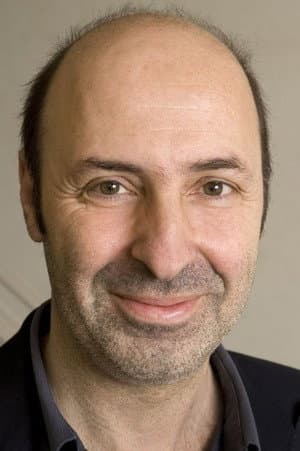
French filmmaker Cédric Klapisch will be honored with a lifetime achievement prize at the César Awards, France's most prestigious film honors, in recognition of a career that has made him one of the defining chroniclers of contemporary French life on screen. The tribute places the director alongside a select group of filmmakers celebrated by the French Academy for the breadth and durability of their work.
Klapisch first came to wide attention in the early 1990s with "Riens du tout," a sharply observed comedy set inside a Paris department store, and consolidated his reputation with "Le Péril jeune," a portrait of a circle of friends looking back on their youthful idealism. Those early films established the template that would define his career: generous, funny, and closely attentive to the texture of everyday relationships.
It was "When the Cat's Away" ("Chacun cherche son chat") that carried him to mainstream success in France, winning him the César for Best Director. The film, about a young woman searching for her missing cat in a Paris neighborhood undergoing rapid change, demonstrated his gift for weaving comedy and melancholy through the life of a single quartier.
He reached an even larger audience with the international hit "L'Auberge espagnole" ("The Spanish Apartment"), a comedy about a French student sharing a flat in Barcelona with housemates from across Europe. The film became a touchstone for a generation of European students, and Klapisch returned to its characters in "Russian Dolls" and later "Chinese Puzzle," building one of the most beloved trilogies in modern French cinema.
An Eye for Ensemble and Era
Across his filmography, Klapisch has shown a consistent interest in ensemble storytelling and in the way private lives intersect with broader social change, from the transformation of Parisian neighborhoods to the mobility and mixing of young Europeans. His films are rarely plot-driven in the conventional sense; their pleasures lie in observation, in the accumulation of small human detail, and in a tone that can shift from farce to tenderness without strain.
He has also worked fruitfully in dance and documentary, most notably with "Reset," a collaboration with choreographer Hofesh Shechter that explored the mood of a country uneasy with its own past. The project underlined how comfortably Klapisch moves between registers and disciplines.
His more recent narrative features include "Back to Burgundy," a drama about siblings reuniting over the family vineyard, and "Someone, Somewhere," a romantic tale set among the apartment blocks of Paris. Both films returned to themes that have run through his work from the outset: family, ambition, and the search for connection in an increasingly fractured society.
A Career Built on Modesty and Observation
What distinguishes Klapisch within French cinema is his refusal of grand statement. Where many celebrated directors are identified with a signature style or a polemical stance, he has built his reputation on accessibility, warmth, and a journalist's curiosity about how people actually live. Critics have sometimes undervalued the craft behind that apparent ease, but the affection in which his films are held by audiences is evidence of something rarer: a sustained popular touch rooted in genuine humanism.
His actors have often given career-defining performances under his direction, and his ability to assemble large, polyglot casts without losing focus on individual characters has remained a hallmark from the "Spanish Apartment" films through his most recent work.
The César Tribute
The lifetime achievement honor adds Klapisch's name to a distinguished roster of filmmakers and performers the César Academy has chosen to celebrate for their overall contribution to cinema. For a director who has spent more than three decades making films about the shared, ordinary business of being alive, the award reads as an acknowledgment of consistency as much as of any single triumph.
The tribute also comes at a moment when French cinema is reflecting on how it tells stories about a changing, interconnected Europe. Klapisch was doing that work early and without fanfare, putting students from a half-dozen countries in one Barcelona apartment and letting their frictions and friendships speak for themselves.
For audiences, the honor is a chance to revisit a body of work that has aged remarkably well. The concerns that animated "When the Cat's Away" - neighborhood change, solitude, the small consolations of community - feel as urgent now as they did when the film was released, and the "Spanish Apartment" trilogy has only gained resonance as European mobility has become both more commonplace and more contested.
Klapisch has never courted the spotlight, and it is fitting that his tribute arrives not on the back of a single sensation but as the cumulative verdict on a career. Few directors have watched modern France so closely, or rendered it with such generosity. The César salute is, in its way, a thank-you from the country he has spent a lifetime observing.
Source: Hollywood Reporter