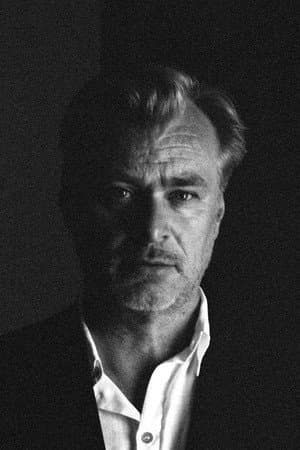
Nolan Interview: Critics, 'Odyssey' Faith, Civilization at
Christopher Nolan's China interview goes viral - his blunt take on critics, Christian themes in 'The Odyssey,' and calling himself a 'bard for a civiliz
Director
Christopher Nolan
Advertisement
Christopher Nolan's China interview goes viral - his blunt take on critics, Christian themes in 'The Odyssey,' and calling himself a 'bard for a civiliz
Christopher Nolan has sparked a fresh wave of online debate after a promotional interview in China offered unusually blunt takes on film critics, the religious subtext of his upcoming adaptation of The Odyssey, and his self-described role as a “bard for a civilization at dusk.” The conversation, which surfaced on social media earlier this week, has quickly gone viral, drawing both praise and pushback from fans and industry watchers alike.
The Oscar-winning director, best known for mind-bending epics like Interstellar and Inception, was in the country to generate buzz for his latest project. But instead of sticking to safe, pre-packaged answers, Nolan veered into more philosophical territory. When asked about the current state of film criticism, he didn’t mince words. He reportedly described much of modern critical discourse as reductive, arguing that too many reviewers focus on plot mechanics and “message-checking” rather than engaging with cinema as a sensory and emotional experience. “A film isn’t a puzzle to be solved or a position paper to be graded,” he said, according to translated remarks circulating online. “It’s a dream you inhabit. If you’re only looking for the exits, you’ll miss the architecture.”
That frankness extended to his interpretation of Homer’s ancient epic. Nolan acknowledged that The Odyssey is being read by some as a secular adventure story, but he leaned into its spiritual dimensions. He pointed to themes of endurance, sacrifice, and the longing for home as fundamentally Christian in their resonance, even while set in a polytheistic world. “Odysseus isn’t just fighting monsters,” he explained. “He’s wrestling with providence, with the idea that suffering has meaning. That’s not a Greek thought alone - it’s a thread that runs through the Gospels. I found it impossible to ignore.”
The most quoted line, however, came when Nolan described himself as a “bard for a civilization at dusk.” He elaborated that he sees his films as chronicles of societies on the verge of transformation - or collapse - where technology, faith, and human fallibility collide. “We’re living in a twilight moment,” he said. “Not necessarily an ending, but a thinning of certain certainties. My job is to sing about that, to make art that holds a lantern up to the fading light.” The phrase, poetic and slightly melancholic, has become a rallying point for his admirers and a target for critics who find it grandiloquent.
The interview has divided audiences. On one side, longtime Nolan defenders argue that his willingness to discuss faith and cinematic artistry in a major market like China - where such topics can be sensitive - shows intellectual courage. They’ve flooded social media with clips and transcripts, praising him for pushing back against what they see as a cynical, algorithm-driven review culture. On the other side, skeptics accuse him of romanticizing decline and adopting a martyr complex. Some have pointed out that a filmmaker with Nolan’s massive budgets and studio backing is hardly an outsider, making the “dusk” metaphor ring hollow. “It’s easy to be the bard of civilization’s end when you’re sitting on a $200 million soundstage,” one film critic wrote on a popular forum.
The viral moment is also notable for where it happened. Nolan has been a vocal advocate for theatrical exhibition and has previously discussed the importance of international markets, particularly China, which has become a crucial territory for Hollywood blockbusters. His unvarnished comments there suggest he’s willing to risk some diplomatic friction. Chinese censorship has historically been strict about religious content, but Nolan’s remarks focused on universal themes rather than specific doctrine, which may explain why the interview aired without edits. Still, the local industry press has handled the story carefully, emphasizing the director’s respect for cinema as an art form over any specific theological claims.
Behind the headlines, The Odyssey remains shrouded in typical Nolan secrecy. Plot details are scarce, though the director has confirmed he’s using cutting-edge IMAX technology to capture the scale of the ancient Mediterranean. Cast announcements have been made in piecemeal fashion, but no release date has been officially locked in. What is clear is that the film is already one of the most anticipated projects in Hollywood, given Nolan’s track record and the literary weight of the source material. The China interview only amplifies that anticipation, offering a rare glimpse into the filmmaker’s mindset as he heads into post-production.
The broader reaction also speaks to Nolan’s peculiar status in contemporary cinema. He remains one of the few directors who can command enormous budgets for original or classical material while maintaining a fiercely devoted following. His films regularly ignite long-form essays and heated arguments, and this interview fits that pattern. Whether you agree with his self-mythologizing or find it exhausting, there’s no denying that Nolan knows how to keep a conversation alive. For Hollywood Buzz News, the takeaway is simple: the man who dreamed up the tesseract and the rotating hallway is still very much interested in the big questions - and he’s not afraid to say so, even thousands of miles from home. As the buzz continues to build, one thing is certain: when Nolan opens his mouth, the world tends to listen, even if it’s just to argue.
Source: Hollywood Reporter
Advertisement
Advertisement