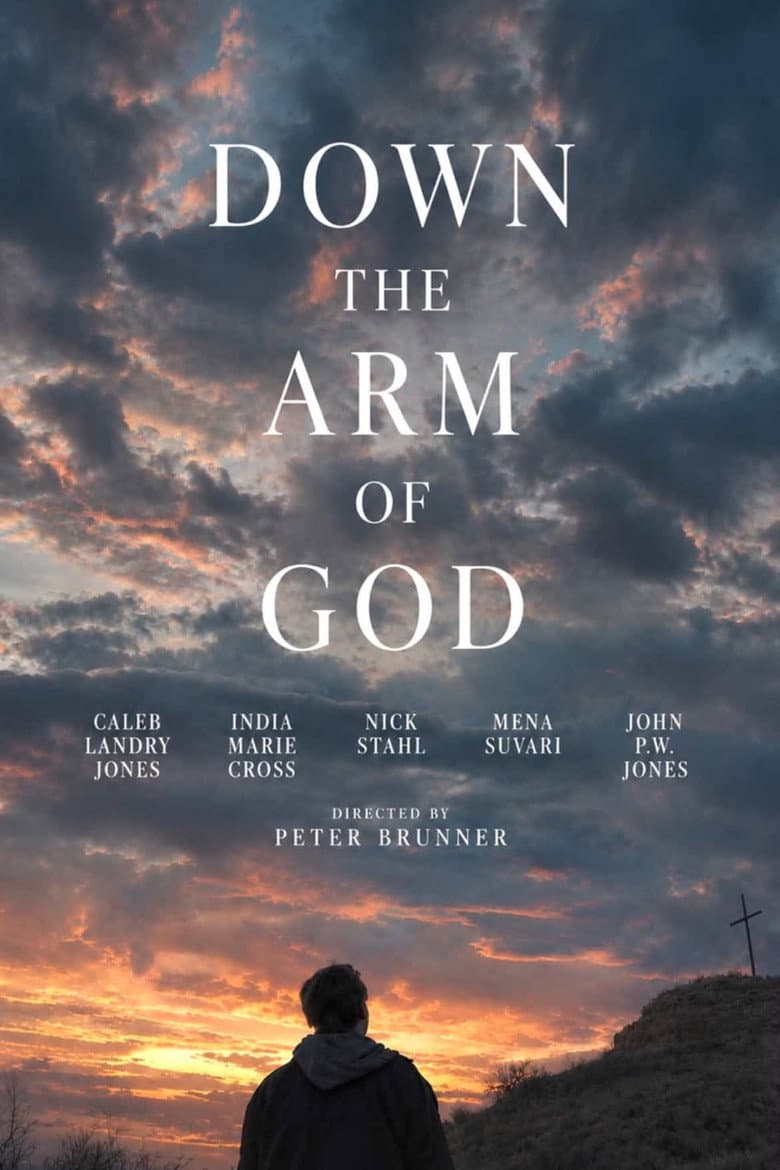
'Down the Arm of God' Film: Jones, Unhoused Cast
Caleb Landry Jones stars in Peter Brunner's 2026 film, made with people without housing - a conversation starter, not advocacy.
Director
Peter Brunner
Language
EN
Release
2026-08-12
Runtime
106 min
Advertisement
Caleb Landry Jones stars in Peter Brunner's 2026 film, made with people without housing - a conversation starter, not advocacy.
Caleb Landry Jones headlines a new drama opening in limited release this Wednesday, August 12, a project that its creators insist is meant to provoke discussion rather than deliver a neatly packaged social message. Down the Arm of God, directed by Peter Brunner, follows a young pastor named Nick who endures a brutal Texas winter while trying to aid his town's homeless population, only to meet fierce opposition from his own congregation.
The film, which runs 106 minutes, was developed in collaboration with individuals currently experiencing homelessness, a fact that shapes both its production approach and its narrative ambitions. The cast includes India Marie Cross as Raven, Nick Stahl as Chris, Mena Suvari as Anna, and John Jones in the role of John, with Whoopie Campfield, Dene Valentine, and Amanda Davis rounding out the ensemble.
Rather than positioning the picture as a traditional advocacy vehicle, Brunner and Jones have framed it as an opening for dialogue about prejudice, institutional neglect, and the limits of good intentions. In a behind-the-scenes statement, Jones described the work as a "conversation starter, not an advocacy film," a distinction that suggests the movie intends to complicate easy answers about charity, faith, and community responsibility.
The setting is a small, isolated Texas town where winter brings not just cold, but a stark reckoning with how residents treat those who have fallen through the cracks. Nick's mission, born from genuine conviction, collides head-on with a congregation unwilling to confront the systemic failures that keep people on the streets. The screenplay reportedly mines this conflict for moral ambiguity, refusing to paint any character as purely heroic or wholly villainous.
Brunner, known for his atmospheric and often uncomfortable visual style, shot the film with a focus on authentic textures - gritty interiors, frostbitten exteriors, and performances that lean toward naturalism. Given the subject matter, the director made the unusual choice to incorporate real input from people without housing during the film's development, a process that reportedly informed character details, dialogue beats, and even certain set pieces.
That collaborative element is central to how the filmmakers want audiences to receive the work. Instead of presenting a top-down portrait of suffering, Down the Arm of God aims to place its unhoused characters in positions of narrative agency, allowing their perspectives to challenge the pastor's assumptions as much as the congregation's prejudice. The result, according to early descriptions, is a drama that spends as much time interrogating the savior complex as it does depicting the hardships of winter survival.
The film's central performance rests on Jones, whose career has frequently gravitated toward volatile, morally complex figures. His Nick is described as a man whose faith is genuine but whose methods are increasingly questioned by the very people he seeks to save. The tension between his pastoral duty and the residents' lived experience drives much of the film's emotional weight.
Supporting turns from Suvari and Stahl add texture to the town's social fabric, with Suvari playing Anna, a character whose relationship to the church and the homeless community complicates Nick's mission. Cross, as Raven, is positioned as a key voice among the unhoused characters, one whose skepticism of Nick's help reads as hard-earned wisdom rather than mere cynicism.
With no early critical buzz to speak of - the TMDb rating currently sits at zero pending public reviews - the film enters theaters as something of an unknown quantity. Its release strategy appears aimed at art-house audiences and festival-circuit followers rather than wide commercial appeal, and the movie's thorny subject matter ensures it won't be an easy sit for mainstream crowds.
Still, the filmmakers have made clear they are less interested in comfort than in questions. The title itself evokes both divine abandonment and the human struggle to find meaning in suffering, a thematic duality that runs through the entire narrative. By centering the story on a faith leader whose good works backfire, Down the Arm of God invites viewers to consider whether institutional help, even when sincerely offered, can ever fully escape the biases of the society that creates it.
That approach may frustrate audiences expecting a clear moral lesson or a uplifting resolution. But for Brunner and Jones, the absence of easy answers seems to be the point. As Jones put it, the goal is not to persuade viewers to adopt a particular stance, but to leave the theater still talking - arguing, even - about what they witnessed on screen.
Down the Arm of God opens on August 12, 2026.
Source: Hollywood Reporter
Advertisement
Gallery
Advertisement