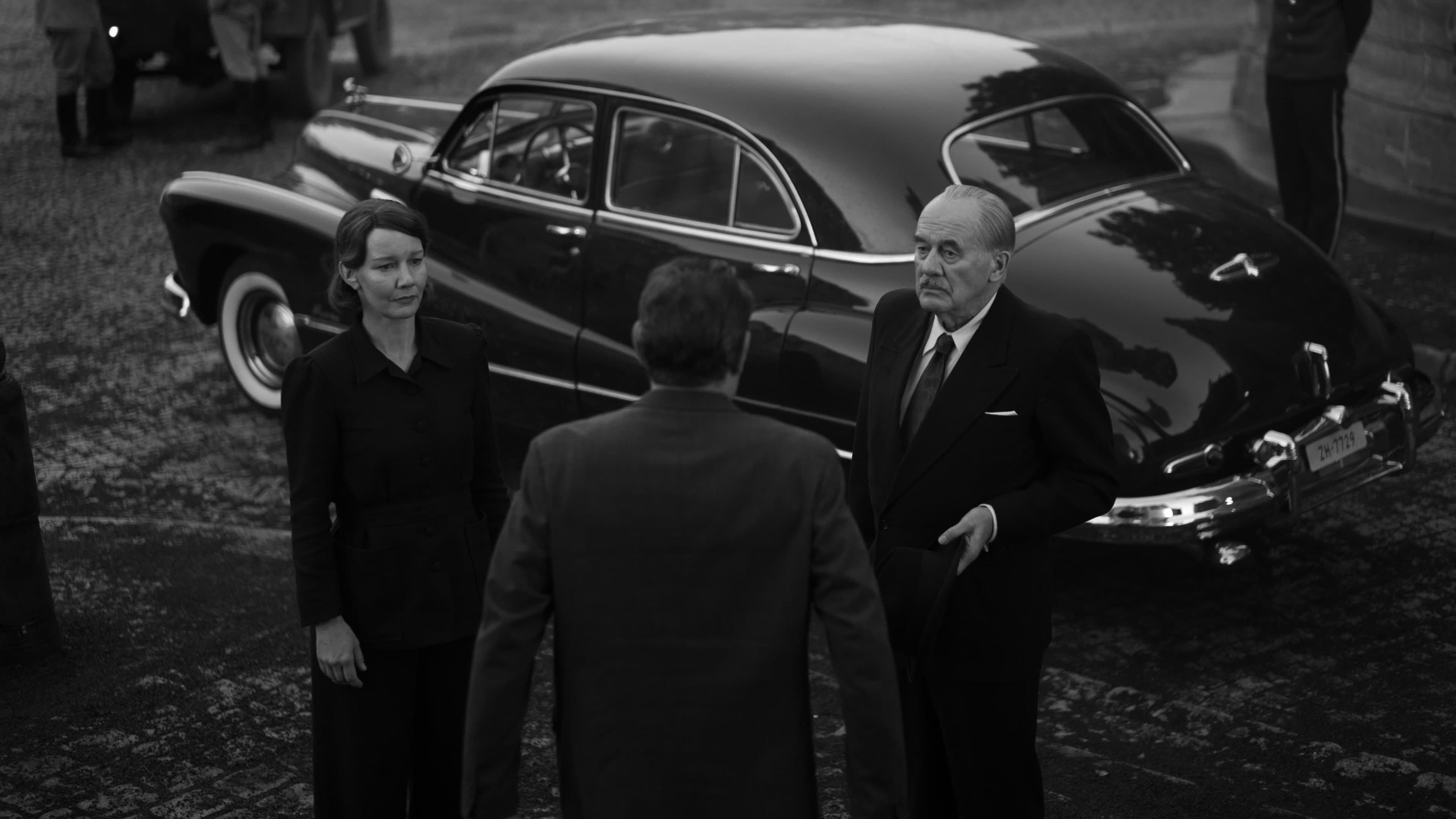
Three films with sharply different sensibilities - the period drama "Fatherland," the Argentine fable "La Bola Negra" and the Norwegian survival story "Fjord" - have emerged as the frontrunners in this year's European Film Award nominations, a slate that once again favors ambitious international co-productions over star-driven prestige pictures.
The nominations, announced by the European Film Academy, position all three titles among the leading contenders across the major categories, including best European film, director and performer honors. That triple presence sets up an unusually wide-open race for the top prize, with no single title dominating the field outright. For awards watchers, the spread is a reminder that the EFAs rarely follow the same script as the American season - and this year appears no exception.
"Fatherland" arrives as the most traditional of the three in awards terms: a serious, historically grounded drama that tends to appeal to voters who prize craftsmanship and ensemble acting. "La Bola Negra" brings a different flavor entirely, a film that has traveled well on the festival circuit and built word-of-mouth momentum heading into the fall. "Fjord," meanwhile, represents the kind of visceral, visually striking cinema that has become a signature of recent Nordic submissions to the Academy's ballot.
An Academy That Rewards Range
What ties the three leaders together is less a shared genre than a shared profile. Each is an international co-production, each premiered to strong notices at major festivals, and each has been championed by critics in multiple territories rather than one home market. That is exactly the kind of film the European Film Academy has spent the past decade positioning itself to celebrate.
The nomination haul also reflects the academy's ongoing expansion of its voter base, which now draws from across the continent rather than a handful of traditional film capitals. That broadening has steadily shifted results toward films that play well across borders - and away from domestic hits that never travel.
Beyond the top three, the slate offers its usual mix of established European auteurs and first-time feature directors, a balance the academy has worked to maintain as it seeks younger audiences without alienating its veteran membership. Several acting nominations went to performers largely unknown outside their home countries, a recurring feature of the EFAs that has helped launch international careers.
What the Race Tells Us
The absence of a clear favorite heading into the ceremony is itself notable. In recent years, the European Film Awards have often coalesced around a single critical darling well before voting closed. This year, the contest looks more like a genuine three-way competition, with each film drawing support from a distinct constituency: heritage-minded voters for "Fatherland," festival loyalists for "La Bola Negra," and those drawn to bold visual storytelling for "Fjord."
That fragmentation could make the final weeks of campaigning unusually consequential. Distributors behind the three titles are expected to lean on regional screening events and targeted outreach to academy members, many of whom vote without having seen every nominee in a given category. In a race this close, a handful of late converts can decide the outcome.
There is also a practical dimension. A strong showing at the EFAs has historically translated into visibility for films still seeking wider international distribution, and all three frontrunners are at different stages of that journey. "Fatherland" has already secured a foothold in several European markets; "La Bola Negra" continues to build its audience festival by festival; "Fjord" is poised to expand into English-language territories on the strength of its nomination haul.
The Bigger Picture
For the European Film Academy, a year without an obvious juggernaut is not a problem but a talking point. The organization has long argued that its awards exist to illuminate films that might otherwise go unseen outside their home countries, and a competitive field serves that mission better than a coronation.
Still, the academy faces familiar pressures. The theatrical market for subtitled, non-English-language cinema remains fragile across much of Europe, and awards buzz alone rarely guarantees a wide release. How much commercial lift the eventual winner receives will be watched as closely as the result itself.
For now, the three films head into the final stretch on roughly equal footing, each with a compelling case and a distinct audience. The European Film Awards ceremony will settle the question - and, as usual, the conversation leading up to it may prove just as revealing as the trophies handed out at the end of the night.
Source: Hollywood Reporter