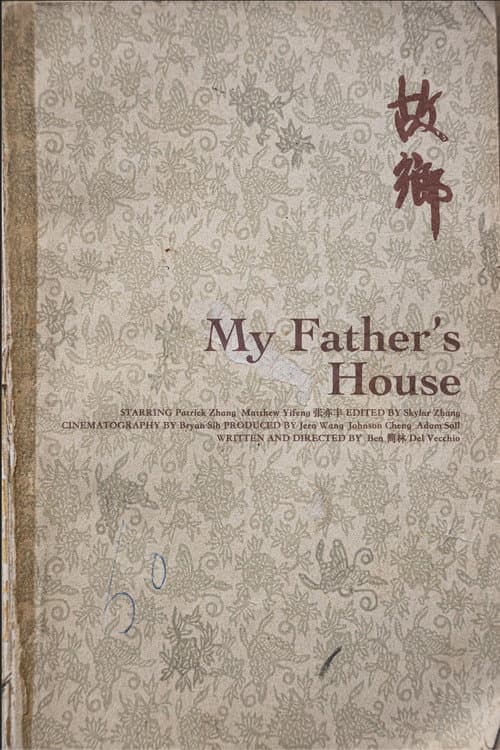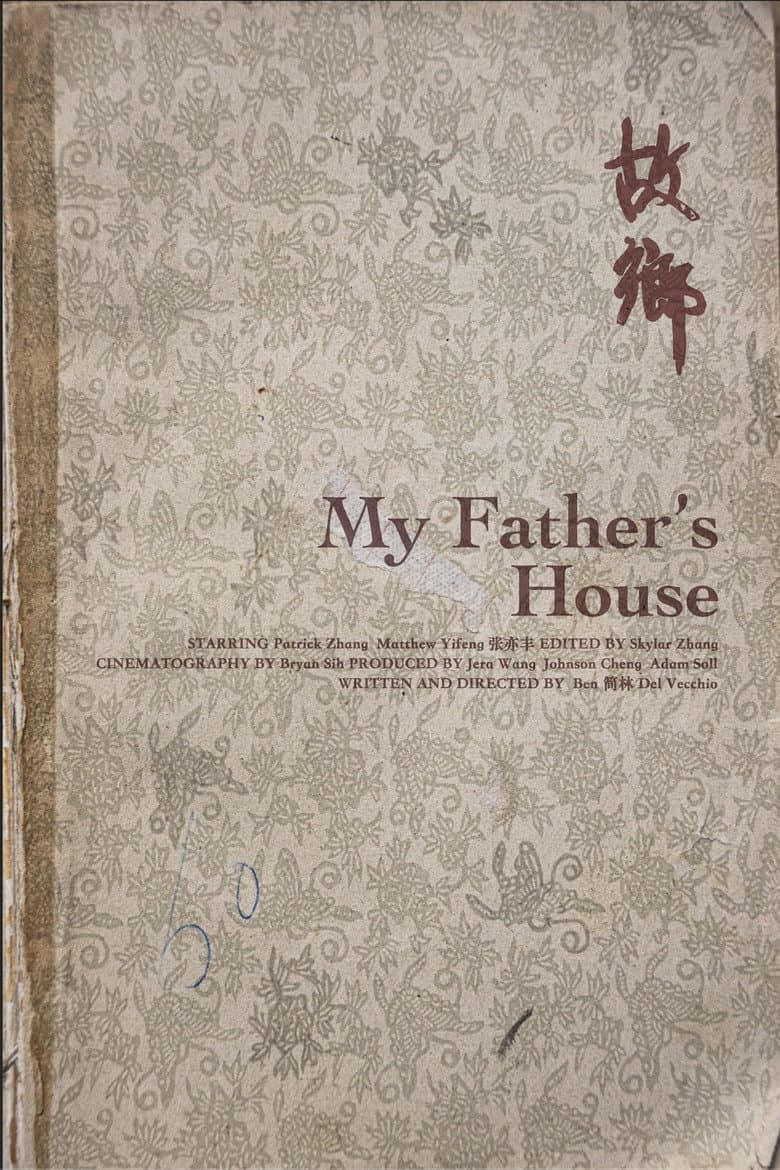
A short film made with an unusual creative process is beginning to draw attention in Hollywood circles. "Father's House," directed by Ben Del Vecchio, brings together former members of cults and established actors in what the filmmakers describe as an experiment in dramatizing the mechanics of control. The film runs 20 minutes and was shot in English.
The project centers on Jo, played by Patrick Zhang, who returns home long after the death of his estranged father. Matthew Yifeng appears as Leslie. Beyond that logline, details of the plot remain under wraps, and no release date has been announced. The film has not yet accumulated audience ratings on major tracking platforms, with TMDb currently listing it at 0 out of 10 based on no recorded votes.
What distinguishes "Father's House" is its production method. According to the creative team, people who have lived inside high-control groups were involved in shaping the material alongside professional cast members, with the aim of grounding the story in firsthand experience rather than outside observation. The collaboration was structured so that those contributors helped inform how coercive dynamics unfold between people, particularly within families.
Del Vecchio, who directs, has framed the short as a study of how influence operates in intimate settings. The film's title points toward the domestic sphere as a primary site of that influence, and the story of Jo's late return suggests an examination of how control can outlast its ostensible architects. The approach places the project somewhere between narrative fiction and documentary-informed drama, though the finished work is scripted.
The casting reflects the film's hybrid ambitions. Zhang, as Jo, carries the emotional weight of a son confronting a household he left behind. Yifeng's role as Leslie places a second figure at the center of whatever reckoning the story stages. Neither actor has publicly discussed the production, and the filmmakers have not released a trailer or stills.
The involvement of former cult members raises practical and ethical questions that the production appears to have taken seriously. People who leave high-control environments often face pressure, shame and fractured relationships, and their participation in a film about those subjects requires careful handling. The filmmakers have not detailed the safeguards used, but the premise suggests a deliberate effort to let lived experience guide the depiction rather than relying on sensationalized tropes.
At 20 minutes, "Father's House" is positioned as a calling card and a conversation starter rather than a commercial release. Short films of this length frequently travel through festivals and industry screenings before finding wider distribution, though no such plans have been confirmed for this project. The absence of a release date leaves its exhibition strategy unclear.
The film also arrives at a moment when stories about coercive groups and the psychology of influence have renewed cultural interest. Documentaries and scripted series on the subject have proliferated in recent years, but work made in direct partnership with survivors remains less common. "Father's House" tests whether that partnership can produce something cinematically durable rather than merely instructive.
For now, the project's public footprint is minimal. There is a title, a director, a two-person cast and a premise. There is no distributor announcement, no festival slot and no marketing material. That sparseness is typical for a short film in its early life, and it leaves the work itself as the only real measure of whether the experiment succeeds.
What is clear is the intent behind the collaboration: to treat the mechanisms of control not as abstract menace but as recognizable human behavior, visible in the routines of a household and the distance between a father and a son. Whether "Father's House" achieves that in 20 minutes will be settled when audiences finally see it. Until then, the film stands as an intriguing example of former insiders and professional actors building a story together, one conversation at a time.
Source: Hollywood Reporter