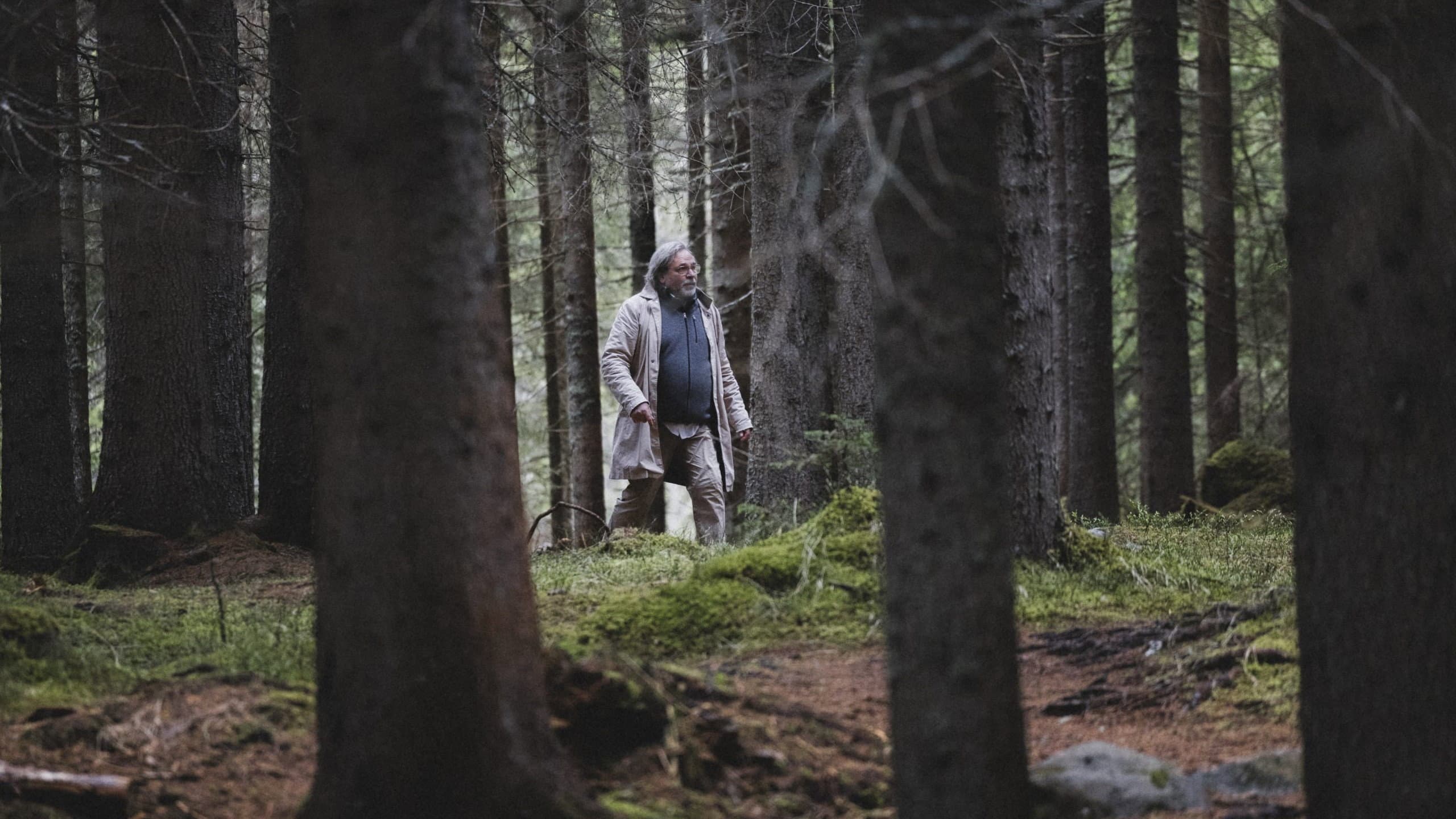
The director behind the provocative art-house project Holy Wood Dust is setting his sights on a new kind of cinematic provocation: the Christmas tree. In a recent series of interviews, filmmaker Elias Thorne has been making the case that the evergreen centerpiece of the holiday season is far more complex than most people realize, describing it as a sentient organism equipped with roughly twenty distinct senses.
Thorne, whose previous work earned a reputation for blending ecological themes with deeply personal, almost ritualistic storytelling, is now shaping what he calls a "meditative horror-adjacent" feature centered on the living nature of conifers. He argues that the traditional act of bringing a cut tree into the home for a few weeks of decoration is a form of unacknowledged violence, one that modern society has normalized to the point of invisibility. The director’s central thesis is not merely poetic metaphor but a stated biological fact, pointing to recent plant physiology studies that suggest trees possess a sophisticated sensory apparatus for light, gravity, moisture, chemical signals, and even touch.
According to Thorne, the tree’s perception goes far beyond the familiar tropes of a green thumb or the concept of a plant "leaning" toward sunlight. He describes a complex network of root and leaf systems that can detect subtle changes in air pressure, the presence of specific pathogens, and even the vibrations of nearby footsteps or machinery. He has been quoted as describing the tree as "a quiet intelligence, not a human one, but a life that is aware of its own existence in a way we have yet to fully decode." The director’s goal with the new project is to translate that alien awareness into a cinematic language that makes the audience feel watched by the very object sitting in their living room.
A Different Kind of Holiday Story
Rather than a conventional narrative with a clear protagonist and antagonist, Thorne’s envisioned film would operate more like an experience, using sound design and close, almost microscopic cinematography to get inside the wooden tissue of a felled fir. The director has spoken about wanting to use high-speed cameras to capture the movement of sap and the micro-fractures that occur when a tree is cut from its stump. He suggests the film will feature no dialogue for long stretches, relying instead on a drone-like score and the audio of wind, insects, and the slow, agonizing process of desiccation.
Sources close to the production indicate Thorne has been working with a botanist and a sound artist to explore how a tree might "respond" to the warmth of a room, the flicker of fairy lights, or the scent of cinnamon and pine. The director has reportedly considered filming actual trees in various stages of decay, juxtaposing their slow demise with the frantic, consumer-driven energy of the shopping season that surrounds them. He has stated that he wants audiences to leave the theater with a lingering guilt about their own material traditions, questioning whether the holiday itself can be separated from the disposable nature of its central symbol.
Thorne has also hinted at a structural approach that mirrors the seasonal calendar. The timeline of the picture would track a single tree from its life in a dense forest, through its harvest, its transport on a truck, its display in a lot, and finally its placement in a sterilized living room. Each stage would be shot from the tree’s perspective, turning a familiar journey into a slow-burn thriller about environmental displacement. He references a concept he calls "the horror of the decorated," where the seemingly benign act of placing an ornament becomes a kind of intrusion into a private world.
Moving Beyond the Metaphor
The director’s commentary comes at a time when popular culture is increasingly interested in the interior lives of non-human organisms, with recent documentaries and features exploring fungal networks and whale communication. Thorne sees his work as part of that broader conversation, but he is careful to distinguish his approach from a simple documentary. He claims his ultimate ambition is to make a film that feels less like a story about a tree and more like a story told by the tree itself, a fantasy built on real, verifiable scientific principles.
He has been candid about the challenges of such an abstract premise, noting that early investors were skeptical of a movie without a classic hero’s journey. Yet Thorne insists that the drama is inherent in the material, pointing to the quiet tragedy of a life that is cut short not for food or shelter, but for a few weeks of aromatherapy before being discarded on a curb. He has discussed the idea of the tree’s final "scream" as an inaudible, subwoofer-driven pulse that beats just below the threshold of human hearing, a sonic metaphor for the suffering that goes unnoticed.
For now, the project remains in a developmental phase, with Thorne spending time in Pacific Northwest forests to conduct location scouting and research. He has stated that the script is being written in tandem with field recordings, and that the final structure will depend on what the trees themselves "tell" him. While no studio or release date has been announced, the director’s passionate advocacy for a new way of seeing the holiday staple has already sparked debate among film circles and environmentalist communities online.
Thorne’s main hope is that his upcoming feature will not be watched passively. He wants it to operate as a kind of ethical test, asking viewers to look at the green bough in their own homes and feel a genuine pang of recognition. The movie’s title, which he has not yet finalized for public release, is expected to confuse audiences as much as it intrigues them, serving as a deliberate challenge to sit with discomfort rather than turning away. As he put it, "a tree is not a prop; it is a participant in our ceremony, and perhaps it is time we listened to what it has been saying all along."
Source: Hollywood Reporter