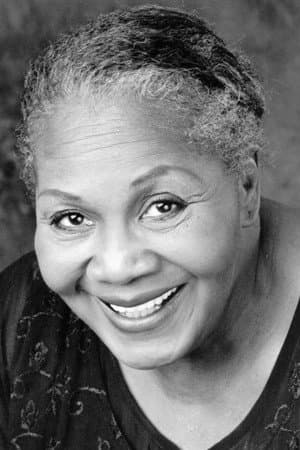
Irma P. Hall, the stage and screen actor whose late-career breakthrough in "Soul Food" and scene-stealing turn in "The Ladykillers" made her one of Hollywood's most recognizable character performers, has died at 91. News of her death circulated Wednesday, prompting tributes from actors, directors and theater artists who worked alongside her across a career that stretched from Chicago's regional stage to the Coen brothers' film set.
Hall was already a veteran of the theater world when she began appearing on screen with regularity in the 1970s, and she stayed busy for decades in roles that rarely carried a marquee but often carried the scene. Her breakthrough came in 1997 with "Soul Food," the family drama in which she played the matriarch Mother Joe, the gravitational center of a household whose Sunday dinners hold it together. The performance earned her widespread notice and an NAACP Image Award nomination, and it reframed how many in the industry saw her range.
A Chicago stage veteran who found a wider audience
Born in Beaumont, Texas, Hall trained as a schoolteacher before turning to acting, and she built her early reputation in Chicago, where she worked with pioneering theater companies and appeared in productions that took her from local stages to national tours. Her résumé eventually grew to include more than 60 films and dozens of television credits, a body of work that made her a familiar face even to viewers who could not name her. She often said she approached every part, however small, as a full character with a life beyond the frame.
That philosophy showed in the variety of her roles. She appeared in the 1996 crime drama "A Family Thing," in the 2002 comedy "Barbershop," and in television series ranging from "The Wire" to "ER" and "Grey's Anatomy," usually bringing a steady, lived-in authority to characters who anchored the people around them.
"The Ladykillers" and a late-career high point
Her most widely seen film role came in 2004, when Joel and Ethan Coen cast her as Marva Munson, the devout, churchgoing widow whose basement becomes the staging ground for a bumbling heist in "The Ladykillers." Hall held her own opposite Tom Hanks and a cast of comic schemers, and the performance drew some of the strongest reviews of her career, including a nomination for Best Actress from the NAACP Image Awards. She was also honored by the Black Film Critics Circle for her work in the film.
Hall's career was not limited to the screen. She remained active in Chicago theater throughout her life and was a fixture in the city's acting community, where younger performers recalled her as a generous mentor. She also appeared in the 2002 film "The Rookie" and continued working in television and independent film into her later years.
Tributes began arriving quickly as word of her death spread. Fellow actors described her as a performer who elevated every project she joined, and directors recalled her professionalism and the warmth she brought to a set. Details on survivors and memorial arrangements were not immediately available.
Hall is survived by a body of work that spans more than half a century of American acting, from regional theater stages to some of the most-watched films of her era. For audiences, she will be remembered less for any single role than for the steadiness she brought to all of them - a matriarch at the head of a table, a widow with a sharp tongue and a soft heart, and, in every part, a performer who understood that the smallest roles could carry the most weight.
Source: Hollywood Reporter