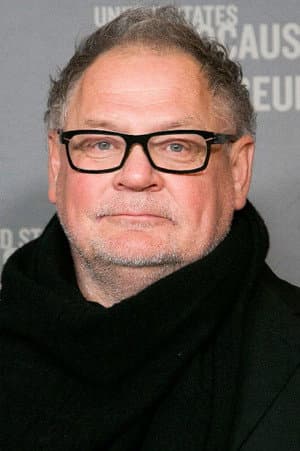
Janusz Kamiński, the Polish-born cinematographer whose name has become synonymous with the visual grammar of modern American cinema, will be honored with the Hollywood Reporter's Visionary in Cinematography Award. The recognition arrives as a capstone to a career that has spanned more than three decades and has quietly reshaped how audiences experience light, shadow and movement on screen.
The award places Kamiński in a lineage of craftspeople whom the industry has singled out for pushing the medium forward. It is a distinction that speaks less to a single film than to a body of work - one defined by restless experimentation and an insistence that the camera is never merely a recording device but an active storyteller.
A Partnership That Redefined the Blockbuster
For most moviegoers, Kamiński's name is inseparable from Steven Spielberg, a collaboration that began with "Schindler's List" and has since produced some of the most visually arresting passages in contemporary Hollywood. That partnership earned Kamiński the Academy Award for Best Cinematography for "Schindler's List" and a second Oscar for "Saving Private Ryan," whose desaturated, jittery combat sequences altered the visual vocabulary of the war film for a generation of filmmakers.
What distinguishes the collaboration is its range. Kamiński has moved from the stark black-and-white of "Schindler's List" to the lurid neon of "Minority Report," from the handheld immediacy of "Munich" to the painterly vistas of "War Horse." Each film carries his signature - a willingness to let the image carry emotional weight that dialogue alone could not.
Beyond Spielberg
Kamiński's résumé extends well past that single partnership. He has worked with directors including Cameron Crowe, Julian Schnabel and James L. Brooks, and his credits include "The Diving Bell and the Butterfly," for which he received an Academy Award nomination, and "Catch Me If You Can." His work has consistently demonstrated that a cinematographer's craft is not confined to a particular genre or scale; the same eye that captures intimate human drama can lend grandeur to a science-fiction spectacle.
That versatility is central to what the Visionary award recognizes. Kamiński has never treated his style as a fixed formula. Instead, he has approached each project as a fresh problem in light and composition, adapting his methods to the story at hand rather than imposing a trademark look.
A Career Rooted in Two Cinematic Traditions
Born in Jelenia Góra, Poland, Kamiński studied film in his home country before emigrating to the United States, where he continued his education at the American Film Institute. That background gave him a dual fluency: an immersion in European art-house sensibilities and a command of the technical machinery of the American studio system.
The combination proved unusually potent. Kamiński's European training instilled a respect for the image as a compositional object in its own right, while his Hollywood career taught him to deploy that sensibility at the service of large-scale narrative. The result is a visual style that feels both rigorous and accessible - artful without ever becoming self-indulgent.
Why the Honor Resonates Now
The timing of the award reflects a broader industry conversation about the role of the cinematographer in an era of digital production and virtual filmmaking. Kamiński has been an active participant in that transition, embracing new tools while remaining committed to the idea that technology should serve narrative rather than replace it.
His willingness to experiment with format and process - sometimes shooting on film, sometimes embracing digital capture - has made him a bellwether for how the craft is evolving. For younger cinematographers, his career offers a model of how to remain relevant across decades without abandoning a personal point of view.
The Visionary in Cinematography Award also underscores a point that is often understated in awards coverage: that the most influential visual artists in film are frequently the ones whose names appear last in the credits. Kamiński's work is felt in every frame of the movies he has shot, even when audiences do not consciously register his contribution. The honor is, in part, an acknowledgment that this kind of influence deserves to be named.
Details regarding the presentation ceremony, including timing and location, are expected to be announced by the Hollywood Reporter in the coming weeks. For Kamiński, the recognition adds another chapter to a career that has already left a deep imprint on the look of modern movies - and, with ongoing collaborations still to come, likely more to follow.
Source: Hollywood Reporter