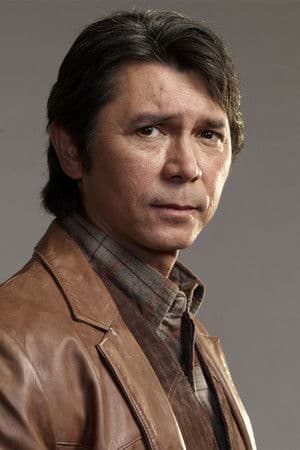
Lou Diamond Phillips will be honored with a lifetime achievement award from the Red Nation International Film Festival, acknowledging a career that has stretched across four decades and an unusually wide range of roles on screens large and small. The festival, which has long made Native and Indigenous storytelling central to its programming, announced the recognition for an actor whose own heritage includes Cherokee ancestry.
The award arrives at a moment when Phillips remains one of the more steadily employed performers of his generation, equally at home in drama, action and character work. He first drew national attention in the late 1980s and has rarely been off screens since, building a résumé that few actors of his era can match for sheer variety.
A Career Built on Range
Phillips broke through as Ritchie Valens in "La Bamba," a performance that introduced him to audiences and remains one of the defining roles of his career. He quickly followed with "Stand and Deliver," playing a young teacher working alongside a demanding mentor, a film still cited for its classroom scenes and its ensemble work. Those two roles alone would have secured a place in 1980s cinema, but they were only an opening act.
From there, Phillips moved between Westerns, war dramas, thrillers and historical epics, never settling comfortably in a single lane. He played a Navy officer in "Courage Under Fire," a role that earned him a Golden Globe nomination, and appeared in the Oscar-winning "Brokeback Mountain." Television became an equally important part of his career, most visibly in the long-running series "Longmire," where he played Henry Standing Bear across the show's full run. More recently he has been a regular presence in the "Prodigal Son" television drama as well as genre and thriller projects.
That willingness to shift registers has made him a frequent presence in projects centered on Native and Indigenous characters and themes, though his career has never been limited to any one category. He has also worked as a writer and director, and his stage work includes a turn on Broadway.
A Festival With a Point of View
Red Nation International Film Festival has grown into one of the more visible showcases for Native cinema, spotlighting filmmakers and performers whose work often reaches audiences outside the mainstream studio pipeline. Its honors carry a particular weight for performers who have balanced commercial studio work with stories rooted in Indigenous communities.
A lifetime achievement nod from such an organization carries a different meaning than a conventional industry prize. It places the honoree's body of work in conversation with the festival's broader mission, recognizing a career that has both reflected and at times helped shape how Native talent appears on screen.
Why This Recognition Matters
Awards season is crowded with tributes, and a lifetime honor from a festival focused on Native storytelling might not dominate the trade headlines. Its significance lies elsewhere. For Phillips, the award underscores a career that began in the pop-culture spotlight of the late 1980s and has continued with remarkable persistence, without ever neatly fitting into one box.
It also highlights the long, often underappreciated history of Native actors working across commercial entertainment, not only in projects explicitly about Native life but in Westerns, procedurals and franchise television. Phillips's filmography sits at that intersection, and a festival rooted in Indigenous cinema is an apt place to acknowledge it.
Festival organizers did not immediately detail the presentation's format or the timing within the festival, and further plans for the tribute were not announced. Fans of his television work and his early film roles alike are likely to see the award as overdue recognition for an actor who has remained visible across eras of the business.
For a performer whose career has never followed a predictable arc, the honor lands as a fitting capstone rather than a farewell. Phillips remains active on screen, and the festival's nod places his name alongside other recipients celebrated for sustained contributions to Native representation in film and television.
Source: Hollywood Reporter