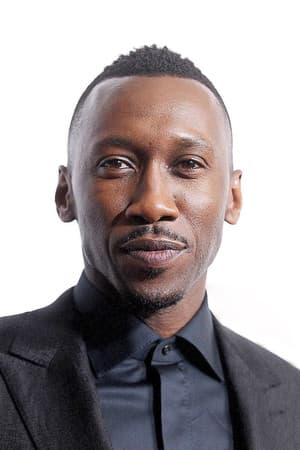
Mahershala Ali has revealed that his two Academy Awards are not displayed in a place of honor around his home, but instead sit inside a cabinet - a decision that reflects how he thinks about achievement versus satisfaction. In a candid reflection on his career, the actor explained that winning the industry's highest honor gave him "a sense of accomplishment, not fulfillment," a distinction he has clearly spent time considering.
The remark captures something unusual for a two-time Oscar winner. Ali joined an elite group when he took home the best supporting actor trophy for "Moonlight" in 2017, and he repeated the feat two years later for "Green Book." Since then, he has largely avoided the awards-circuit spotlight, choosing projects on his own terms rather than chasing momentum. Storing the statuettes in a cabinet, rather than on a mantel, fits that pattern - a quiet acknowledgment that the hardware marks a milestone but does not define the man holding it.
A Deliberate Separation Between Work and Worth
Ali's comment lands with particular force because it comes from someone whose trophy case tells a remarkably consistent story. His first win made him the first Muslim actor to take home an Oscar, and his second cemented a rare back-to-back run in the supporting category. Yet throughout that period, Ali has spoken about craft and process more often than prizes. The cabinet, in that sense, is less an act of modesty than a form of self-protection: a way to keep the awards from becoming the measure of everything that follows.
Fellow actors have long pointed out that the Oscar race can distort an artist's sense of purpose - campaigns consume months, and the outcome rarely settles the internal questions that led someone to act in the first place. Ali's framing echoes that skepticism without bitterness. "Accomplishment" is the word for a finished task; "fulfillment," he suggests, has to come from somewhere else.
A Career That Suggests He Means It
The 52-year-old has been selective in the years since his wins, and his choices support the idea that he is not chasing another statue. He has moved between film and television, picked up additional Emmy nominations, and taken on a producing role on "Swan Song," a project that gave him room beyond performance. He is set to appear in the next installment of the "Jurassic World" series, a mainstream swing, while continuing to develop material that appeals to him. None of this points to a performer resting on recognition.
That approach has made him a frequent subject of speculation among fans and industry watchers, who often assume an actor with two Oscars is permanently in campaign mode. Ali's comments suggest otherwise - that he treats awards as a professional byproduct rather than a goal, and that he is comfortable letting the conversation move on to the next role.
The Broader Conversation Around Awards
His remarks also arrive during a period of open debate about awards culture. Studios spend enormous sums on campaigns, and the season's rituals can leave even the most celebrated actors exhausted. Ali's willingness to separate acknowledgment from inner satisfaction speaks to that unease with unusual directness. He has never disparaged the Academy or the honor itself. He simply refuses to let it stand in for something deeper.
For a generation of performers who grew up watching Oscar-night heroes deliver tearful acceptance speeches, the notion that two statuettes might live in a cabinet is useful and slightly deflating - a reminder that an award is a door prize, not a destination. Ali's phrasing is precise: accomplishment implies a completed act, while fulfillment suggests ongoing contentment, something earned by living rather than by winning.
What Comes Next
Ali has given no indication that he plans to explain the cabinet further, and he has already shown he prefers his work to speak for him. His upcoming slate suggests a performer still looking for the right part - the one that might bring fulfillment rather than merely another line on a résumé. Whether that role arrives is impossible to predict, but he has made clear what he thinks the Oscars can and cannot do.
For now, the image of two golden statues tucked quietly out of sight says more about Mahershala Ali than any acceptance speech he could give. The cabinet is not a rejection of the honor. It is a statement about proportion - and about a man who knows how to keep an industry's loudest praise at a comfortable distance.
Source: Hollywood Reporter