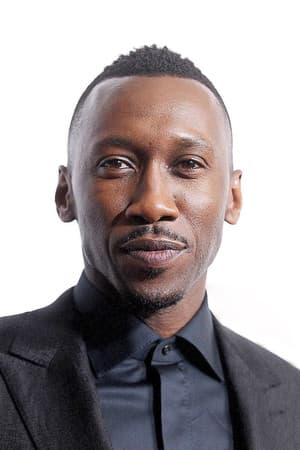
Mahershala Ali has won two Academy Awards, earned a reputation as one of the most disciplined actors of his generation, and still finds that the parts he wants are rarely written for him. In a candid new interview, the actor said that the "vast majority of projects" he encounters simply do not contain roles that fit him, a striking admission from a performer whose trophy cabinet suggests the opposite.
Ali, who took home supporting-actor Oscars for "Moonlight" and "Green Book," framed the problem as structural rather than personal. Awards, he suggested, open doors, but they do not rewrite scripts. The scarcity he described is about what gets written in the first place, not about whether casting directors will see him.
The remark lands at an awkward moment for an industry that has spent the past decade publicly committing to broader representation. Studios and streamers regularly publish diversity reports and tout inclusive slates, yet a two-time Oscar winner is saying that the material offered to him remains narrowly defined. That gap between corporate messaging and the reality described by a marquee actor is the real story here.
A Career Built on Defying Categories
Ali's rise has been anything but conventional. He broke through on television in "The 4400" and later drew acclaim as Remy Danton in "House of Cards," a role that demonstrated his capacity for moral ambiguity long before Hollywood handed him prestige-film fare. His performance as Juan in "Moonlight" won him his first Oscar, and his turn as Don Shirley in "Green Book" brought a second, making him one of the few actors to win back-to-back Academy Awards in the supporting category.
He has also been a fixture in franchise filmmaking, appearing as Cottonmouth in "Luke Cage" and voicing a character in "Spider-Man: Into the Spider-Verse." In 2019, he was announced as the lead of Marvel Studios' "Blade," a project that has since weathered a prolonged and much-publicized development process. That saga alone illustrates how even a star of Ali's stature can find his options constrained by forces beyond his control.
The Parts He Actually Wants
What Ali appears to be describing is not a shortage of offers but a shortage of the right ones. Leading roles for Black actors have clustered in recent years around a recognizable set of templates: historical biopics, civil-rights dramas, and noble-supporting figures in ensemble pieces. Ali has worked across those lanes and clearly wants out of them. He has spoken before about the value of playing characters whose interior lives are not defined solely by race, and about his interest in genre work, psychological complexity, and flawed protagonists.
His comments also hint at a subtler frustration familiar to actors of color: the way a single breakthrough can paradoxically narrow the range of what follows. Win a prize for playing a mentor figure in a coming-of-age drama, and the industry's imagination may fix you there. Ali's two wins, separated by just one year, arguably made him more bankable and more boxed in at the same time.
There is a business dimension as well. The middle-budget adult drama that once provided actors with rich character work has largely migrated to streaming, where algorithmic commissioning favors recognizable genres and established franchises. For an actor seeking original, director-driven material, the pool of viable projects has shrunk regardless of accolades.
What the Industry Might Hear
Ali has never been a prolific press presence or a headline-seeker, which gives his remarks added weight. When an actor of his standing says the pipeline is thin, it complicates the narrative that casting has been comprehensively reformed. The industry's response will be telling: whether his comments prompt a genuine reconsideration of what kinds of stories get greenlit, or merely a round of sympathetic nods.
For now, Ali's message is blunt. Two Oscars, he suggests, do not guarantee a script worth saying yes to, and the problem lies with the roles that are never written rather than the ones he is offered. It is a reminder that representation is not measured by trophy counts alone, but by the breadth of stories a performer is allowed to inhabit.
Source: Hollywood Reporter