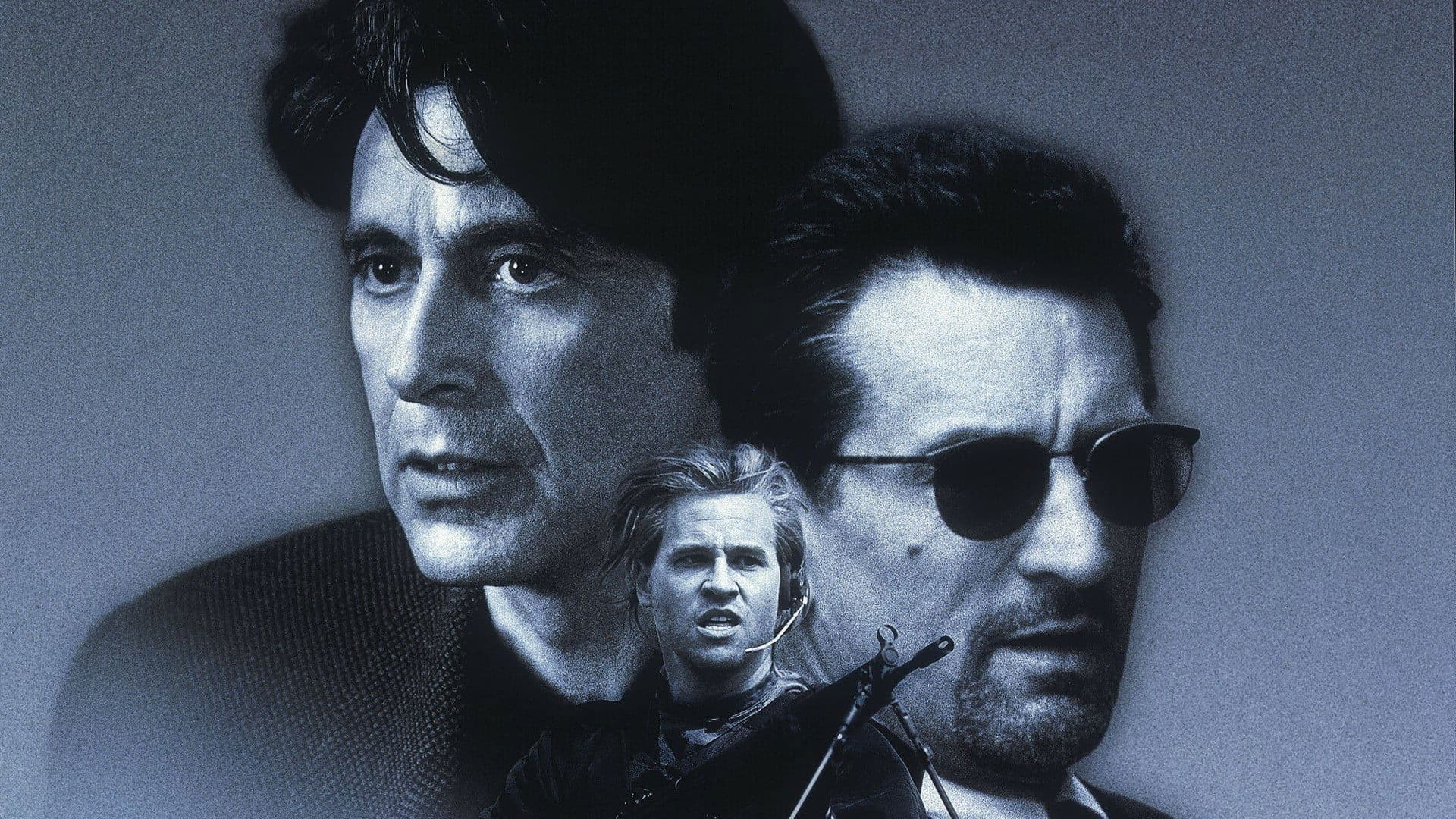
New Regency has filed suit against Michael Mann in an effort to hold on to the rights behind Heat, the 1995 crime epic the director made for the company and which remains one of the defining Hollywood thrillers of its decade. The legal action, confirmed Friday, puts a long-simmering question about who ultimately controls the film back in front of a judge and, by extension, in front of an industry that has spent years watching auteurs claw back ownership of their earlier work. Neither New Regency nor Mann's representatives offered substantive public comment on the filing, but the bare fact of the litigation is significant: a studio and a filmmaker who once collaborated closely are now on opposite sides of a rights dispute over a title that both have reason to value.
Heat stars Al Pacino as Lt. Vincent Hanna, a Los Angeles detective whose pursuit of a disciplined crew of professional thieves becomes a personal obsession, and Robert De Niro as Neil McCauley, the mastermind who leads that crew through a series of brazen heists across the city. The two men come to recognize and respect the skill and commitment in each other even as they understand their cat-and-mouse game may end in bloodshed. Released on December 15, 1995, the film runs 170 minutes and is classified as a crime drama with strong action elements, produced within the Hollywood studio system and shot in English. Its standing has only grown in the three decades since; it holds a 7.948 rating on TMDb and an 8.3 on IMDb, numbers that place it among the most durable mainstream crime pictures of its era.
A Rights Fight With Real Stakes
The commercial logic behind the suit is not hard to trace. Heat is not merely a well-regarded catalog title; it is a film that has been reissued, re-examined, and reintroduced to new audiences repeatedly, and any party holding a meaningful stake in it controls a piece of intellectual property with obvious long-term value. For New Regency, the dispute is about protecting an asset it commissioned and financed. For Mann, the question is presumably one of authorship and control over a work he wrote and directed, and whose reputation is inseparable from his own. Those two positions are not automatically irreconcilable, which is precisely why rights conflicts of this kind so often end in negotiation rather than verdict - though the filing of a lawsuit suggests that private talks have not produced a resolution either side finds acceptable.
The timing also lands in a period of unusual attention around the film. Mann has spoken over the years about his continuing interest in the Heat universe, and the ensemble that surrounds Pacino and De Niro remains a deep bench: Val Kilmer as Chris Shiherlis, Jon Voight as Nate, Tom Sizemore as Michael Cheritto, Diane Venora as Justine, Amy Brenneman as Eady, and Ashley Judd as Charlene Shiherlis. Any project built on that foundation requires clear chain of title, and a courtroom fight over underlying rights can complicate or delay development, licensing, and re-release plans alike. That practical dimension may matter more to the parties than the abstract principle of who deserves to own a classic.
What the Case Could Mean
Beyond this single title, the lawsuit fits a broader pattern in which filmmakers and studios litigate over older films whose value has compounded with time. Courts have grown more willing to examine the terms under which rights were granted decades ago, and the outcomes can reshape how studios structure agreements with major directors going forward. For New Regency, a favorable ruling would affirm its position as the rights holder of record. For Mann, success would strengthen his claim to a film that bears his signature as both writer and director. For everyone else in Hollywood, the case is a reminder that the contracts behind beloved movies are rarely as settled as the movies themselves.
No trial date has been set, and it is entirely possible the matter resolves quietly before it ever reaches a courtroom. For now, the only certainty is that Heat - a film about two professionals who understand each other better than anyone else does - has acquired a new chapter involving two parties who evidently no longer see the situation the same way. Hollywood Buzz News will continue to follow the filing as further details become available.
Source: Hollywood Reporter


