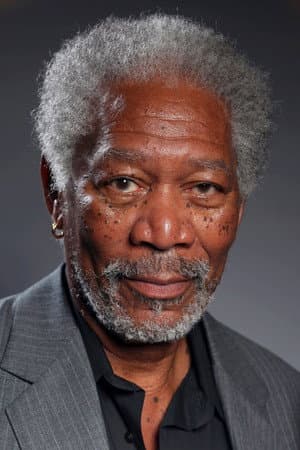
Morgan Freeman: Script Glitches If Pay Is Enough
Advertisement
In this film, Morgan Freeman says he'll overlook script flaws for enough money. A candid look at Hollywood's pay-for-perfection trade-off.
Morgan Freeman, the two-time Oscar-winning actor behind such iconic roles as Se7en's Detective Somerset, has offered a refreshingly candid take on the business of making movies: sometimes, the paycheck does the heavy lifting. Speaking about his approach to evaluating scripts, the 89-year-old legend admitted that a healthy salary can smooth over a multitude of narrative sins.
"Look, if they pay you enough, you will overlook some of the glitches in a script," Freeman said, delivering the kind of plain-spoken wisdom that has become his trademark. The comment, which surfaced in a recent interview, cuts through the typical Hollywood platitudes about "falling in love with the story" to reveal a pragmatic reality shared by many working actors. Freeman, whose career spans over five decades and includes more than 100 film credits, didn't elaborate on which specific projects triggered this philosophy, but the sentiment is unmistakable for anyone who has followed his filmography.
Freeman's body of work is a study in deliberate contrasts. He has anchored cerebral thrillers like Se7en, where his weary, principled detective provided the moral compass amidst darkness, and he has also lent his gravity to films that were, by critical consensus, far less distinguished. The actor's straightforward logic suggests a professional division: the pursuit of artistic excellence for some roles, and a more transactional calculus for others. It's a distinction that insiders say is more common than audiences might assume, even if most stars are reluctant to admit it aloud.
The comment arrives at a time when the industry is deeply focused on the economics of filmmaking, with streaming giants and studios alike scrutinizing budgets and franchise potential. Freeman's statement effectively demystifies a process often romanticized by publicists. While a director might spend months perfecting a story's third act, an executive's spreadsheet can rewrite the conversation in seconds. Freeman’s blunt acknowledgment serves as a reminder that the final product on screen is the result of a negotiation, not just a creative vision.
For fans, the revelation is hardly scandalous. After all, this is the same actor who once narrated the story of a penguin in March of the Penguins with such gravitas that the film became a global phenomenon, or who played the president of the United States in Deep Impact while a comet hurtled toward Earth. In each case, the premise might have had its logical holes, but Freeman's presence filled them with a quiet authority. He has a unique ability to take dialogue that could be either profound or preposterous and deliver it with a certainty that forces the audience to believe it.
The actor's pragmatism also extends to his working methods. Known for his exacting standards on set - he famously requested a specific chair, a request that became a viral meme - Freeman understands the value of comfort and compensation. He has repeatedly stated that acting is a craft, not a mystery, and that showing up prepared is half the battle. The other half, apparently, is being fairly compensated for the effort.
In recent years, Freeman has remained a constant presence, lending his voice to documentaries and appearing in high-profile projects like The Hitman's Wife's Bodyguard and the 2022 sequel to Coming 2 America. While some of these films received mixed reviews, Freeman's involvement was never the point of contention. His willingness to take on roles that might not win awards but do well at the box office reflects a career management strategy that prioritizes longevity and variety over pure prestige.
Industry analysts note that Freeman's stance is less a critique of modern cinema and more a realistic survival tactic in a fickle business. With production costs soaring and streaming algorithms constantly shifting, studios often rely on recognizable names to green-light projects. For an actor of Freeman's stature, that leverage translates directly into negotiating power. When the offer is substantial, the "glitches" in a script - a convoluted plot twist, a wooden supporting character, or a questionable ending - become easier to ignore.
Freeman's career is also a testament to his range. He has moved from stage to screen, from dramas to comedies, from action to animation, always maintaining a distinct, resonant voice that is immediately identifiable. That versatility, combined with his unshakeable persona, has made him one of the most bankable actors in film history. It is precisely because of that bankability that he can afford to be so candid about his decision-making process.
The takeaway from Freeman's comment is not that he doesn't care about quality - his performances in Million Dollar Baby, Driving Miss Daisy, and Unforgiven prove otherwise. Rather, it's that he understands the difference between a passion project and a professional obligation. And in the current climate, where films are increasingly judged by first-weekend numbers and streaming metrics, that distinction is more relevant than ever.
As audiences wait to see what Freeman takes on next, his latest remark offers a playful backstage glimpse into the mind of a man who has seen it all. He has starred in classics and in outright misfires, and he has done so with the same even-keeled demeanor. In an era of actors chasing awards and critical acclaim, Freeman's simple admission is a welcome breath of honesty. It suggests that sometimes, the best reason to take a part is a very straightforward one: the check clears, and the work day has its own rewards.
For now, fans can take solace in knowing that even if the next Freeman vehicle isn't a masterpiece, the man himself will likely be perfectly content. As he put it, the glitches are just part of the landscape. The key is knowing which ones to overlook - and at what price.
Source: Hollywood Reporter
Advertisement
Advertisement