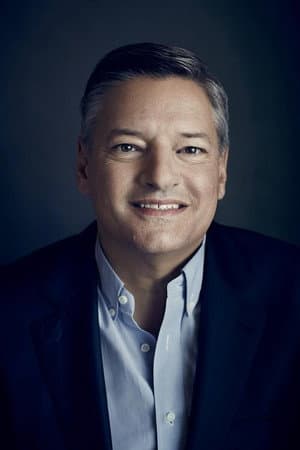
Ted Sarandos, the co-chief executive of Netflix, has been elected to serve as chair of the American Film Institute's Board of Directors, giving the storied film preservation and education organization a sitting streaming executive at the head of its governing body. The move, first reported by a trade outlet, places one of Hollywood's most powerful and most disruptive corporate figures in a stewardship role at an institution long associated with the traditional film establishment - a pairing that says as much about AFI's evolving priorities as it does about Sarandos's own ambitions.
Sarandos steps into a position that has historically been occupied by figures drawn from the legacy studio system and the worlds of film production, exhibition, and philanthropy. That a Netflix executive now holds the chairmanship is a notable shift for an organization founded in the late 1960s to preserve the nation's film heritage and to train the next generation of filmmakers. The appointment reflects how thoroughly streaming has been absorbed into the industry's institutional fabric, and how the line between the disruptors and the establishment has blurred.
A Bridge Between Old Hollywood and the Streaming Era
AFI's board has traditionally functioned as a fundraising and strategic body, helping to steer the institute's activities across its film preservation work, its annual AFI Life Achievement Award, and its conservatory for young filmmakers. Sarandos's arrival in the chair role is likely to be read in Hollywood as a signal that the organization intends to deepen its ties to the streaming sector - both as a source of financial support and as a partner in the broader project of sustaining film culture.
For Netflix, the position offers a measure of institutional legitimacy that money alone cannot buy. The company has spent years fighting for recognition from the creative community, courting awards voters, and positioning itself as a home for prestige filmmaking. Having its co-CEO lead the board of one of the industry's most respected institutions is a symbolic win that dovetails with that longer campaign.
For AFI, meanwhile, the appointment can be framed as a pragmatic bet. Streaming platforms have become among the most significant patrons of film production and film culture, and an organization devoted to preserving the art form needs friends in the places where audiences and resources increasingly reside. Sarandos's profile - a long-tenured executive with deep relationships across talent, studios, and the technology sector - makes him a potentially effective advocate and fundraiser.
The Optics and the Open Questions
The election is not without complications. AFI's mission includes celebrating and preserving a broad spectrum of American filmmaking, while Netflix's business imperatives shape which projects get made and promoted. Critics of consolidation in the entertainment industry may see the arrangement as another sign of streaming's growing influence over institutions that once served as independent arbiters of cinematic value. Supporters will counter that AFI has always relied on close relationships with industry leaders and that Sarandos's involvement is an extension of that tradition rather than a departure from it.
There are practical questions as well. The chair's role at AFI involves presiding over board meetings, helping set institutional direction, and acting as a public face for the organization - duties that will compete with Sarandos's day-to-day responsibilities running one of the world's largest entertainment companies. How actively he engages with AFI's programs, and whether his tenure produces concrete new initiatives, will be watched closely.
What It Means for the Industry
The appointment lands at a moment of transition across Hollywood, with studios restructuring, theatrical exhibition still finding its footing, and streaming services recalibrating their spending on original film. In that climate, AFI's choice of a streaming executive as its board chair reads as an acknowledgment of where influence now sits. It also underscores the degree to which the industry's institutional architecture - its boards, guilds, festivals, and philanthropies - has been reshaped by the rise of the platforms.
For Sarandos personally, the role adds a new dimension to a career defined by the transformation of how movies reach audiences. He has been among the most visible defenders of Netflix's model, arguing that the company's investments in filmmaking have expanded opportunities for creators and audiences alike. Leading AFI's board offers him a chance to shape the conversation about film culture from within an institution that predates Netflix by decades.
Whether the arrangement proves mutually beneficial will depend on what Sarandos and AFI actually accomplish together. The headlines will follow the novelty of a streaming chief taking the chair, but the lasting judgment will rest on the institute's programming, its fundraising, and its ability to serve filmmakers and audiences in a market that looks nothing like the one AFI was built to navigate. For now, the election stands as a clear statement: in today's Hollywood, the institutions of film culture and the companies that distribute film are increasingly led by the same people.
Source: Hollywood Reporter