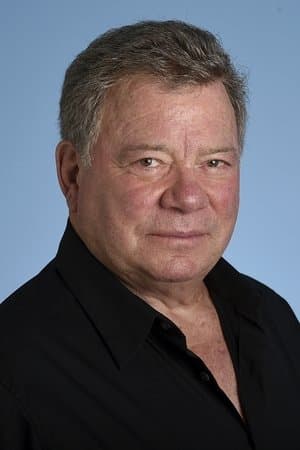
Friends and colleagues of Patrick Stewart are paying tribute to the actor after his death, remembering a performer whose classical training and quiet authority made him one of the most admired figures of his generation. William Shatner, Seth MacFarlane, Hugh Jackman and Marvel Studios chief Kevin Feige were among those who shared their recollections, with several describing Stewart as “a singular talent.” The phrase ran through the reactions like a refrain, an acknowledgment that the man who became famous to millions as Captain Jean-Luc Picard and Professor Charles Xavier occupied a category almost entirely his own.
Stewart’s career began far from the soundstages of Hollywood. A native of Yorkshire, England, he spent years in regional theater and with the Royal Shakespeare Company, building a reputation as a meticulous interpreter of Shakespeare before television audiences knew his name. That foundation never left him. Even in the middle of a science-fiction franchise built on starships and alien diplomacy, he carried the bearing of a stage actor who understood that stillness could be as commanding as spectacle. It was that combination, admirers said, that allowed him to move so easily between the Bard and the bridge of the Enterprise.
A Captain Remembers Another
Shatner, who commanded the Enterprise before Stewart took over in “Star Trek: The Next Generation,” offered a reflection rooted in their shared history. The two men were often compared, and the comparison was rarely flattering to either in the fan press, but Shatner’s remembrance carried the tone of one captain saluting another. He noted that Stewart brought a different kind of leadership to the role, one built on reason and patience rather than bravado, and that the character’s dignity came directly from the man playing him. Shatner also spoke of the professional respect that grew between them over decades of appearances at conventions and anniversary celebrations, where the two actors found themselves bound together by a legacy neither had anticipated.
From Quahog to the Stage
MacFarlane’s connection to Stewart came through comedy as much as drama. As the creator of “Family Guy,” MacFarlane repeatedly cast Stewart in animated roles, drawing on a willingness to send up his own image that surprised people who knew him only as the stern captain. MacFarlane recalled Stewart as game for nearly anything, able to deliver a ridiculous line with the same gravity he brought to a soliloquy. That ease, MacFarlane suggested, was itself a mark of mastery. A lesser actor might have guarded his reputation; Stewart seemed to enjoy dismantling the pedestal while standing on it.
A Younger Generation of Co-Stars
Jackman, who worked alongside Stewart in the “X-Men” films, remembered him as a mentor and a model of professionalism on set. The two shared a franchise and a great deal of screen time, and Jackman spoke of watching Stewart prepare, of the care he took with language and the courtesy he showed to crew members whose names appeared nowhere in the credits. Jackman described him as someone who made everyone around him raise their game, and said the younger cast looked to him not only for guidance but for reassurance that the work could be done with grace.
Feige, who oversees the Marvel film universe in which Stewart’s Professor Xavier became a beloved figure, weighed in on what the role meant to the broader genre. Stewart took a character from the pages of a comic book and lent him a moral weight that helped persuade audiences that these stories could carry serious themes. Feige’s tribute emphasized that contribution, framing Stewart as a bridge between the theatrical tradition and the blockbuster era, someone who never condescended to the material and never treated it as lesser than the classics he had cut his teeth on.
A Career That Crossed Divides
What emerges from the tributes is a portrait of an actor who refused to be confined by any single audience. Stewart could hold a theater audience in silence with a few lines of verse, then turn around and trade jokes with a cartoon baby on a prime-time comedy, then anchor a superhero franchise watched by millions of teenagers. The range was not a stunt. It reflected a conviction that the work mattered regardless of the venue, and that a performer owed the same discipline to a Saturday-morning cartoon as to a Royal Shakespeare Company production.
Colleagues also noted the personal qualities that accompanied the professional ones: patience, wit, a sense of humor about his own seriousness, and a generosity toward younger performers that several described as formative. Shatner’s remarks touched on this, as did Jackman’s, and MacFarlane’s fondness came through clearly in the way he described Stewart’s willingness to play along with a joke at his own expense.
The tributes arrived from several corners of the entertainment world, which is itself a testament to the breadth of Stewart’s reach. A science-fiction icon, a superhero mentor, a Shakespearean trained in the classical tradition, a voice actor admired for his comic timing - the same man occupied all of those roles, and his peers remembered him for moving among them without apparent strain. Those who knew him best returned again and again to the same idea, that the industry may not see another quite like him, and that “a singular talent” was not merely a polite phrase but a plain description of the man.
Source: Hollywood Reporter