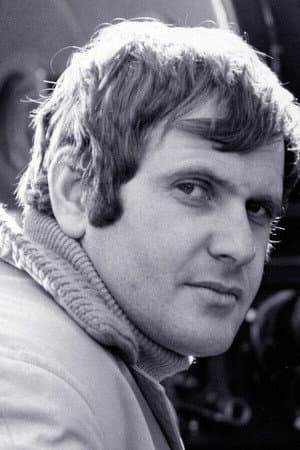
Peter Medak, the Hungarian-born filmmaker whose eclectic career ranged from the biting British satire "The Ruling Class" to the haunted-house chiller "The Changeling," has died at 88. No cause of death was immediately available. Medak's passing removes from the industry one of its most restlessly versatile directors - a craftsman equally at home with black comedy, supernatural horror and period drama, and one whose best work left a permanent mark on the genres he touched.
Medak was born in Budapest and fled Hungary as a young man following the 1956 uprising, settling in Britain, where he built his early career in television before moving into features. That immigrant's outsider perspective would inform much of his work, which often trained an amused, skeptical eye on the British class system and the rituals of polite society.
A Satire That Won a Historic Oscar
Medak's international breakthrough came with 1972's "The Ruling Class," an adaptation of Peter Barnes's stage play that starred Peter O'Toole as Jack Gurney, a paranoid schizophrenic aristocrat who believes he is God and stands to inherit a peerage. The film was a ferocious, surreal send-up of the English establishment, blending music-hall absurdity with genuine horror at the machinery of inherited power.
O'Toole received an Academy Award nomination for his performance. The film itself earned a place in Oscar history when, in the category of Best Music, Original Song Score and Adaptation, the Academy declined to name a winner and instead announced that the nominees had been voted runners-up - a decision that made Medak's film, in effect, a co-recipient of an honor the Academy chose not to award formally.
The film's reputation has only grown over the decades, and it remains a calling card for Medak's willingness to take tonal risks that few studio-era directors would have attempted.
A Haunted-House Classic
Eight years later, Medak changed register entirely with "The Changeling," a 1980 ghost story starring George C. Scott as a grieving composer who moves into a Victorian mansion in Seattle and finds himself entangled with a malevolent presence tied to a long-buried family secret. The film is now widely regarded as one of the most effective haunted-house movies ever made - a restrained, atmospheric piece that favors dread over gore.
"I want the audience to be afraid before anything happens," Medak said in a later interview, describing his approach to building tension. "The house itself must feel alive."
Critics have consistently singled out the film's sound design and its use of a solitary wheelchair as among the most unsettling images in the genre. "The Changeling" has influenced generations of horror filmmakers and is frequently cited alongside "The Haunting" and "The Innocents" as a benchmark for psychological horror.
A Prolific and Versatile Career
Medak's filmography defied easy categorization. He directed the 1990 crime drama "The Krays," about the notorious London gangster twins, and the 1991 romantic drama "Let Him Have It." He moved fluidly between film and television, becoming a prolific and sought-after director of episodic drama in his later decades. His television credits included work on "The Wire," "House," "Breaking Bad" and "Hannibal" - a remarkably varied run that introduced his visual sensibility to audiences far younger than those who first encountered him in cinemas.
Colleagues remembered him as a director who brought a European cinephile's eye and a dry, self-deprecating wit to every set. "Peter never treated a television episode as a step down," said one longtime collaborator. "He treated every frame as if it mattered."
That seriousness of purpose, combined with a refusal to be pigeonholed, defined a career that spanned more than half a century.
A Legacy of Risk-Taking
Medak is survived by his family and a body of work that resists summation. He never became a household name in the way some of his contemporaries did, but the films he made in the 1970s and 1980s continue to be discovered by new audiences. "The Ruling Class" remains a staple of repertory cinemas and film schools; "The Changeling" endures as a touchstone for horror directors seeking to frighten without spectacle.
His career stands as a reminder that a director's influence is not measured solely by box office or awards. Medak took chances on difficult material, trusted audiences to follow him into strange territory, and left behind at least two films that will outlast most of what was released alongside them.
Funeral arrangements were not immediately announced.
Source: Hollywood Reporter