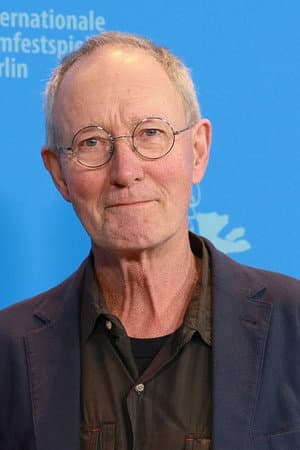
Veteran Australian filmmaker Rolf de Heer will serve as jury president at the Tokyo International Film Festival, the festival has announced, placing one of world cinema's most quietly persistent voices at the head of its main competition panel.
The appointment hands de Heer the task of guiding the jury that will decide the festival's top prize, a role that carries particular weight at a gathering long regarded as the most prominent film event in Japan and a key showcase for Asian cinema on the global circuit. De Heer steps into the position with a reputation built over four decades of films that have moved between drama, documentary-inflected storytelling and formal experimentation, rarely repeating himself and rarely courting the mainstream.
A Career Built Between Cultures and Genres
De Heer first drew wide international attention with "Bad Boy Bubby," a 1993 film whose confrontational intensity divided critics but established him as a director willing to push into uncomfortable territory. That willingness became a defining feature of his career. Rather than consolidate around one style or audience, he alternated between intimate character studies, historical dramas and films that blur the line between fiction and documentation.
His international standing was cemented by "Ten Canoes," released in 2006, a film set in remote Arnhem Land and made in close collaboration with the Ramingining community. Told partly in Aboriginal languages and partly in English, it drew acclaim for its storytelling and its model of shared authorship, and it won the Un Certain Regard special jury prize at Cannes. It remains the film most often cited when programmers describe de Heer's approach to collaboration and cultural specificity.
More recently he has continued to work at an unhurried pace, releasing films that tend to arrive at festivals without heavy marketing machinery behind them and rely instead on critical word of mouth. His filmography, while not vast by commercial standards, has been a regular presence at Cannes, Venice and other major festivals, giving him a familiarity with the international jury circuit that likely informed Tokyo's decision.
A Jury Role in a Changing Festival Landscape
The Tokyo festival has long balanced two functions: introducing Japanese audiences to international arthouse cinema and providing a platform for Japanese and wider Asian filmmakers seeking distribution abroad. In recent years, as streaming platforms have reshaped acquisition strategies and regional festivals have proliferated, the competitive value of a Tokyo prize has shifted. A jury president with de Heer's profile signals an emphasis on auteur-driven cinema rather than star-driven spectacle.
De Heer's selection also reflects a broader pattern at major Asian festivals, which have increasingly turned to Australian and New Zealand filmmakers as jurors and honorees. Geographic proximity, a shared time zone with parts of the region and a growing network of co-production relationships have made these filmmakers natural participants. Australia's screen sector, meanwhile, has been actively pursuing ties across Asia, and festival appearances by its established directors are often read in that light.
Practically, the jury president sets the tone of deliberations and frequently becomes the public face of the competition, fielding questions at press events and delivering remarks at the closing ceremony. For a director known for avoiding the spotlight, the role represents a notably visible turn. De Heer has generally given few interviews and has let the work carry the conversation, which makes his willingness to lead a high-profile jury a meaningful endorsement of the festival itself.
Programmers who have followed his career note that his films tend to reward patient viewing, and that his own taste as a viewer skews toward work that takes formal risks. If that sensibility shapes the jury's decisions, the competition lineup could be judged by how boldly its entries test their own premises rather than how smoothly they satisfy expectations.
Further details about the jury's composition, the competition slate and scheduling will emerge as the festival approaches. For now, the headline is a filmmaker whose career has been defined by cross-cultural collaboration taking on a role that requires him to weigh the work of others rather than produce his own - a different kind of authorship, and one that will play out in public.
Source: Hollywood Reporter