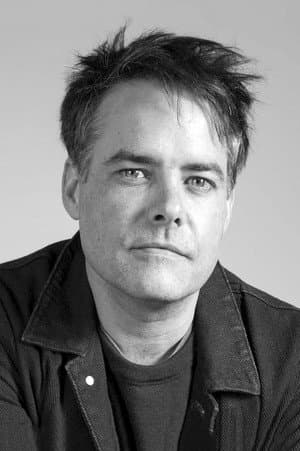
The Chilean filmmaker Sebastián Lelio, whose intimate and formally restless films carried him from the art-house circuit to the Academy Awards, has died at 52. News of his death was confirmed Friday, though no further details were immediately available. Over a career spanning more than two decades, Lelio built a body of work defined by a rare combination of emotional warmth and structural daring, moving fluidly between Spanish-language productions rooted in his native Chile and English-language dramas starring some of the most sought-after actors of his generation.
Lelio first drew widespread international attention with "Gloria" in 2013, a tender, clear-eyed portrait of a woman in her late fifties navigating solitude, romance and the indignities of middle age. Anchored by a magnetic performance from Paulina García, the film became a surprise crossover success and announced a filmmaker with an unusual feel for the inner lives of women - a sensibility that would come to define his career.
A Landmark Year and an Oscar
The director's breakthrough moment arrived four years later with "A Fantastic Woman," the story of a transgender waitress and singer named Marina who faces suspicion and cruelty from her late partner's family. Starring Daniela Vega, the film premiered to acclaim at the Berlin International Film Festival, where it took the top prize, and went on to win the Academy Award for best foreign language film. It was the first Chilean film ever to win an Oscar, a milestone that turned Lelio into a national cultural figure and cemented his reputation as one of Latin America's most consequential directors. Acceptance of the award also became a platform for trans visibility, a cause the filmmaker championed consistently afterward.
Crossing Into English-Language Cinema
Rather than settling into a single idiom, Lelio used his newfound profile to pursue a strikingly varied slate. In 2018 he released "Disobedience," an adaptation of Naomi Alderman's novel about forbidden desire inside an Orthodox Jewish community in London, starring Rachel Weisz and Rachel McAdams. The same year brought "Gloria Bell," an English-language reimagining of his own earlier film with Julianne Moore in the lead - an unusual experiment in self-remake that Lelio described as an opportunity to revisit a character from a different angle.
His 2022 release, "The Wonder," set in the Irish midlands, cast Florence Pugh as a nurse sent to observe a young girl whose apparent survival without food becomes a local legend. The film's moody, austere visual language drew strong notices and further demonstrated the director's willingness to work in registers far from the contemporary urban settings of his Chilean films. In 2023 he also directed "The Room Next Door" - an earlier collaboration with Julianne Moore and Tilda Swinton - which marked his first Spanish-language filmmaking since "A Fantastic Woman" and his first English-language production shot in Spain.
A Signature Concern With Interiority
Across these disparate settings, Lelio's films shared a preoccupation with characters at odds with the institutions around them - religious communities, courthouses, families, the medical establishment - and with the private rituals people invent to survive such pressure. He favored long takes, natural light and actors given room to breathe, and he returned repeatedly to questions of female desire, identity and autonomy. Colleagues and collaborators consistently pointed to his warmth on set and his willingness to cede control to performers.
Lelio also worked extensively in television, directing episodes of the acclaimed adaptation of Elena Ferrante's Neapolitan novels, "My Brilliant Friend," and he co-wrote several of his features with regular collaborator Gonzalo Maza. His films were frequently selected for the competition lineups at Cannes, Berlin and Venice, and he remained active as a producer for younger Chilean filmmakers through his production company.
Tributes and a Documented Legacy
Tributes began arriving quickly from across the film world, though a complete accounting was not yet available Friday evening. The loss is likely to be felt most acutely in Chile, where Lelio's Oscar triumph was widely received as a national achievement and where his early films helped sustain a wave of internationally celebrated cinema from the country. He is survived by family and by a body of work that spans two languages and more than a dozen features and shorts. For a director who spent his career looking closely at people on the margins of their own lives, that portfolio now stands as the fullest record of what he saw.
Source: Hollywood Reporter