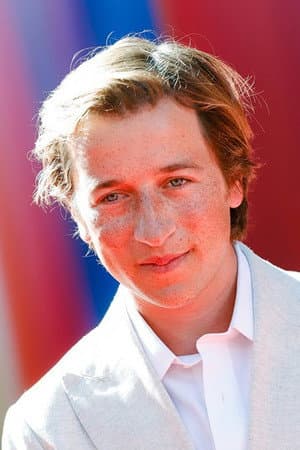
Skyler Gisondo says he is still processing the news that James Gunn and Peter Safran have stepped down from their leadership posts at DC Studios, and the actor isn't pretending otherwise. Speaking about the shake-up, Gisondo admitted that he remains largely in the dark about what the departures will mean for him personally or for the franchise at large. "There's a lot I still don't know," he said, a candid acknowledgment from one of the younger performers in the DC stable at a moment when the studio's direction has been thrown into question.
Gisondo's reaction carries particular weight because his own DC role was set in motion under the very regime that is now departing. The actor has been part of Gunn and Safran's broad reshaping of the comic-book label, a restructuring that was designed to unify film, television and animation under a single creative roadmap. With the two executives now heading for the exit, the performers who signed on to that plan are left to wonder how much of it survives. For Gisondo, that uncertainty is not abstract; it touches directly on his place in the studio's future.
A Reboot Built on a Single Vision
When Gunn and Safran took the reins at DC, they arrived with an unusually clear mandate: bring coherence to a slate that had previously sprawled in several directions at once. Their approach favored long-range planning over one-off bets, with interconnected storylines and a smaller, more deliberate volume of releases. That strategy gave actors a sense of stability - a sense that signing on meant joining something with a defined arc rather than a patchwork of disconnected projects.
Gisondo's comment suggests that confidence has been dented, at least from the perspective of talent on the ground. He did not criticize the outgoing leadership or speculate about who might follow them. Instead, he emphasized the limits of what he had been told, which is itself telling. In an industry where information travels fast but decisions travel faster, rank-and-file cast members are often the last to learn how a corporate change will land on their own careers.
What the Shake-Up Means for the Slate
Neither Gunn nor Safran has publicly detailed the reasoning behind their exits, and the studio has not issued a full account of how the transition will be managed. What is clear is that the pair's departure arrives at a delicate point, with a number of announced projects at various stages of development. Some are deep into production; others exist largely as plans on paper. The question now hanging over all of them is whether the incoming leadership will honor the existing blueprint or chart a new one.
That question matters most for films that have already been cast but not yet shot. Actors in that position have committed time and scheduling to projects whose creative anchors may soon be gone. Gisondo's honesty about his own uncertainty reflects a broader mood among performers who have learned, through repeated industry upheavals, that a green light is not a guarantee.
A Young Career in a Volatile Moment
For Gisondo, the timing is especially charged. He has spent years building a reputation as a versatile and likable screen presence, moving between comedy and drama with ease. A major franchise role represented a step up in scale, the kind of opportunity that can define a young actor's trajectory. Having that opportunity arrive under one creative team and then watch that team walk out the door is a scenario many performers dread.
Yet his remarks were notably free of frustration. He did not hint at doubts about staying with the franchise, nor did he suggest that he had been blindsided in any unusual way. Rather, he framed his situation as one of incomplete information - a fair description of how most talent experiences executive turnover. Actors are, in effect, freelancers within a corporate structure, and they rarely get a seat at the table when the structure changes.
The Wider Ripple Effect
Gunn and Safran's exit also raises questions about the creative culture they installed. Their tenure was marked by a willingness to take swings and by a direct, fan-facing style of communication that set them apart from more guarded studio executives. Losing that voice leaves a gap, not only in strategy but in tone. DC has long struggled with the perception of inconsistent leadership, and this latest change risks reinforcing that impression unless the studio moves quickly to clarify its path forward.
For now, the most concrete thing anyone has is Gisondo's plain-spoken admission. It is a reminder that behind every release calendar and corporate press release are working actors trying to plan their lives. "There's a lot I still don't know" is not a dramatic statement. It is an honest one, and it captures the moment better than any official statement is likely to. As DC enters its next chapter, its performers will be watching closely - and waiting to find out what, exactly, they are now part of.
Source: Hollywood Reporter