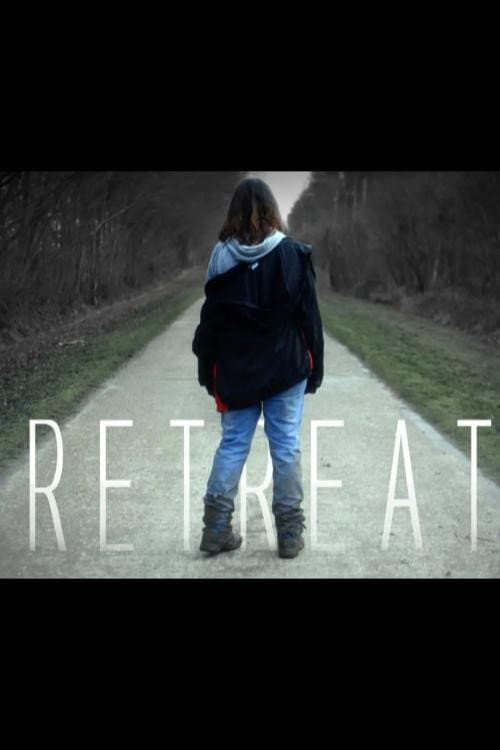
Ted Evans, whose short film "Retreat" earned him a place among BAFTA's Breakthrough Brits, says the years he has spent working in British Sign Language have reshaped the way he thinks about cinema itself. The director, who is deaf, credits sign language with teaching him that a film's visual grammar carries as much meaning as its dialogue, a lesson that runs through the 22-minute drama he made in 2013. Speaking as he looks ahead to his next projects, Evans described the recognition as a turning point rather than an arrival.
"Retreat" follows Isobel, a deaf woman played by Sophie Stone, who is torn between a hostile world sliding toward collapse and a closed-off commune that has given itself over to suspicion. When a thief is caught, Isobel is pushed toward a decision that will change her life. The cast also includes Pickles Norman as the man at the center of that capture, Jude Mahon as Rosa, and Adam Bassett, Brian Duffy, David Hay, Lara Steward and Stephen Collins. The film is an English-language drama running just 22 minutes, released on May 18, 2013. It remains without a rating score on TMDb.
For Evans, the short was never simply a calling card. Its central tension, between an outside world in freefall and a community consumed by fear, gave him a way to explore how isolation sharpens the instincts. The thief's capture becomes the hinge on which Isobel's future turns, a small event with outsized consequences, and a structure that suited a director interested in what goes unsaid.
Sign Language as a Filmmaking Tool
Evans has been candid that his deafness has shaped him as a visual storyteller, and he frames sign language not as a workaround but as a discipline that sharpened his instincts. Signing demands economy and precision, he has suggested, because every gesture must carry its own weight; filmmaking, at its best, works the same way. That outlook informed how "Retreat" was built - through framing, movement and performance rather than exposition. The presence of Stone, a deaf actress, in the lead role reinforced the approach, grounding the film's isolation and its pressure points in a performance rather than in explanation.
He has also spoken about the broader question of who gets to tell stories and how access behind the camera changes what appears on screen. For Evans, the breakthrough recognition was less about a single award than about visibility: the chance to show that deaf filmmakers are not a niche concern but part of the mainstream conversation, and that work made with sign language at its core can speak to any audience.
What Comes After "Retreat"
Details of Evans's follow-up work remain under wraps, but he has made clear that the themes of "Retreat" were not a one-off. The short's central concern, how people behave when the world outside turns hostile, is the kind of question he intends to keep pressing. His next steps are expected to build on the visual language he developed in the short, with an eye toward longer-form storytelling and toward bringing more deaf collaborators into the creative process.
The timing is notable. "Retreat" arrived in 2013, and more than a decade later its central image, a community walled off by paranoia, has lost none of its force. The BAFTA Breakthrough platform has given Evans a wider stage at a moment when the industry is rethinking both accessibility and the kinds of stories it funds.
A 22-Minute Calling Card
At 22 minutes, "Retreat" is a compact piece of work, but its reach has outlasted its runtime. The short carries a zero rating on TMDb, a reflection of how few viewers have logged it rather than any judgment of its quality, and it remains far less widely seen than the recognition surrounding its director suggests. BAFTA's spotlight offers a chance to change that, drawing new attention to a cast that includes Stone, Norman and Mahon, and to a director whose approach to image and silence has been steadily refined.
For Evans, the message is straightforward. Sign language taught him how to watch, how to build meaning from gesture and framing, and how to trust an audience to read what is in front of them. "Retreat" was where that education first showed itself on screen. What comes next will show how far he intends to take it.
Source: Hollywood Reporter