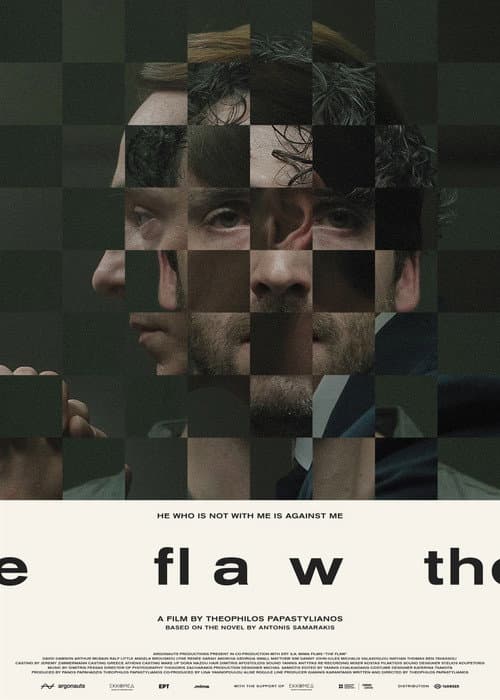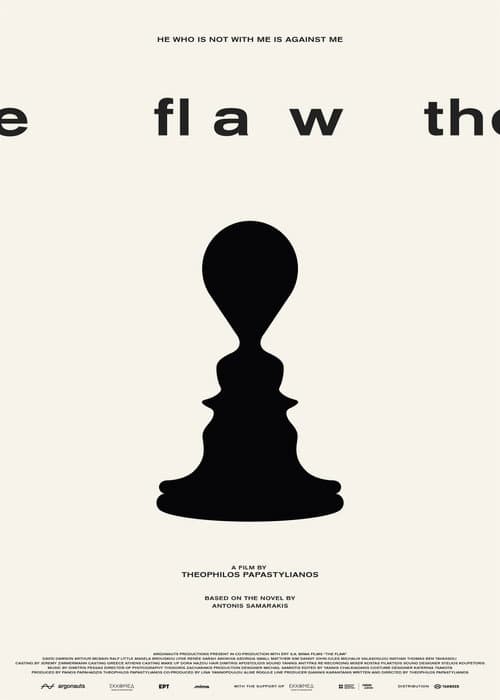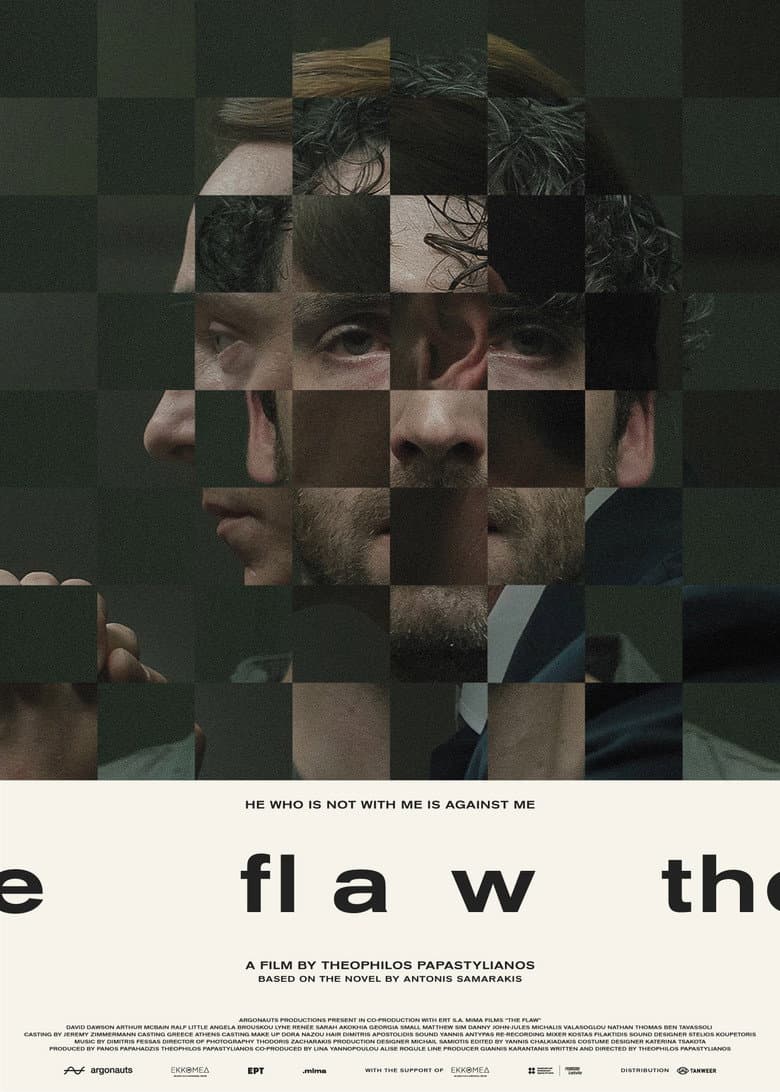
Theophilos Papastylianos's dystopian thriller The Flaw opened in Hollywood theaters on November 13, and it arrives as one of the fall's more unusual genre exercises: a 94-minute chamber piece in which a ruthless Interrogator, bound to a perfect Plan, must prove a Suspect's guilt inside a future society where the Regime alone decides who belongs.
The setup is deceptively simple. In this bleak world, the Line divides everyone, separating those the Regime accepts from those it expels. The Interrogator's assignment is to follow the Plan to its cold, precise conclusion and establish the Suspect's culpability. What follows is a game of psychological manipulation in which each word and gesture is recast in a new light, and reality itself bends as the interrogation proceeds.
Papastylianos, who directs, has built the film around that escalating uncertainty rather than around action set pieces. The puzzle appears to be nearing completion when a single flaw upends everything. A gun is drawn, and the central question shifts: it is no longer who will pull the trigger, but whether either man can cross the Line that has always separated them. The premise sets the film's stakes as much internal as external, with the Regime's machinery of judgment pressing on two men locked in a room.
The cast is led by David Dawson and Arthur McBain, with Ralf Little, Angela Brouskou, Lyne Renee, Sarah Akokhia and Georgia Small rounding out the ensemble. The film is an English-language Hollywood production, classified across thriller, drama, crime and science fiction. Its release arrives with a TMDb rating of 0/10, a figure that reflects the absence of aggregated audience votes rather than a verdict on the movie itself.
A puzzle-box structure, and a title that states its thesis
The marketing line attached to the film - "Each one of us is a regime" - reads like a thesis statement for its portrait of totalitarianism. Rather than treating the Regime purely as an external apparatus of control, the film appears to locate that impulse inside its characters, turning the interrogation into a mirror as much as a contest. The Line, in that reading, is not only a border drawn by the state but a division the two men carry with them.
That approach places The Flaw in a tradition of confined, dialogue-driven thrillers in which procedure and psychology do the work of spectacle. The Plan functions as a kind of script within the script, and the film's tension depends on the audience tracking its advances with the same cold precision the Interrogator is expected to apply. When the flaw surfaces, it breaks the procedural logic the story has trained viewers to trust.
The lean 94-minute runtime suggests a tight construction, with little room for digression. Papastylianos is working with a small ensemble and a premise that can sustain itself on performance and staging, and the casting of Dawson and McBain opposite each other puts the psychological duel at the center of the film.
A genre hybrid in a crowded season
Genre mixing is nothing new, but The Flaw straddles crime, drama and science fiction in a way that could broaden its appeal beyond dedicated science-fiction audiences. The Regime and the Line supply the speculative scaffolding; the interrogation supplies the crime-thriller engine; the manipulation supplies the drama. How cleanly those elements cohere will likely determine word of mouth.
The film also lands in a period when dystopian stories about belonging and exclusion continue to resonate, and its focus on bureaucratic certainty - a Plan that cannot be questioned - gives it a topical edge without overt lecturing. The title itself signals the film's interest in imperfection as a form of resistance: a system designed to be flawless is undone by a single deviation.
With no meaningful audience rating yet recorded, The Flaw remains an open question at the box office and in the conversation around it. What is clear is that Papastylianos has delivered a film built on a single, escalating confrontation, one in which the most dangerous moment is not the pulling of a trigger but the decision of whether to cross a line that has defined two lives. The Flaw is now playing in Hollywood theaters.
Source: Hollywood Reporter