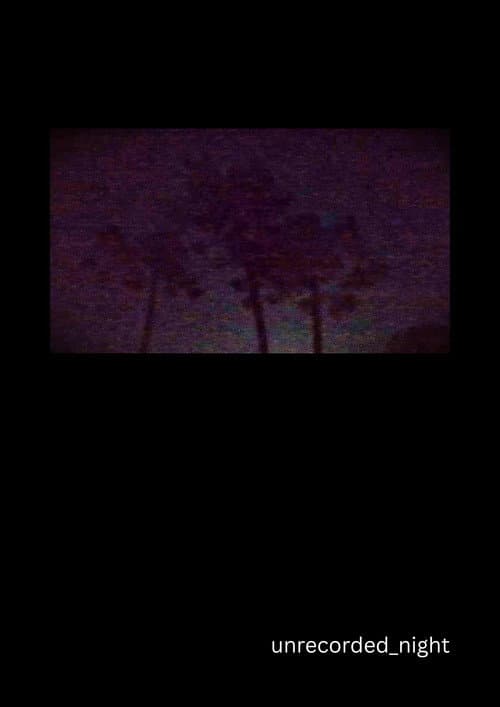
It’s 3:00 AM, and the television is still on. You’re halfway through a bag of stale chips, thumb hovering over the remote, cycling through infomercials and static. But tonight, on September 3, 2026, a very different kind of late-night viewing experience is arriving - and it’s only thirteen minutes long. That’s the unsettling premise of unrecorded_night, a new horror short that feels less like a movie and more like a dare you shouldn’t accept.
For those who crave the raw, the grainy, and the deeply wrong, this is your wake-up call. Directed by Santo Ortisi - who also steps in front of the camera as the film’s titular Night Stalker - unrecorded_night is a compact, vicious slice of found-footage-adjacent terror. It is a film designed to be watched alone, in the dark, with the volume just a little too high. And it is hitting select screens and streaming platforms today.
Release Date & Where to Watch
Your wait is over. unrecorded_night officially premieres today, September 3, 2026, in the United States. This is a straight-to-platform and limited theatrical release, designed for maximum late-night creep factor. Given its tight 13-minute runtime, the film is ideally suited for horror anthology streaming services and genre-focused VOD platforms - think the kind of digital shelves where short-form nightmares live and breed. Check your preferred horror streaming hub, as well as indie-focused marketplaces like Vimeo on Demand and Amazon Prime Video, where the short is expected to land for rental or digital purchase. For those in Los Angeles and New York, a handful of repertory cinemas and genre festivals are screening it as a lead-in to midnight features. You won’t find this in your local multiplex’s family matinee, and that is precisely the point.
Cast & Crew
At the helm is Santo Ortisi, a filmmaker who clearly understands that the most effective horror doesn’t need a two-hour runtime - it needs a knife-edge of tension and a willingness to go to ugly places. Ortisi serves as director and also performs the central monstrous presence, credited simply as "Night stalker." It’s a dual role that suggests a singular, uncompromising vision; he is both the hands behind the camera and the threat within the frame. This is not a large ensemble piece. The cast list is deliberately sparse, almost anonymous, which heightens the sense of voyeuristic dread. You’re not watching characters with backstories; you’re watching victims and a predator. The genius of the casting is in its restraint. By keeping the player pool minuscule, Ortisi forces the audience to focus on the action - the mundane act of flipping channels becomes a descent into hell. There are no familiar Hollywood faces to offer comfort or distance. Just a stranger, a screen, and a stalker who knows you’re watching.
Story & What to Expect
The logline is deceptively simple: late-night TV zapping goes way too far when the tapes of an actual snuff movie show up. The film opens with a mundane, almost boring scenario. A tired insomniac, faces lit only by the blue glow of a cathode-ray, surfs through the graveyard shift programming. Infomercials for juicers, old black-and-white westerns, a preacher promising salvation - all the usual detritus of the post-midnight bandwidth. But then, between the static and a local access channel, a signal bleeds through. It looks like a home video, unsteady and poorly lit. But the content is unmistakably, horrifyingly real. This is not a fictional slasher. This is a recording of a murder, captured with brutal, unflinching fidelity. And the remote control won’t change the channel.
The narrative structure is a ratcheting vise. Each click of the remote only brings the viewer closer to the tape and the figure within it - the Night Stalker, played with a terrifying physical stillness by Ortisi. Expect minimal dialogue, replaced instead by the hum of electronics, the buzz of interference, and the sickening, wet sounds of violence that feel far too authentic for comfort. The film leans heavily on the aesthetics of degraded VHS and grainy digital noise, making every frame feel like evidence. Is the protagonist still watching, or is something now watching them? The boundary between viewer and participant dissolves within the film’s final, brutal moments. At 13 minutes, there is no time for exposition or escape. It’s a tight, escalating panic attack that ends with a final freeze-frame that you’ll likely replay - not because you want to, but because you need to understand what you just saw.
Why It's Worth Watching
In an era of bloated, big-budget horror franchises, unrecorded_night is a welcome corrective: a lean, mean exercise in pure, unfiltered dread. Its brevity is its superpower. There is no fat, no padding, no unnecessary subplot. It is a short, sharp shock that respects the audience’s intelligence while preying on our deepest anxieties about media consumption. In a world where true crime is entertainment and viral videos of real violence are just a swipe away, unrecorded_night asks an uncomfortable question: how long would you watch before you turned it off?
The film’s power lies in its verisimilitude. Ortisi stages the horror with a documentary-like detachment that makes the fictional violence feel hauntingly plausible. It’s a bold, unsettling choice that will polarize viewers. Some will find it exploitative; others will find it the most effective horror short of the year. The TMDb rating of 0/10 is a blank slate - a testament to its pristine, untainted status as a true word-of-mouth outlier. This is not a film for the faint of heart or the casual viewer. It’s a challenge. A test of endurance and moral fortitude. If you think you can stomach thirteen minutes of the most private violation imaginable, broadcast directly into your living room, then unrecorded_night is calling your name. Just remember to keep the lights on. And maybe unplug the TV. You’ll want to, afterward.