September has barely begun to cool, and Hollywood is already feeling the autumn chill - though perhaps not the kind anyone expected. Wyatt Whittier, the director who has spent the better part of a decade lurking on the festival circuit with shorts that never quite broke through, has finally unveiled his most ambitious project to date: A Tell Tail Summer, a nine-minute fever dream that lands in theaters and on streaming today, September 22, 2026.
It's a curious date for a film with "Summer" in the title. But then again, Whittier has never been one for convention.
Release Date & Where to Watch
A Tell Tail Summer arrives today, September 22, 2026, in a hybrid rollout that speaks to the strange limbo Whittier occupies in the industry. The film is playing in select theaters - mostly independent houses and a handful of AMC locations in major markets - while simultaneously debuting on digital platforms. Given its nine-minute runtime, this is less a theatrical event than a curiosity piece, the kind of thing cinephiles will seek out precisely because it refuses to fit neatly into any box.
The release strategy makes sense when you consider the film's origins. As the first installment in a planned four-part series based on the seasons, A Tell Tail Summer functions as both a standalone short and a prologue. Whittier has reportedly shot all four films already, though no release dates for the remaining chapters have been announced. For now, audiences get summer - and they'll have to wait for fall, winter, and spring to complete the cycle.
Cast & Crew
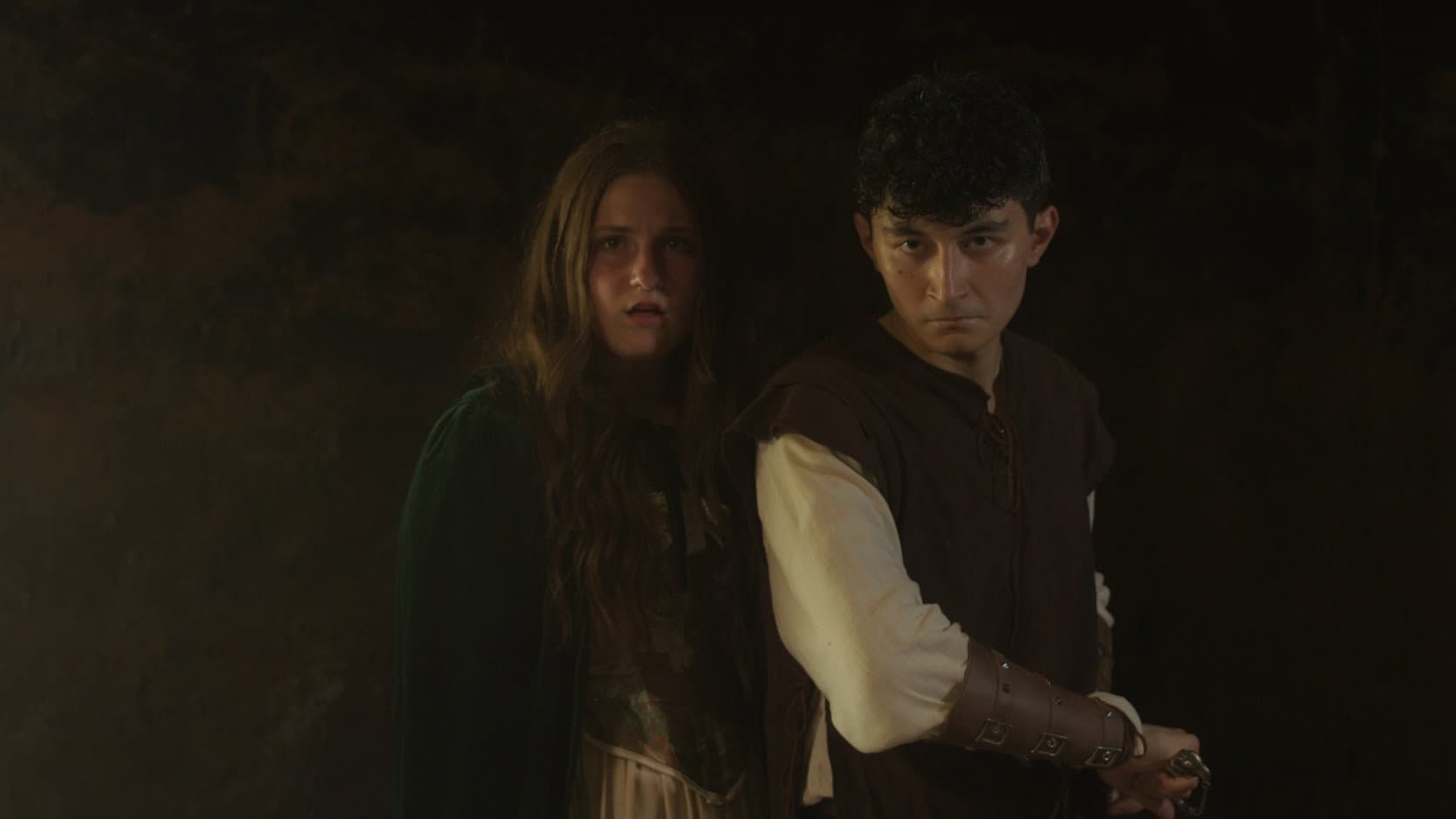
Whittier has assembled a trio of relative newcomers for his seasonal experiment. Avery Gilmore voices Doe, the film's emotional center - a character whose paradise is about to be shattered. Gilmore brings a delicate vulnerability to the role, her voice carrying the weight of someone who suspects, on some level, that her happiness was always built on borrowed time.
Brock Davis plays Wolf, the enigmatic partner whose true nature becomes the film's central revelation. Davis has the trickiest job here: he must be warm enough to make Doe's devotion believable, yet menacing enough that the Crow's warning lands with the force of a thunderclap. Early reactions suggest he pulls it off with unsettling ease.
Bianca Delgado rounds out the cast as Crow, the interloper who arrives bearing unwelcome truths. Delgado's Crow is neither villain nor hero - she's a catalyst, the kind of character who exists to force a reckoning. In a nine-minute film, that's a lot of narrative heavy lifting, but Delgado's sharp, knowing line readings suggest she's up to the task.
Behind the camera, Whittier serves as both director and, presumably, the driving creative force behind the four-part structure. The project has been something of a passion play for the filmmaker, who has described the series as an exploration of "the stories we tell ourselves to survive the seasons of our lives" - a quote that feels appropriately enigmatic for a film that refuses easy answers.
Story & What to Expect
The premise is deceptively simple: a Doe and a Wolf live together in paradise. They are, by all appearances, happy. Then a Crow arrives and reveals Wolf's true nature, and everything falls apart.
This is fable territory, but Whittier isn't interested in simple moralizing. The film's nine-minute runtime suggests a fragmented, impressionistic approach - less a traditional narrative than a tone poem about trust, deception, and the stories we construct to justify our own willful blindness. The characters are archetypes, but the emotions they navigate are anything but abstract.
Expect gorgeous imagery - Whittier has always had an eye for composition - and a sound design that does as much storytelling as the dialogue. Expect, too, a certain ambiguity. The film's TMDb rating sits at a puzzling 0/10, which either means it hasn't been widely seen yet or that early viewers are deeply divided. Given the film's unconventional structure and its status as the first chapter of a larger work, it's likely that A Tell Tail Summer raises more questions than it answers. That's clearly the point.
The four-part structure is the most intriguing element here. By framing the series around the seasons, Whittier seems to be suggesting that this story - whatever it ultimately is - can't be contained in a single moment. Summer is the season of illusion, of long days and warm nights that trick us into believing nothing bad can happen. What comes next, presumably, is the fall.
Why It's Worth Watching
Nine minutes is a small investment for what appears to be a genuinely original piece of filmmaking. In an era of bloated runtime and franchise fatigue, A Tell Tail Summer is refreshingly brief - a prologue that trusts its audience to keep up.
It's also worth watching because Whittier is taking a real swing here. The four-season concept isn't just a gimmick; it's a structural gamble that could pay off beautifully or collapse under its own ambition. Either way, witnessing the beginning of that experiment has value.
And then there's the cast. Gilmore, Davis, and Delgado are all at the beginning of what could be significant careers. If the subsequent installments deliver on this one's promise, they'll be part of something special.
A Tell Tail Summer isn't for everyone. It's slow, it's strange, and it ends - as all first chapters do - without resolution. But for viewers willing to surrender to Whittier's vision, it offers something increasingly rare in Hollywood: a story that refuses to explain itself, trusting instead that the audience will return for the next season.
Fall can't come soon enough.