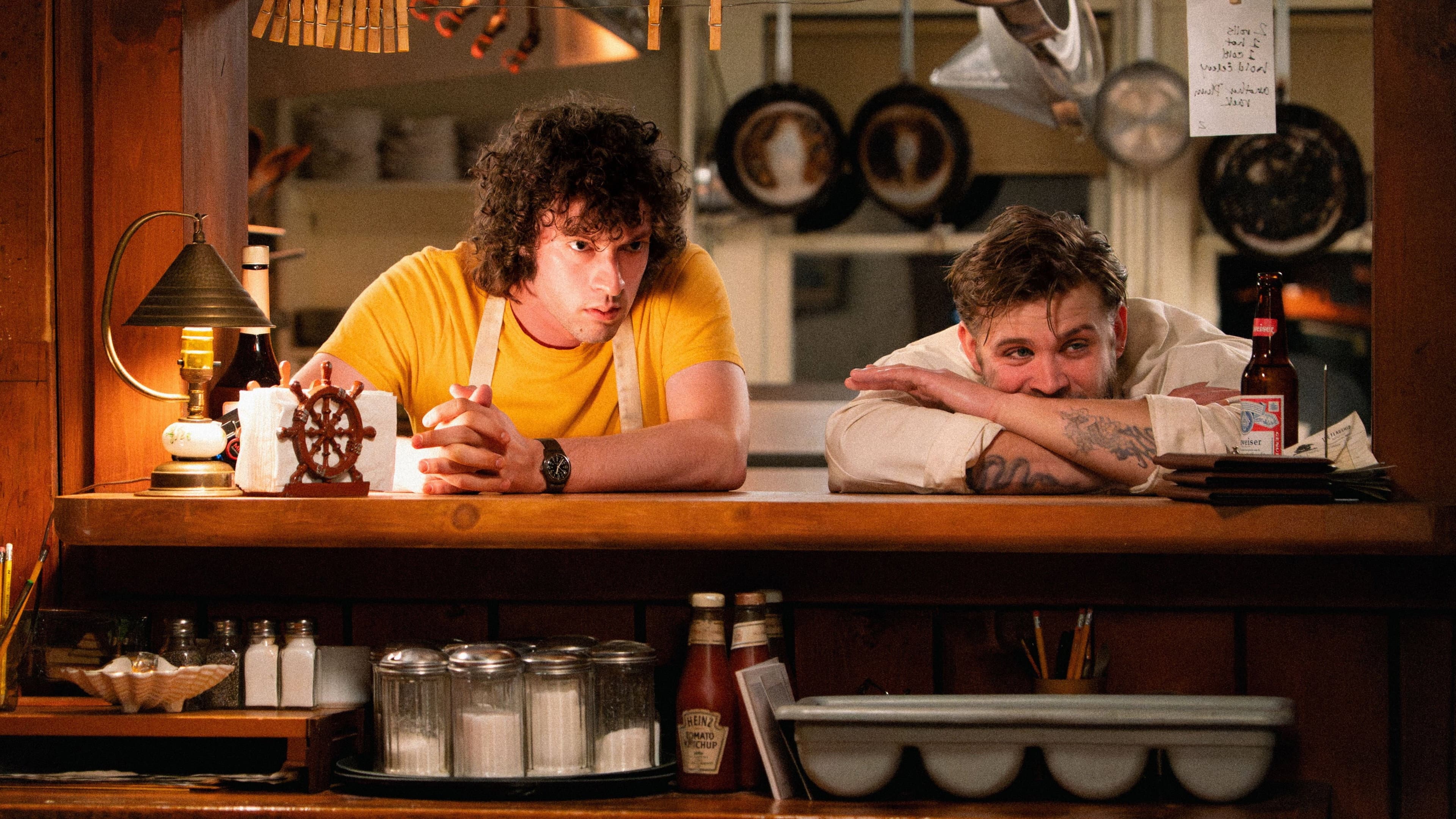
The first thing you notice, about ten minutes into Teenage Sex and Death at Camp Miasma, is that the title is not a lie. The second thing you notice is that Jane Schoenbrun, the filmmaker behind We're All Going to the World's Fair and I Saw the TV Glow, has somehow smuggled a genuine, unhinged romantic thriller into the carcass of a tired slasher franchise - and nobody at the studio seems to have stopped them.
To understand why that matters, a brief history. The Camp Miasma movies ran from the early eighties into the late aughts, each sequel more slapdash than the last, until the property was effectively a punchline with a machete. Enter Kris (Hannah Einbinder), a young director who grew up on the tapes and genuinely, hopelessly loves them. She takes the resurrection gig. She also decides, against the counsel of her agent (a magnificently exasperated Sarah Sherman), to track down Billy, the actress whose turn in the original 1981 film made her a horror icon before she vanished from public life.
Billy is played by Gillian Anderson, and it is a performance that should be studied. Reclusive, draped in shadow, equal parts seductive and menacing, she receives Kris in a house that feels less haunted than hungry. What follows is not the standard director-meets-muse story. Kris wants to understand the original film's making. Billy, it turns out, wants something considerably stranger. The two women spiral into what the film's own synopsis calls a blood-soaked world of desire, fear, and delirium - a description that undersells how gleefully it all escalates. By the third act, the movie has abandoned any pretense of being a legacy sequel and become something closer to a fever dream with a body count.
Schoenbrun, working from a script that keeps shifting registers under your feet, directs with the same queasy intimacy that made TV Glow such a singular experience, but here the melancholy is spiked with something funnier and meaner. This is, per its official genre tagging, a comedy-horror-romance, and the film honors all three contracts. Einbinder, best known for her acidic comic timing, plays Kris as a woman whose professional ambition and personal longing have become indistinguishable. Amanda Fix appears as Young Billy in flashbacks that carry their own quiet devastation. Arthur Conti, Eva Victor, Zach Cherry, and Patrick Fischler round out a cast that clearly understood the assignment. Fischler's Rudolph, in particular, gets a monologue so deranged it drew audible gasps at an early screening.
The ratings tell an interesting story. On IMDb, the film sits at 7.1 - respectable, especially for a horror title with this much weirdness in its DNA. Over on TMDb, the score settles at 6.466, a number that suggests a certain amount of audience whiplash. That gap feels right, honestly. This is not a crowd-pleaser. It is a movie that dares you to keep liking it, and rewards you if you do.
Released on August 6 and running 112 minutes, Camp Miasma arrives at a moment when franchise horror is almost entirely built on nostalgia mining and IP maintenance. What Schoenbrun has made instead is something rarer: a film that uses the wreckage of a dead series to ask who gets to own a story, and what it costs to love a thing that never loved you back. It is a romance, technically. It is also a horror movie about how desire can curdle into something that wants to consume you, literally.
The last twenty minutes will divide people. Some will call them indulgent. I would call them inevitable - the only honest place this story could end up. The final image is a nasty little joke, and I mean that as praise.
Whether the studio gets the commercially viable Camp Miasma revival it presumably wanted is an open question. What is not in question is that Schoenbrun, Einbinder, and Anderson have made the most audacious American horror-romance of the year, and possibly the strangest. See it in a theater, ideally with someone you are not entirely sure you trust.