The history of the Philippines is not a smooth narrative; it is a palimpsest, written over by successive waves of hope, betrayal, and resilience. On August 11, 2026, a new five-minute experimental short film, MOOSAP (Memories of Old Sapang Palay), arrives to scrape away the top layers and reveal the raw, bleeding ink of a forgotten chapter. Directed by the bold and uncompromising Edsel Gasmen, this is not a documentary in the traditional sense, nor is it a conventional narrative. It is a cinematic memory, fractured and haunting, that refuses to let the past stay buried.
Release Date & Where to Watch
Mark your calendars, cinephiles and history buffs alike. MOOSAP officially premieres today, August 11, 2026. While the film’s distribution strategy has been characteristically unconventional for an artist like Gasmen, the primary venue for its debut is through select art-house cinema screenings and film festivals, with a simultaneous release on major VOD platforms expected to follow within the week. Given its five-minute runtime, it is ideally suited for the festival circuit, where short-form experimentation thrives, but its subject matter demands a wider audience. Check your local independent theater listings and streaming services like MUBI or Criterion Channel, which have a penchant for acquiring politically charged, formally daring works. This is a film designed to be watched, discussed, and then watched again - preferably in a dark room where its visual echoes can linger without the interruption of a phone screen.
Cast & Crew
The film is the singular vision of director Edsel Gasmen, a name that has been circulating in underground cinema circles for years, known for his incisive, often poetic, treatment of social outcasts and systemic failures. Gasmen has crafted a film that does not rely on a traditional cast of characters. Instead, the "performers" are the archival images themselves - the grainy faces of 1970s settlers, the sweat on their brows, the desperation in their eyes. In the modern segments, the camera lingers on unnamed, contemporary figures, their faces often obscured or in silhouette, suggesting a cyclical identity that transcends decades. There are no credited actors, a deliberate choice that reinforces the film's thesis: this is not the story of one individual, but of a collective who have been rendered nameless by history. Gasmen acts as both director and editor, meticulously weaving together the 1970s footage - likely sourced from Philippine news archives - with his own stark, contemporary digital cinematography. The result is a dialogue between two eras, mediated by a singular, powerful authorial voice.
Story & What to Expect
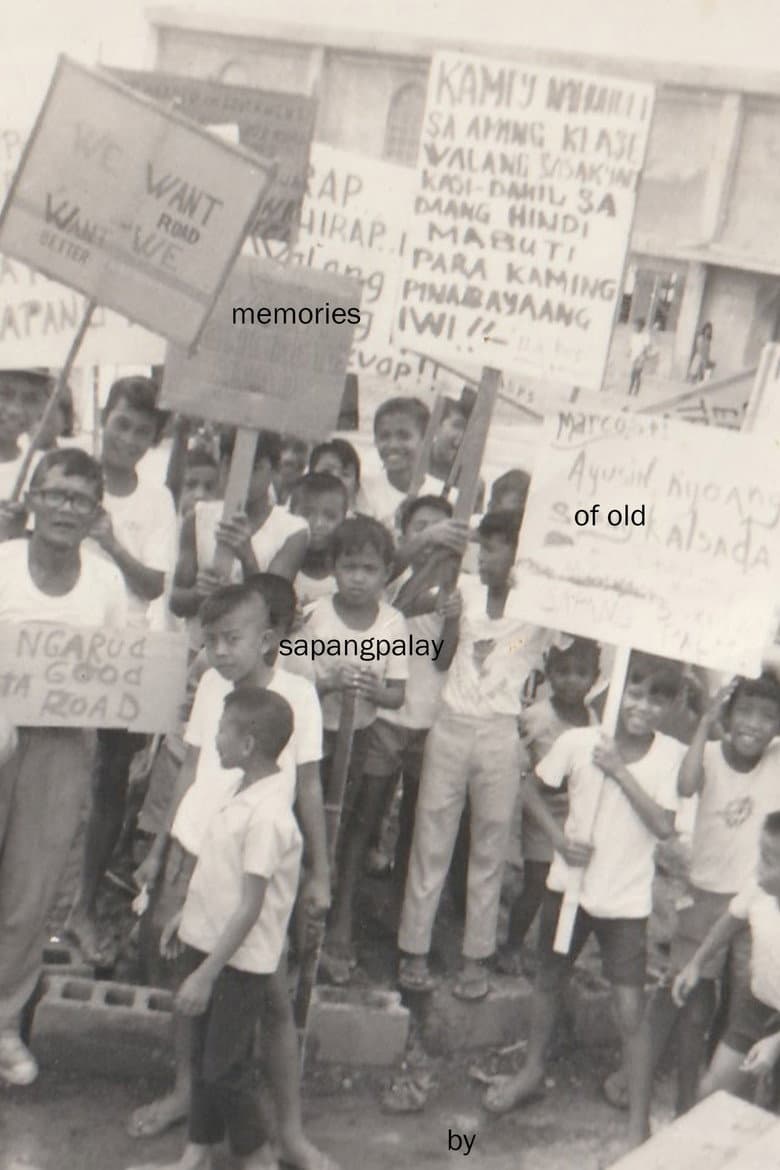
Set your expectations for a traditional plot aside. MOOSAP is an experience, a visceral collage of memory and mirror. The film opens with scratchy, sepia-toned footage of Sapang Palay, a relocation site in Bulacan that promised a "better life" to thousands of displaced Manilans in the early 1970s. This was a forced promise, a government directive to decongest the capital under martial law. What awaited them, however, was a wasteland - a place devoid of basic necessities like water, shelter, and sanitation. The early minutes are a slow, painful pan across this landscape: barren fields, makeshift tents, and the hauntingly blank faces of families grappling with a profound betrayal. There is no narration to hold your hand; the images are allowed to speak in their own raw, unfiltered language.
Then, the film shifts. The grain dissolves into the crisp, cold digital reality of the present day. We see new faces, but the same weary postures. We see eviction notices, flooded shantytowns, families once again displaced by urban renewal projects and economic upheaval. Gasmen employs a technique of parallel editing, cutting between a mother fanning her child in a 1970s makeshift home and a mother doing the same in a contemporary sidewalk dwelling. The juxtaposition is not merely poetic; it is accusatory. The film’s central sequence focuses on the infamous 1970s "Martsa ng Langgutom" (March of Hunger), where thousands of Sapang Palay residents marched to Malacañang Palace to demand food, water, and dignity. We do not see the climax of that march; instead, Gasmen dissolves the image of the marchers' feet - dusty, calloused, determined - into the image of contemporary protesters’ feet, marching for housing rights, for justice, for a livable wage. The sound design is equally crucial: the rhythmic thud of footsteps becomes a drumbeat, a constant reminder that the walk is not over. The film ends not with a resolution, but with a lingering question, etched in silence: how many more miles must they traverse before the promises are kept?
Why It's Worth Watching
In an era of bloated blockbusters and formulaic storytelling, MOOSAP is a correctional shock to the system. It is a masterclass in brevity, proving that five minutes can hold more weight than five hours of standard exposition. For those unfamiliar with the history of Sapang Palay, the film serves as a crucial, painful education. It unearths a national scar that has been conveniently papered over by triumphant political narratives. Gasmen does not allow for comfortable distance; his visual language is a bridge that connects the viewer to both the past and its living consequences. He forces the audience to confront an uncomfortable truth: the Philippines is still a nation of mass displacement, and the cycle of neglect that birthed Sapang Palay is replicated in every demolition site from Tondo to Quezon City today.
The film’s strength lies in its refusal to offer a neat conclusion. It does not provide a hero, nor does it propose a simple political solution. Instead, it offers a powerful act of witness. It validates the memory of those who were told they did not exist, and it challenges the present generation to break the cycle of empty rhetoric. This is not an easy watch. It is dense, challenging, and deliberately uncomfortable. But that is precisely why it matters. It is a work of art that functions as a civic imperative, a voice for the voiceless that cuts through the noise of modern media. For fans of experimental film, it is a triumph of form; for students of history, it is a vital primary source; and for anyone with a pulse, it is a haunting reminder that the march for justice is never truly finished. See it, and you will not forget it.