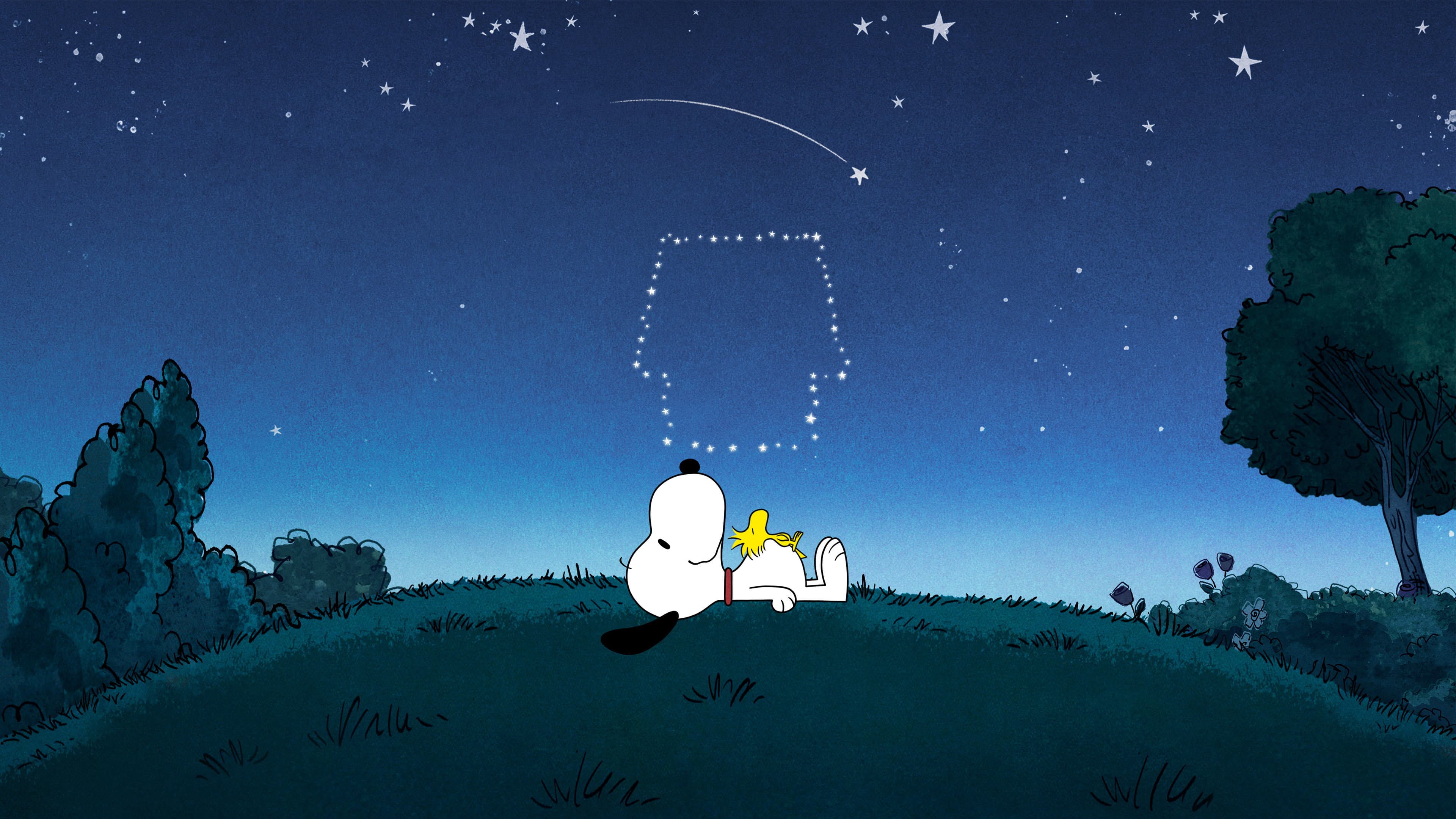
There is a particular kind of quiet that settles over a room when Snoopy is on screen - a stillness that has nothing to do with silence and everything to do with recognition. The beagle doesn't need dialogue to communicate longing, mischief, or that peculiar ache of missing something you didn't realize you'd claimed as your own. In "Snoopy Presents: There's No Place Like Home, Snoopy," released July 30, the creative team behind Apple TV+'s Peanuts revival once again proves they understand this better than almost anyone working in animation today. The 32-minute special, directed by Ridd Sorensen, takes one of the most familiar images in American pop culture - a dog atop a rickety red doghouse - and asks a deceptively simple question: what happens when the roof over your head disappears?
The premise is elegantly spare. Snoopy's beloved doghouse goes missing. Not destroyed, not sold, simply gone. What follows is a tracking mission that takes the beagle through familiar neighborhoods and unfamiliar feelings, a journey that eventually teaches him what actually makes a house feel like home. It's the kind of story Peanuts has always excelled at - small in scope, enormous in implication. There are no villains here, no grand set pieces, just a dog and his friends and the disorienting sensation of coming back to a place that looks different than you remembered.
Riley Kai Vargas leads the voice cast as Charlie Brown, bringing a weariness that feels earned rather than performed. Terry McGurrin's Snoopy is a marvel of restraint, conveying volumes through grunts and sighs and the occasional dramatic swoon. Rob Tinkler's Woodstock remains the franchise's secret weapon, a tiny yellow blur of loyalty and anxiety. The supporting ensemble - Kitai O'Garro as Franklin, Josephine Nisbett as Marcie, Grace Nicolaou-Wood as Sally, Jo-Hannah Atchison as Lucy, and Lexi Perri as Peppermint Patty - each get their moments without ever crowding the central emotional arc. That's trickier than it sounds when you're working with a runtime under forty minutes.
Sorensen, a veteran of the Peanuts animation pipeline, understands pacing in a way that honors the source material's newspaper-strip rhythms. Scenes breathe. Jokes land softly. A panel where Snoopy stares at an empty patch of lawn where his doghouse used to be lingers just long enough to register as genuine grief before pivoting to something lighter. The animation retains that hand-drawn warmth while taking advantage of modern tools to render texture and light. A sequence involving a rainstorm and a misplaced sense of direction is particularly gorgeous, all muted blues and the amber glow of a distant window.
What's striking is how the film resists the temptation to over-explain. The doghouse isn't a metaphor for childhood, or stability, or the passage of time - or rather, it's all of those things simultaneously and none of them exclusively. Snoopy's search has a sweetly meandering quality, like a Sunday afternoon walk with no particular destination. He follows leads. He gets distracted. He naps. The narrative trusts its audience, young and old, to find their own meaning in the journey.
That trust is rewarded in the final act, which doesn't hinge on a grand revelation but on a series of small ones. A familiar blanket. A friend's porch. The sound of someone calling your name. The special's title borrows from "The Wizard of Oz," but its sensibility is pure Peanuts: earnest without being saccharine, philosophical without being pretentious, funny without trying too hard. When the doghouse finally reappears - and it does, in a way that feels both inevitable and earned - the victory is quiet. Snoopy doesn't jump for joy. He climbs onto the roof, stretches out, and closes his eyes. It's the same image we've seen a thousand times before, but by now it carries weight.
The TMDb rating of 8.372 out of 10 suggests audiences are responding to this approach. It's not hard to see why. In a cultural moment saturated with sequels and spinoffs and expanded universes, "There's No Place Like Home, Snoopy" offers something almost radical: a story that knows when to stop. Thirty-two minutes, no more. A beginning, a middle, an end. A dog, a house, a lesson learned gently.
It's the kind of film that will play equally well on a Saturday morning with cereal and on a Sunday evening when the light is fading and the week ahead feels very long. That's not a small thing. That's not a minor achievement. That's just about everything you could ask for from a Peanuts special, and it's delivered with the unassuming grace that has always been this franchise's greatest gift.