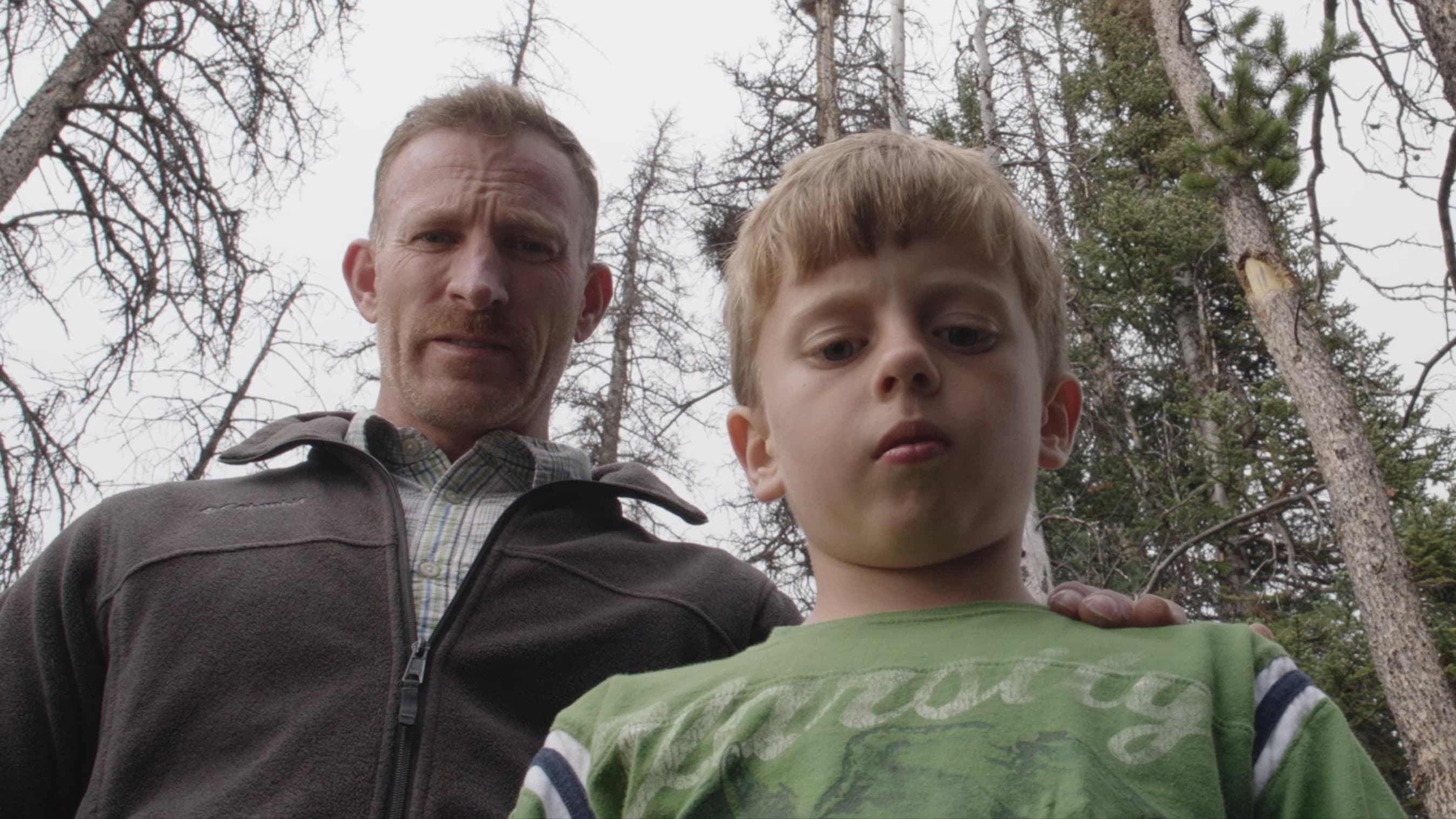
The backpacking trip at the center of Isaac Lounsbury’s new short film Dust was never meant to be a grand philosophical expedition. It is, on its face, a familiar family outing: boots on gravel, a tent that takes too long to pitch, two parents trading quiet looks over the heads of their kids. But Lounsbury, making his directorial mark with this twenty-two-minute drama, uses that ordinary wilderness setting as the stage for something far more searching. The film follows Sam, a six-year-old whose questions about life and death begin to deepen amid the pines and switchbacks, and it arrives in theaters on October 1, 2026, after a festival run that has kept audiences talking about the way it frames grief through a child’s eyes.
At the heart of Dust is Carl Hutchings’s performance as Sam, and it is the kind of child role that lives or dies on restraint. Hutchings plays Sam not as a precocious philosopher but as a boy who notices things - a dead bird, the husk of a beetle, the way his father’s silence stretches a beat too long - and files them away. Lounsbury’s camera stays close to that noticing. The film’s visual grammar is built around the low angle, the small hand reaching toward something fragile, the wide shot that makes the family look briefly swallowed by the landscape. It is a drama in the truest sense: the conflict is internal, the stakes are existential, and the runtime of twenty-two minutes leaves little room for wasted motion.
Michael Bagley and Mia Bagley round out the family as Dan and Madeline, parents who are clearly carrying something they haven’t fully named for their children. Dan in particular is a study in held-back answers; when Sam asks where things go when they stop moving, Dan’s response is the kind of gentle deflection that parents master and children see through. Madeline, meanwhile, provides the film’s emotional ballast, a presence that steadies the trip even as the questions accumulate. Cyrus Salmon appears as Josh, and though the role is supporting, it adds a texture to the family dynamic that keeps the film from feeling like a two-hander.
What distinguishes Dust from the crowded field of short-form family drama is its refusal to resolve. Lounsbury, who also wrote the piece, is less interested in providing Sam with an answer than in letting the question breathe. The cycle-of-existence theme announced in the film’s logline is handled with a light touch - there are no heavy-handed montages, no swelling score to tell you how to feel. Instead, the film trusts its young lead to carry the weight, and Hutchings proves more than capable. In the quietest scenes, when Sam is simply watching, the film finds its pulse.
It is worth noting that Dust arrives with a TMDb rating currently sitting at zero, a reflection of its limited release footprint rather than any measure of its quality. Short films in this lane rarely accumulate the volume of votes that features do, and Lounsbury’s film is likely to find its audience through word of mouth and festival circuits rather than opening-weekend noise. That is the nature of the format, and it is not a knock on the work. If anything, Dust is the kind of film that benefits from being discovered rather than marketed - a small, deliberate piece that rewards the viewer who sits with it.
The release timing, landing in early October, feels apt for a film preoccupied with endings and the natural world’s quiet turning. There is an autumnal quality to Dust even in its summer-forest setting, a sense that something is being let go of even as the family pushes forward on the trail. Lounsbury has spoken in festival Q&As about wanting to capture “the moment before understanding,” and that phrase lingers over the film’s final frames. Sam does not arrive at wisdom. He arrives at wonder, which for a six-year-old may be the same thing.
For Hollywood audiences accustomed to tidy resolutions, Dust may feel like an incomplete sentence. But that is precisely its point. It is a film about the questions we carry long before we have the language to ask them, and it offers no easy comfort - only the image of a child looking out at the world and beginning, slowly, to see it. Hutchings, Bagley, Bagley, and Salmon give Lounsbury the ensemble he needs to make that vision land, and the result is a short film that lingers well past its twenty-two minutes.