The coffee table in Motonori Sakakibara’s animation studio is cluttered with die-cast chassis, tiny rubber tires, and one very large, very plastic dinosaur. It is a fitting tableau for a director who has spent the better part of two years asking a deceptively simple question: what happens when the most famous toy car brand in the world meets a monster that does not care about loop-the-loops?
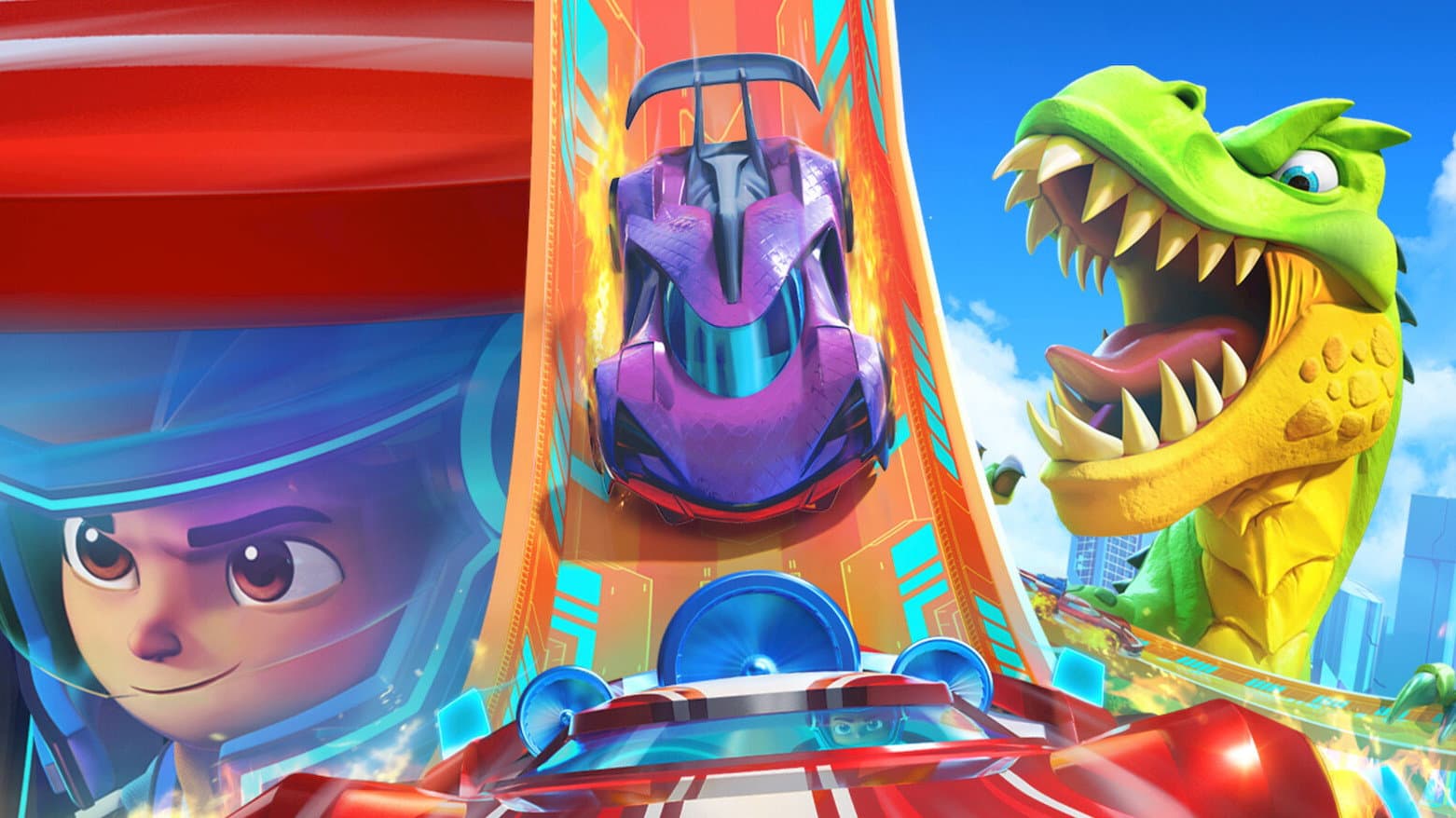
The answer arrives on October 20, 2026, when Hot Wheels Let’s Race: Attack of the T-Rex lands on screens. Clocking in at a brisk 47 minutes, the animated action-comedy sends Coop and his crew of racers hurtling into their biggest challenge yet - a towering prehistoric threat stomping through Hot Wheels City.
For the uninitiated, the Let’s Race franchise has quietly become a cornerstone of family entertainment since its debut, following young Coop as he trains at the ultimate racing academy. But this installment trades the friendly rivalries of the track for something more primal. “We wanted to see what our characters do when the rules of the race no longer apply,” Sakakibara explains through a translator, his hands tracing the arc of a jump. “A T-Rex does not obey traffic laws. That is the fun of it.”
The director, whose animation background spans both Japanese and American productions, brings a kinetic precision to the film that honors the physics of the toy line. Cars do not merely drive; they launch, pivot, and collide with the satisfying weight of plastic on hardwood. Yet Sakakibara insists the dinosaur is the true star. “We built it like a character, not a prop. It has weight, it has frustration. It is not evil - it is just very large and very confused.”
Returning to voice the core cast are Carter Burney as Coop, whose enthusiasm remains the series’ engine, and Amari McCoy as Spark, the team’s ingenious mechanic. Josh Keaton steps in as Axle, lending a gravelly bravado to the muscle-car specialist. Risa Mei’s Brights provides a warm counterpoint, while Griffen Campbell’s Mac and Charlie Schlatter’s Sidecar round out the ensemble with comic timing that lands for kids and parents alike.
“The tone on set was a lot of yelling,” Burney says with a laugh. “In a good way. You have to sound like you are actually driving away from a dinosaur, so subtlety goes out the window. Motonori kept telling us, ‘Faster, louder, more scared but still having fun.’ That is a strange note to give a voice actor, but it works.”
The film’s release strategy is notable. Rather than a wide theatrical push, Attack of the T-Rex arrives as a standalone event on streaming platforms, a format that has become increasingly common for family animation. At 47 minutes, it occupies a sweet spot - long enough to feel like a movie, short enough to hold the attention of a five-year-old on a Saturday morning.
Technically, the film represents a step forward for the series. The animation team developed a new system for rendering dust and debris, essential when a creature the size of a condo is stomping through a city of plastic. “We studied footage of actual landslides,” says Sakakibara. “Not to be frightening, but to understand how big things move. The T-Rex does not walk. It rearranges the world around it.”
Early audience metrics suggest the approach is working. The film currently holds a 7.438 rating on TMDb, a strong figure for the family-animation space and a sign that the series’ core audience is showing up. Online chatter has focused on a mid-film sequence in which Coop uses a loop-the-loop to evade the dinosaur’s jaws - a moment that has already spawned its share of fan edits.
What remains to be seen is whether this is a one-off adventure or a new chapter in the franchise’s evolution. The ending, without spoiling anything, leaves a door propped open. Asked about the future, Sakakibara smiles and gestures at the toy dinosaur on his table. “There are many dinosaurs,” he says. “And many cars.”
For now, Attack of the T-Rex stands as a confident, well-crafted entry in the Hot Wheels canon - proof that a 47-minute cartoon about plastic cars can deliver genuine thrills. It is not trying to be anything other than what it is: a fast, funny, unexpectedly warm story about friends who race toward danger rather than away from it. And in a world that often asks too much of children’s entertainment, that clarity is its own kind of superpower.