The summer of 2026 has been a strange and wonderful beast at the multiplex, a season of gargantuan blockbusters and wall-to-wall IP. But tucked inside the cinematic ecosystem, often on smaller screens or in the quiet corners of streaming catalogs, lies the truest heart of storytelling: the micro-budget indie. Today, August 15, 2026, marks the release of one such gem, a five-minute short that dares to ask a deceptively simple question - what does it actually take to pull your sister away from her screen? That film is Airplane Store, a tender, quiet slice of familial drama from director Kevin Lau that is making its debut today. While it won’t break box-office records, it might just break your heart, and that’s a far more valuable commodity.
Release Date & Where to Watch
Airplane Store officially lands today, August 15, 2026. For those eager to catch this little film, your best bet is to keep an eye on the festival circuit and digital showcases associated with the Pens to Lens program, under whose banner the project was created. Pens to Lens is a unique initiative that encourages young writers to see their stories translated to the screen, and this short is one of its latest, most heartfelt products. While a wide theatrical release is not in the cards for a five-minute runtime, the film will likely be available on the program’s official platforms and at select youth film festivals throughout the fall. Check your local indie theaters’ shorts programs, as these are the kind of emotionally resonant pieces that often precede feature presentations. Given the modest scope and the rising tide of short-form storytelling, you can also anticipate a VOD release or a spot on a curated streaming service dedicated to indie film in the coming weeks. It’s the kind of film you discover, not the kind that finds you - and that’s precisely its charm.
Cast & Crew
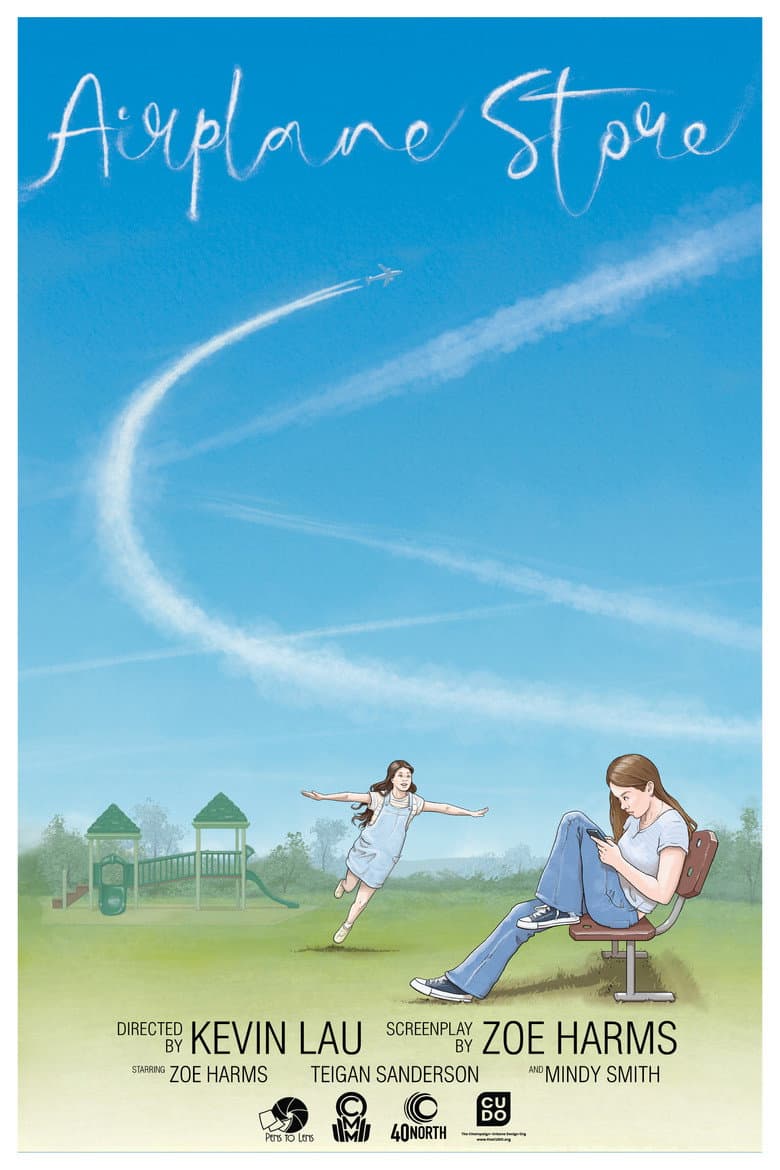
At the helm is director Kevin Lau, whose work here demonstrates a clear-eyed understanding of visual restraint. Lau doesn’t need a massive budget to communicate isolation; he uses the geometry of a living room, the glow of a smartphone, and the physical distance between two sisters to build a world of palpable tension. His direction of young actors is particularly sharp, coaxing natural, unforced performances that anchor the film’s emotional weight.
The film hinges on the dynamic between its two leads. Zoe Harms plays Sadie, the phone-entranced protagonist whose world has shrunk to the size of a six-inch screen. Harms delivers a performance that is refreshingly unsentimental; Sadie isn’t a brat, she’s just stuck, and Harms captures that slump-shouldered, glazed-over state with uncomfortable authenticity. She’s the picture of a modern teenager who has traded the tactile world for the dopamine drip of the feed. Opposite her is Teigan Sanderson as Lucy, the sister who hasn’t given up on her. Sanderson is the film’s secret weapon, infusing Lucy with a mix of frustration, tenderness, and a stubborn hope that refuses to let the silence win. Rounding out the trio is Mindy Smith as Mom, a small but crucial role that grounds the story in a broader family context, even if her presence is mostly a background chorus to the central sibling story. The chemistry between Harms and Sanderson is the engine that drives the whole piece; you genuinely believe they share a history, a shorthand of grievances and love that predates the film’s opening frame.
Story & What to Expect
The premise is deceptively slight: Sadie is lost in her phone, and Lucy has an idea - an absurd, whimsical invitation to visit the “airplane store.” That’s it. No car chases, no high-stakes heist, no resolution of an intergalactic war. The conflict here is purely interpersonal, a quiet tug-of-war between digital detachment and real-world connection. Overview describes Sadie as “addicted to the world of her phone,” and Lau wastes no time establishing this. The opening shots are likely to be claustrophobic, hugging the screen of Sadie’s device, showing us the scrolling, the tapping, the hollow glow. It’s a world we all recognize, a world that feels both private and empty.
Lucy’s pitch is the film’s central dramatic device. It’s a childlike, almost nonsensical entreaty - an attempt to disrupt the inertia with a moment of pure, silly imagination. Yet what unfolds is less about an actual destination and more about the journey of disconnection. Expect a slow-burn of resistance, as Sadie’s thumbs pause and her eyes flicker upward, and then a tentative capitulation. Don’t expect on-screen depictions of massive aviation merchandise; the “airplane store” is a McGuffin, a symbol of the shared creativity and undirected play that Lucy is trying to resurrect. The film operates in the space between their negotiation - the sighs, the long pauses, the half-hearted objections, and the dawning realization that maybe, just maybe, the world outside the phone still exists.
The five-minute runtime is both a constraint and a gift. Lau is forced into precision, cutting away all fat to deliver only the essential moments. There is a rhythm to the piece that mirrors a real conversation: the stilted start, the building frustration, and the hesitant thaw. It’s a film that trusts its audience to fill in the gaps, to project our own sibling dynamics onto the frame. The score, presumably understated, will likely swell at just the right moment, but you can expect the primary sound design to be the unglamorous background noise of life: a fridge humming, a distant television, the muffled sound of one person ignoring another.
Why It's Worth Watching
In an era where “content” is endlessly churned, Airplane Store feels handmade. The TMDb rating of 0/10 is likely a placeholder for its debut, but don’t let that fool you - this is a film whose value isn’t measured in stars but in the quiet resonance it leaves behind. This is a movie that understands that the most dramatic moments in life are often the ones you don’t notice until later. It’s about the small act of persistence required to save a relationship from the slow drift of neglect.
The short is a perfect artifact of the Pens to Lens mission, which encourages young voices to tell their own truths. There’s a raw, unpolished honesty to it that big-budget studio films often sand down. The performances from Harms and Sanderson feel like eavesdropping on a real sibling pair, capturing the particular blend of annoyance and deep affection that defines those bonds. What makes this more than a public service announcement about screen time is its empathy. It’s not a condemnation of technology; it’s a plea for balance, a reminder that behind every screen is a person, and sometimes, the bravest thing you can do is to ask someone to put it down and go to a weird store with you.
Airplane Store is a small circle of light, a reminder that connection is a verb, an action you must choose. In five minutes, it captures a lifetime of feeling. It’s a beautiful, fleeting piece of cinema that doesn’t overstay its welcome, content to exist as a perfect little anecdote - a story you’ll tell a friend about, not a franchise you’ll binge. If you can find it, don’t scroll past it. Let Lucy’s gentle insistence convince you, too, that the airplane store is worth the trip.