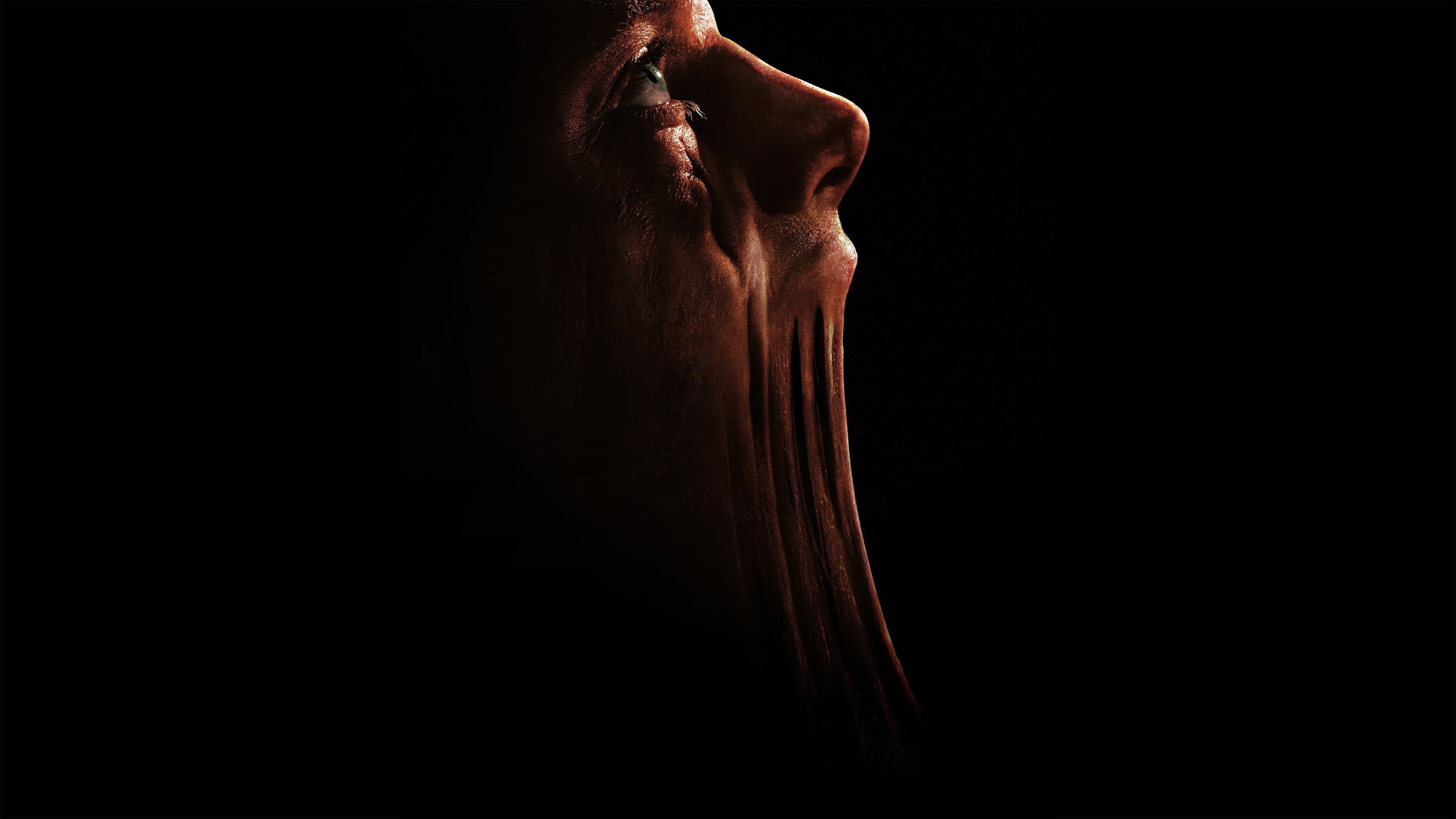
The release calendar for late August usually signals the end of blockbuster season - a time for studio leftovers and quiet awards-bait whispers. But every so often, a project slips through the cracks that feels less like a product and more like a pulse. DRIVE THEORY is that anomaly. Landing today, August 29, 2026, this 20-minute musical short isn't just arriving; it's detonating in the gap between summer's noise and autumn's introspection. And if you're looking for a traditional cinematic experience, you might want to recalibrate your expectations immediately.
Release Date & Where to Watch
DRIVE THEORY officially hits screens today, August 29, 2026. For now, the film is available exclusively through major digital on-demand platforms, with a focus on premium VOD selections that cater to music-driven short-form storytelling. Given its tight 20-minute runtime, this isn't a feature-length commitment - it's a burst of audio-visual adrenaline meant to be consumed in one sitting, probably more than once. The Hollywood industry label attached to the project suggests a high-gloss finish, but the distribution strategy screams "eventize it." Check your preferred streaming aggregator for the film's availability across Amazon Prime Video, Apple TV, and Vudu, though don't be surprised if it surfaces on a curated music-platform playlist later this fall. The lack of a wide theatrical rollout isn't a slight; it's a signal that this is designed for headphones and midnight repeat viewings.
Cast & Crew
At the helm is director Jerrod Richards, a filmmaker whose prior shorts have navigated the murky waters of identity with a visual language that borrows equally from music video grammar and intimate indie realism. Richards isn't interested in spoon-feeding you narrative; he's building atmospheres. His choice to cast musicians as themselves rather than actors playing characters is the film's boldest gamble. Jonathon Munez, credited as Himself/JONO, anchors the piece. He isn't performing a breakdown; he's documenting one in real-time. Alongside him, Chris J and MUDI appear as themselves, forming a loose constellation of fellow travelers rather than a traditional supporting cast. The most intriguing credit belongs to Tahja Alijah, listed simply as "Love Interest." That vagueness is intentional - she exists less as a fully realized character and more as a gravitational pull, a palpable force that JONO orbits but can't quite land on. The chemistry between Munez and Alijah is less dialogue-driven than it is spatial; you feel the distance crackling between them in every frame.
Story & What to Expect
The official logline - "A young man tries to maintain his psychological homeostasis as he stands on the precipice of adulthood" - sounds clinical, like a case study. But Richards translates that clinical jargon into a visceral, sonic experience. This is a film that listens as much as it watches. Munez's JONO is caught in a liminal state, driving through the city at night as a physical manifestation of his internal loop. The car isn't a prop; it's a therapy couch on wheels. The music - and make no mistake, the score and original songs are the narrative engine - drifts between anxiety-inducing percussive pulses and hollow, echoing synth lines that mimic the emptiness of a 2 a.m. thought spiral. There's a moment roughly halfway through where the diegetic sound drops out entirely, replaced by a low-frequency hum that feels less like composition and more like a migraine aura. You'll check your own pulse. That's the point.
This isn't a plot-driven piece. Don't come looking for three-act structure or a tidy resolution. What you get instead is a portrait of paralysis - the specific, grinding inertia of being 22 and realizing the scaffolding you built as a teenager has collapsed. Munez, who co-writes with Richards, gives a performance that's raw without being histrionic. He mumbles, he stares, he grips the steering wheel until his knuckles go white. The "Love Interest" dynamic is deliberately fractured; Alijah appears in fragments - a laugh from a memory, a silhouette against an apartment window, a text message glow. It's less a romance than a haunting. MUDI and Chris J function as Greek choruses made modern, appearing in rest stops and gas stations to offer half-hearted platitudes that sound like advice but land like accusations. Their presence underscores the isolation; even when JONO is physically surrounded, he's utterly alone.
Why It's Worth Watching
Because DRIVE THEORY refuses to look away from the ugliest part of growing up: the moment where you realize that no one is coming to save you, and that "homeostasis" is a fragile, homemade arrangement of coping mechanisms. This film doesn't entertain you; it ambushes you. The 20-minute runtime is perfect - any longer and the suffocation would become unbearable; any shorter, and it would be just another generic mood piece. Richards and Munez have crafted something that feels less like a movie and more like a transmission from a specific emotional frequency, one that repeats late at night when the city is quiet and your anxiety is screaming.
More than that, it's a testament to what can happen when you let musicians be themselves on camera without forcing them into theatrical molds. There's an authenticity to Munez's discomfort that a trained actor would have to fake. The music cuts deep, the visuals linger, and by the end, you'll feel like you've been dragged through someone else's sleepless night. The TMDb rating sits at a blank 0/10, which is honestly perfect - this is a film that defies rating, demanding instead that you sit with it, let it wash over you, and decide what the sound of your own internal collapse looks like. It's not easy watching. It's necessary watching. And for those of us who remember that exact, vertiginous feeling of teetering on the edge of becoming an adult, it's the most honest 20 minutes you'll spend all year.