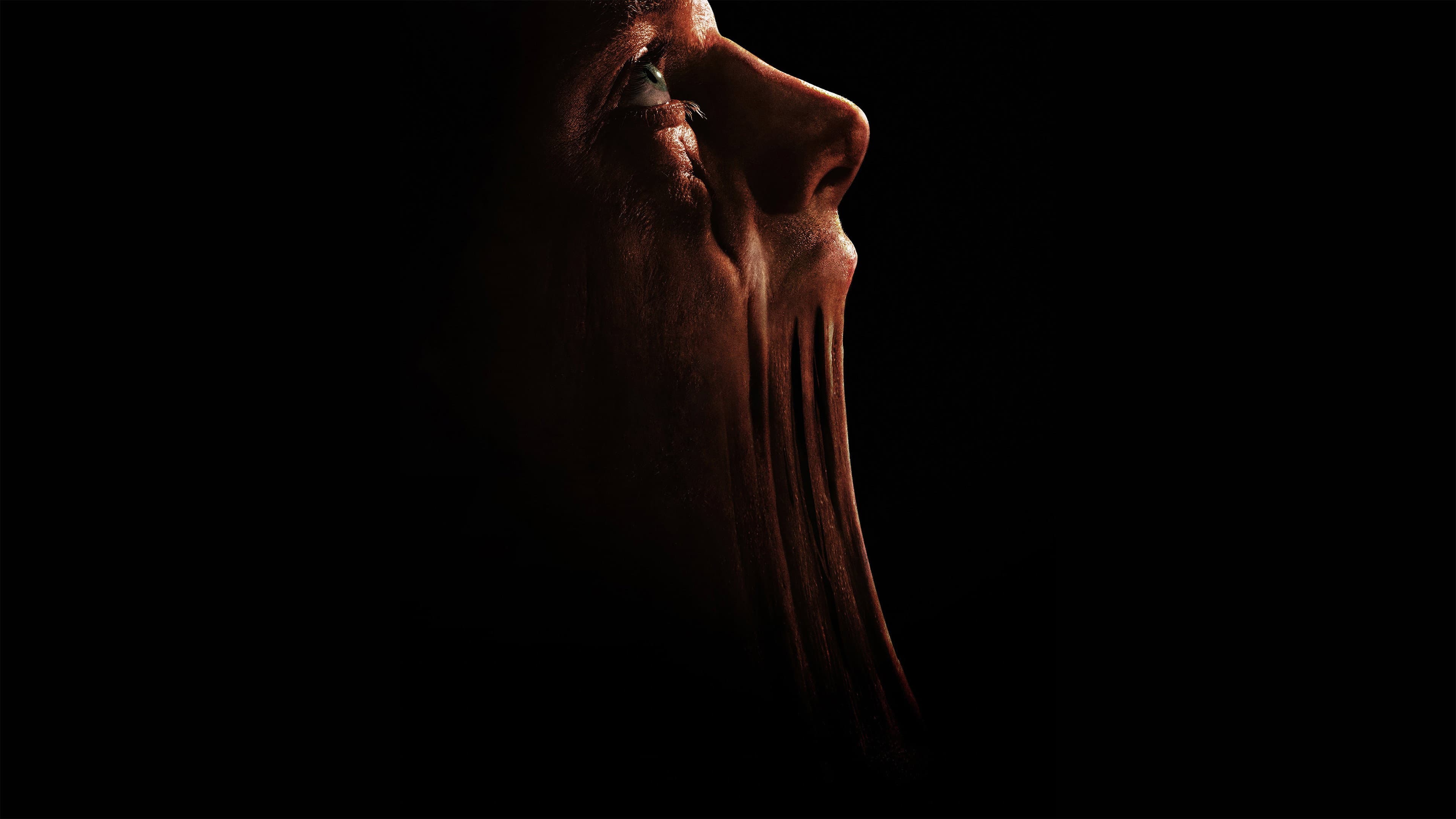
Nearly a year after it first hit theaters, "The Running Man" has settled into an unexpected second life. The Edgar Wright-directed adaptation, which opened on November 11, 2025, has become the kind of title that refuses to disappear quietly. It arrives on streaming this month with a fresh wave of attention, and a TMDb rating of 6.7 that suggests audiences are still arguing about exactly what they watched.
The premise is familiar to anyone who has read the 1982 Stephen King novel or caught the 1987 Arnold Schwarzenegger version. Ben Richards, a working-class father desperate to save his sick daughter, is convinced by the charming but ruthless producer of a deadly competition show to enter the game as a last resort. What follows is a survival spectacle broadcast to a nation addicted to watching him fall.
But Wright's version, with a screenplay that relocates the story to a near-future America saturated by streaming algorithms and engagement metrics, swaps the original's blunt satire for something more insidious. The result is a film that plays less like a chase movie and more like a diagnosis.
Glen Powell anchors the film as Richards, and it is the most physically demanding role of his career. Powell, who built his early reputation on charisma and a movie-star grin, spends much of the 133-minute runtime covered in grime, limping through industrial corridors, and saying almost nothing. It is a performance built on exhaustion rather than quips.
"Ben is not trying to win," Powell said at the film's premiere last fall. "He is trying to survive long enough to see his daughter again. Everything else is noise. That was the only thing I kept in my head the whole shoot."
Colman Domingo plays Bobby T., the producer who lures Richards into the game, and he is the film's most unsettling presence. Domingo, who has spent the past several years oscillating between Broadway prestige and awards-season heavies, brings a silky, almost paternal menace to a character who genuinely believes he is helping.
"He doesn't see himself as a villain," Domingo said in an interview. "He sees himself as a businessman giving people a chance. That is what makes him dangerous. He has convinced himself."
Lee Pace appears as Evan McCone, a Hunter with a strangely philosophical streak. Josh Brolin is Dan Killian, the network executive who watches the numbers climb. William H. Macy turns up as Molie, a technician with a conscience, while Michael Cera steals his scenes as Elton Perrakis, a twitchy analyst who treats human suffering as a content strategy problem. Emilia Jones and Daniel Ezra round out the cast as Amelia Williams and Bradley, two figures whose allegiances shift as the ratings spike.
Wright, working from a script that has been kept under wraps since production, directs with a precision that is both thrilling and cold. The film's central set piece - a sequence inside a derelict shopping mall where Richards improvises a weapon from shelving brackets - has already been dissected by fans frame by frame. But the director resists the urge to make the kills fun. Every death lands with a thud, not a punchline.
That approach has divided viewers. Some have praised the film for refusing to glorify the violence it depicts. Others have found the relentless grimness exhausting. The 6.7 rating on TMDb reflects that split: a solid score, but not a triumphant one.
What is not in dispute is the film's timeliness. Wright and his team began shooting in early 2024, before the current wave of AI-generated content and algorithmic recommendation debates fully engulfed the industry. But "The Running Man" now plays like a warning shot. The film's version of the competition is not a gladiator arena but a media ecosystem where suffering is content and defiance is a brand.
"The scariest thing about this story is that it is not really about the future," Wright said at a festival appearance earlier this year. "It is about the way we watch things now. The game is not the punishment. The audience is."
Whether that message lands or gets lost in the noise of a crowded release calendar is still an open question. But nearly eleven months after its debut, "The Running Man" has done something rare for a studio genre film: it has kept people talking. Not about whether it is good, but about what it means.
Powell, for his part, seems content to let the audience decide. "I just wanted to run," he said. "The rest is up to them."