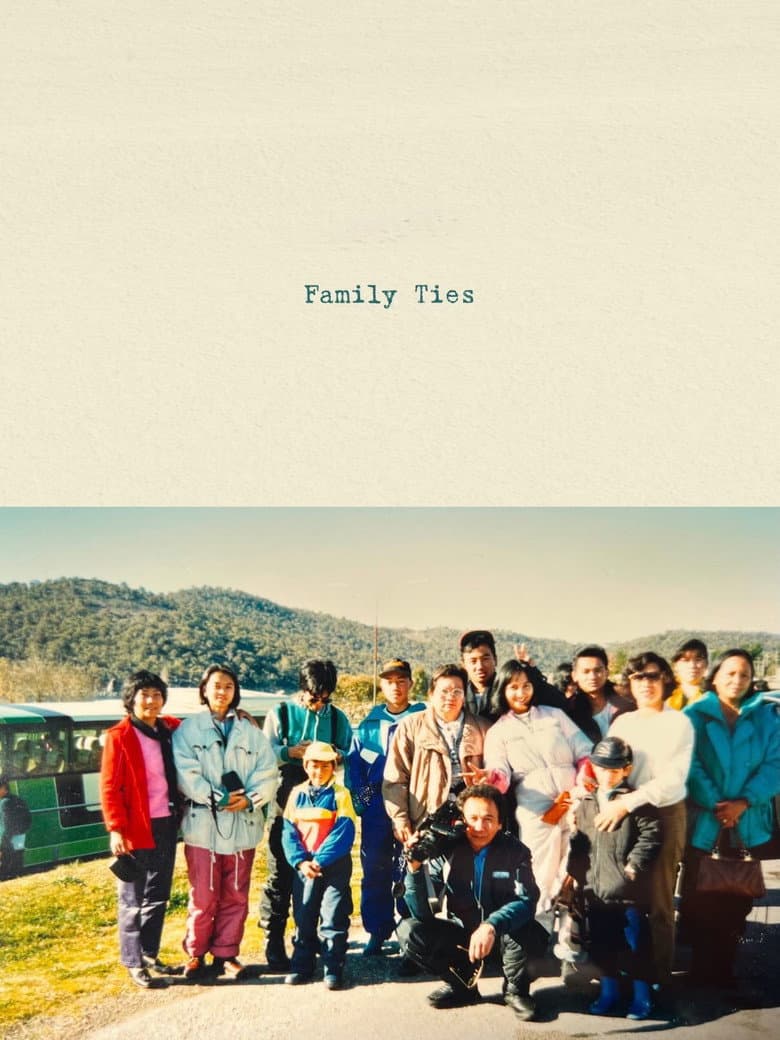
Some stories are shouted from the rooftops. Others are whispered over a shared cup of tea, between the clatter of Mahjong tiles and the quiet weight of decades. Family Ties, a ten-minute documentary that premieres today, August 20, 2026, belongs firmly to the latter category. It is a small film with an enormous, beating heart, one that trades cinematic spectacle for the more profound drama of memory, migration, and the stubborn persistence of love across generations.
Release Date & Where to Watch
The film officially lands today, August 20, 2026. Given its intimate scope and modest runtime, Family Ties isn’t headed for a sweeping multiplex takeover. Instead, the documentary is making its debut in the more curated spaces of the film festival circuit and select arthouse cinema showcases, with a simultaneous VOD release planned for later in the fall. For those eager to catch it on opening day, your best bet is to check local independent theater listings or keep an eye on major streaming platforms’ documentary sections, where it’s expected to land within the next few weeks. It’s a short film, but it’s crafted with the kind of precision that rewards a dedicated, attentive viewing - ideally in a quiet room, perhaps with a loved one nearby.
Cast & Crew
At the helm is Tigerlily Henderson-Smith, a first-time director whose name might be unfamiliar but whose vision is unmistakably personal. She takes on the dual role of filmmaker and on-screen guide, navigating the narrative with the curiosity of a journalist and the tenderness of a granddaughter. Her mother, Ellen Henderson-Smith, also appears on camera, adding a crucial middle link in the chain of generational storytelling.
But the true stars, the absolute anchors of this piece, are Elenea and Manuel Papelera. They are the director’s “Lola” and “Lolo,” the Filipino terms for grandmother and grandfather, and they are the soul of the project. Their weathered faces, their measured voices, and their unflinching recollections transform what could have been a simple home movie into a vital piece of living history. The film is, in essence, a three-way conversation - between director and subject, between past and present, and between two worlds. There are no action heroes here, no A-list marquee names; the star power is raw, authentic, and drawn directly from lived experience.
Story & What to Expect
Do not expect a glossy historical reenactment. Family Ties is a documentary built on the quiet power of testimony. The film’s structure is elegant in its simplicity. Henderson-Smith sits down with her grandparents, and she lets them talk. What emerges is a harrowing and deeply moving oral history.
The Papeleras grew up in the Philippines at the end of World War II and in its immediate aftermath, a period defined by the brutal Japanese occupation. They don’t speak in grand geopolitical terms; they speak in fragments of memory. The fear of air raids. The scarcity of food. The strange, unsettling quiet of a world turned upside down. They recall the chaos of liberation and the arduous task of rebuilding lives from rubble. This isn’t a history lesson filtered through textbooks; it’s history as it was felt on the skin, in the stomach, and in the heart.
The documentary then follows the couple’s monumental decision to leave their homeland. Picking up everything they knew, they immigrated to Australia, trading the familiar warmth of the Philippines for the unknown.
Expect a visceral, unvarnished look at the immigrant experience. The film doesn’t flinch from the laborious jobs they had to take, the long hours, the physical toll, and the quiet humiliations of starting over in a new country where you didn’t speak the language or understand the customs. It’s a story of bone-tired exhaustion, but also of unbreakable resolve. Elenea and Manuel worked not just to survive, but to give their children and grandchildren a foundation they never had. This central act of sacrifice is the film’s quiet engine, and it’s rendered with heartbreaking clarity.
As the conversation unfolds, the film shifts. The initial interview becomes a journey of discovery for Henderson-Smith. She begins to see her own life, her own identity, through the prism of her grandparents’ sacrifices. The footage of their early struggles intersects with present-day scenes of family gatherings, where the sound of Mahjong tiles clicking together serves as a rhythmic heartbeat. The film’s final note is one of resilience. After strife spanning two countries and three generations, the Papelera family is still here - gathered around a table, arguing playfully over a game, laughing, and living. The director’s connection to her Filipino heritage is no longer an abstract concept but a tangible, felt reality.
Why It's Worth Watching
In a cinematic landscape obsessed with billion-dollar franchises and ever-larger spectacles, Family Ties is a radical act of intimacy. It’s a reminder that the most extraordinary stories are often the ones we overlook in our own living rooms. Henderson-Smith has crafted a film that is both a personal keepsake and a universal meditation on family, identity, and the immigrant’s burden and gift.
Its ten-minute runtime is deceptively brief; within that short span, it manages to encapsulate a lifetime of struggle and triumph. For anyone who has ever wondered about their own grandparents’ past, or grappled with the complexities of their own cultural identity, this film will resonate on a deep level. It is specific to the Papelera family’s experience, yet speaks to the shared human condition. It’s about remembering where you came from, honoring the sacrifices that made your present possible, and finding yourself in the stories of those who came before you. It is a small, quiet gem, and absolutely worth seeking out.