There is a particular kind of quiet that settles over a room when two sisters understand each other without speaking. Georgia Oakley builds her entire film around that quiet. Sense and Sensibility, which opened in theaters on September 23, runs 132 minutes, and somehow finds room in every one of them for the small negotiations of love, money, and loyalty that Jane Austen first mapped more than two centuries ago. Oakley, whose previous work established her as a patient observer of interior lives, takes on the Dashwood family with a cast that suggests Hollywood has finally stopped treating Austen as a museum piece.
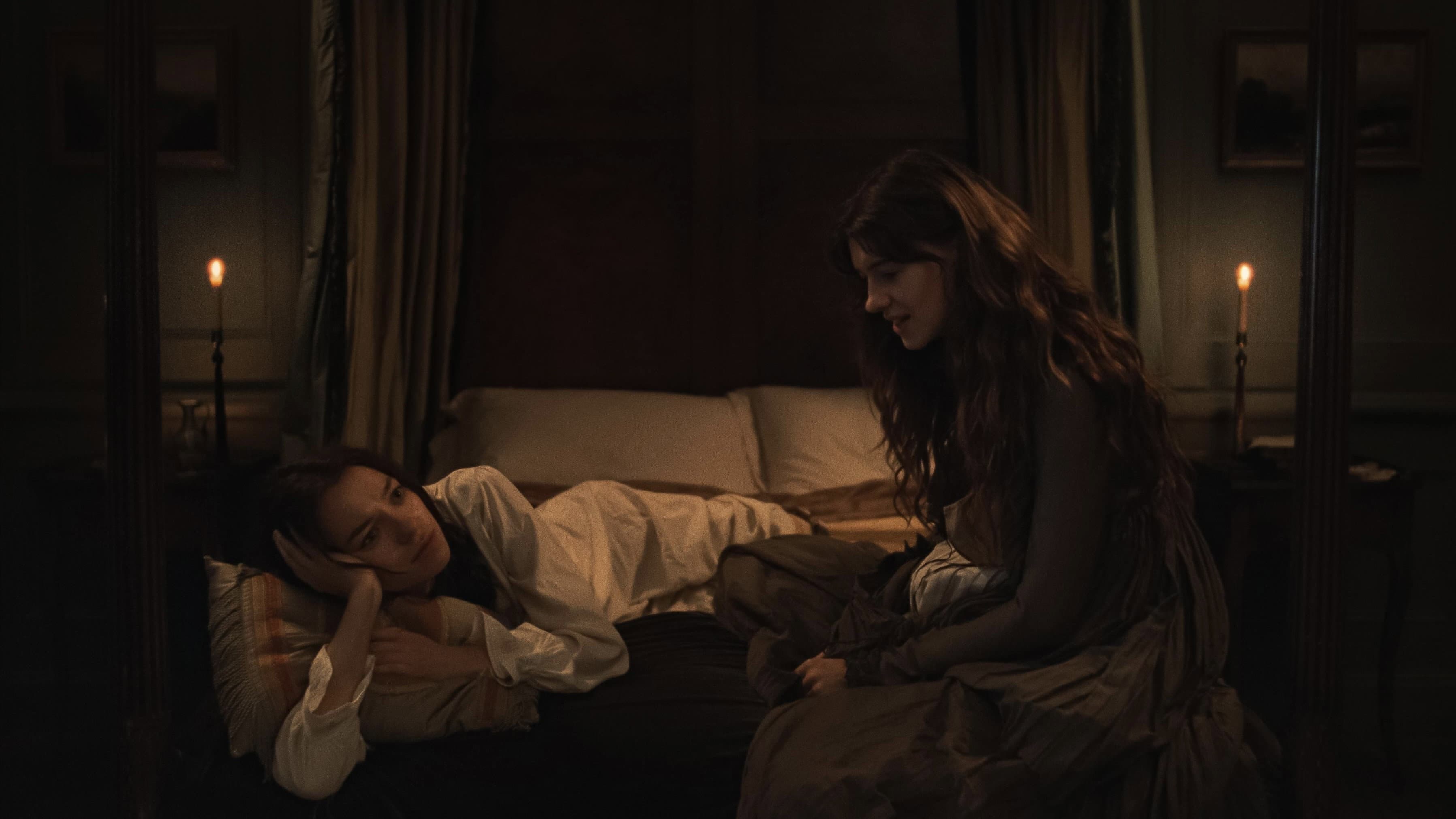
Daisy Edgar-Jones plays Elinor, the elder sister who feels everything and shows nothing. It is a performance built on restraint, on the flicker of a jaw and the half-second delay before a polite answer arrives. Opposite her, Esmé Creed-Miles plays Marianne, all impulse and open grief, the sister who believes a heart should be worn where everyone can see it. The contrast is the engine of the story, and both actors understand that the tension between them is not a disagreement but a language. They argue the way siblings argue, with shorthand and old wounds and an unspoken agreement that the argument is survivable.
Around them, Oakley assembles a supporting cast that could carry a film on its own. Caitríona Balfe gives Mrs. Dashwood a weary dignity, a woman watching her daughters navigate a world that offers them very little room. Bodhi Rae Breathnach plays young Margaret with the sharp-eyed curiosity of a child who misses nothing. Fiona Shaw, as Mrs. Jennings, supplies the film's best comic timing; she is nosy, generous, and utterly without malice, and Shaw plays her like a woman who has decided that other people's business is the finest entertainment available.
Then there is the question of the men. George MacKay's Edward Ferrars is awkward in the way decent people are awkward when they cannot say what they mean. Frank Dillane's John Willoughby arrives with the magnetism the role demands, and Dillane wisely lets the charm curdle slowly rather than announcing villainy upfront. Herbert Nordrum's Colonel Brandon is the film's stillest presence, a man whose steadiness could read as dullness in lesser hands. Nordrum makes it feel like shelter.
Oakley, working from a screenplay that trusts the audience to keep up, resists the urge to modernize the dialogue or wink at the camera. The costumes and estates are rendered with care but not fussiness. What she modernizes instead is the emotional access. This is a version of Austen where the characters cry when they need to, where men's silences are examined rather than excused, and where the economics of marriage are never far from anyone's mind. The film understands that the Dashwood women are not merely unlucky in love. They are unlucky in law, and every romantic decision is also a financial one.
The result is a film that feels both faithful and alive, the kind of literary adaptation that earns its runtime. At 132 minutes, Sense and Sensibility allows its subplots room to breathe, particularly the slow-burning connection between Elinor and Edward, which unfolds mostly in glances and interrupted conversations. Oakley stages the great emotional set pieces, the letter, the rain, the long walk, without inflating them. She trusts that an audience can feel a heart break in a close-up.
Audiences have responded warmly. TMDb currently logs the film at 7.435 out of 10, a respectable figure for a period drama in a market crowded with spectacle. That number will likely climb as word of mouth spreads, because this is the sort of film people recommend to a specific friend, the one who will appreciate a movie about sisters who love each other even when they cannot agree on how to live.
What Sense and Sensibility offers in 2026 is not nostalgia. It is recognition. The Dashwood sisters are navigating a world that tells them their value is tied to their prospects, and they are doing it with humor and stubbornness and the occasional collapse. Oakley never lets the audience forget the stakes, but she also never lets the film become a lecture. It is charming, it is witty, and it is deeply, almost uncomfortably relatable. Some stories keep getting told because we keep needing them, and this one has found the right people to tell it again.