Almost a year after it first hit theaters, Legend of the White Dragon remains one of 2026's strangest Hollywood stories - a superhero fantasy that arrived with a fraction of the marketing noise surrounding the year's tentpoles, yet refused to disappear quietly. Released on August 28, 2026, and directed by Aaron Schoenke, the 97-minute action fantasy has settled into an unusual afterlife on streaming, where it keeps finding viewers drawn in by word of mouth and by the poignancy surrounding its star, Jason David Frank.
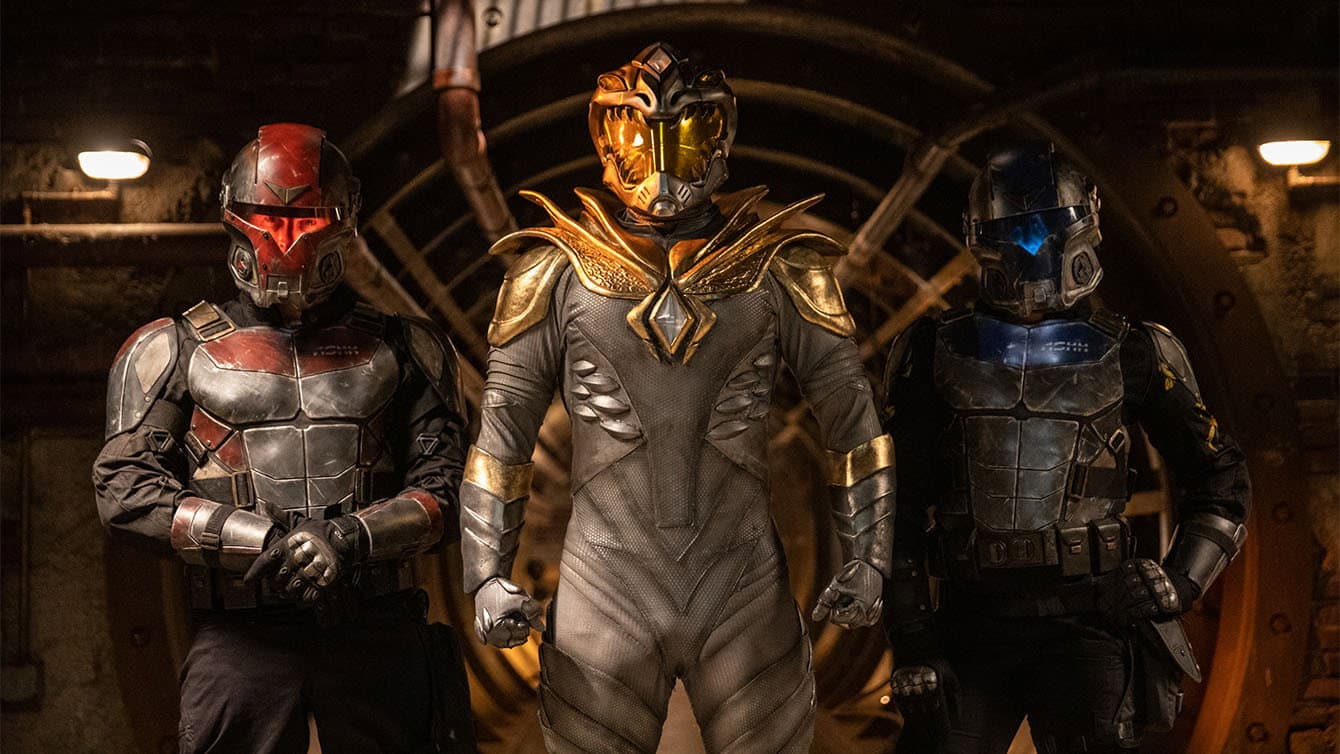
The film centers on Erik Reed, the fugitive hero behind the White Dragon mantle. Forced into the shadows and hunted by forces he can't fully identify, Erik must clear his name if he ever hopes to reunite with his family. Standing between him and that reunion is a mysterious villain whose singular obsession is the total destruction of the White Dragon - not merely the man who wears the title, but the symbol itself. It's a familiar engine for a superhero narrative, but Schoenke, working with a modest canvas, leans into the pulp intensity of it rather than the scale.
Frank, a figure whose screen legacy was cemented decades earlier in the Power Rangers franchise, plays Erik with a weariness that sits interestingly against the character's physical ferocity. This was one of his final film roles, and that knowledge inevitably colors the performance. There's an elegiac quality to the quieter scenes - Erik's longing for his family registers less as plot mechanics and more as genuine ache. The film was dedicated to his memory, and audiences have responded to that thread with a devotion that ratings alone don't capture.
Schoenke pulls double duty, directing and appearing as Jai, also known as Dragon Prime, a role that positions him opposite Frank's Erik in several of the film's most charged confrontations. It's a pairing that gives the movie its dramatic spine: two men who understand the Dragon's power, divided over what it should mean. Jason Faunt appears as Connor, while Rachele Brooke Smith plays Iris, a presence that grounds Erik's personal stakes. Michael Madsen brings his trademark gravel as Max Reed, and David Ramsey lends mayoral weight as Trevon Sterns, whose political stakes intersect with the city's supernatural disorder. Mark Dacascos turns up as Xang, and Andrew Bachelor rounds out the cast as U.R.I.
Critical and audience reception has been notably split from the film's passionate core following. On TMDb, the movie holds a 5.618/10 rating, while IMDb users have placed it at 5.6. Those numbers tell a predictable story: mixed notices, a niche identity, and a movie that was never going to win over the broader superhero audience. Yet in the months since release, Legend of the White Dragon has functioned less like a box-office contender and more like a cult object in slow formation - the kind of film that gets discovered late at night, passed between friends, and defended more fiercely than its aggregate scores might suggest.
What makes it worth examining a year on isn't the plot machinery, which is sturdy and serviceable, but the way it functions as a farewell. Frank's involvement gives every fight scene an added charge and every moment of stillness a weight the script alone couldn't supply. Schoenke, who has spent years in the independent genre space, directs with obvious affection for the material and for his star, staging the action with a scrappy energy that suits a movie about a man who has lost everything except his ability to keep moving.
Whether Legend of the White Dragon endures as more than a footnote depends, ultimately, on how viewers continue to receive it. Its mythology is broad enough to support sequels the film never got to build toward, and its central conflict - a man trying to reclaim his name while something darker tries to erase it entirely - carries a resonance that outlasts its runtime. For now, it stands as a 97-minute snapshot of an actor saying goodbye to a genre that shaped him, and a director honoring that legacy with a story about heroes who refuses to stay buried. In a year crowded with capes and multiverses, that's a modest legacy. It's also one that a devoted audience has clearly decided is worth keeping alive.