Deep in the far reaches of the galaxy, there exists a threat far more terrifying than any black hole or supernova: the straight white maliens. And on September 11, 2025, a scrappy Australian animated gem dared to launch a full-frontal assault on heteronormative space opera tropes with Lesbian Space Princess. Now, almost a year after its initial release, the film is finding its cult footing, and it’s high time we dissect why this gloriously chaotic, proudly queer adventure is the most fun you can have with an 87-minute runtime.
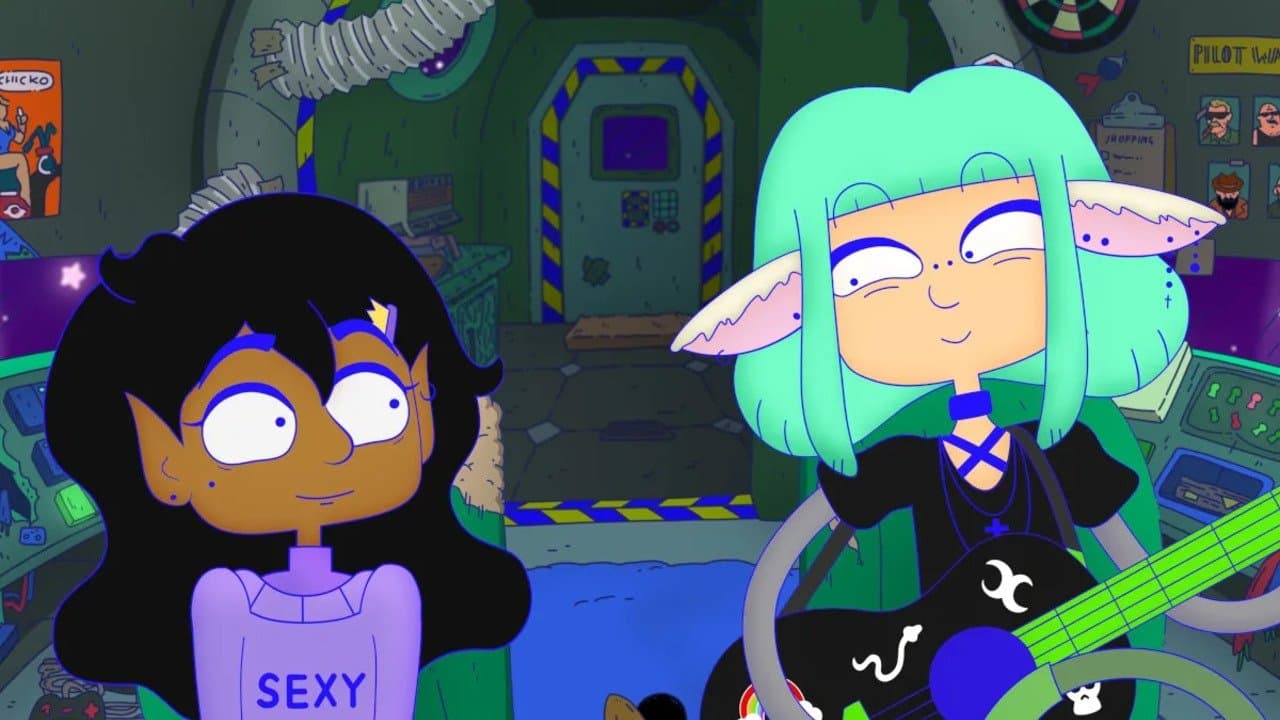
The premise alone is a pitch-perfect hook: Princess Saira (voiced with effervescent charm by Shabana Azeez) has spent her entire life in the gilded, anxiety-free bubble of her home planet, Lesbos. She’s the heir to a throne she never wanted, more interested in poetry and comfort than combat. But when her ex-girlfriend, the tough-as-nails bounty hunter Willow (Gemma Chua-Tran), is kidnapped by the aforementioned "straight white maliens" - an alien race so aggressively basic that they weaponize corporate synergy and pumpkin spice - Saira must venture into the perilous void to save her.
It’s a classic "fish out of water" narrative, but the water is a cesspool of toxic masculinity, and the fish is a deeply sheltered lesbian princess armed with, essentially, a very good emotional support system. Directors Emma Hough Hobbs and Leela Varghese (in their feature directorial debuts) have crafted a world that feels both wildly inventive and sharply satirical. The animation style is deliberately scrappy and vibrant, wearing its indie budget on its sleeve like a badge of honor. This isn’t the polished sheen of a Pixar release; it’s the kind of DIY energy that pulses with a distinctive voice.
Much of the film’s comedic freight is carried by the voice cast, who clearly understood the assignment. The standout is Richard Roxburgh as the Problematic Ship - a sentient vessel with the sleazy, condescending cadence of a mid-level marketing executive who just discovered "wokeism." His interactions with Saira provide the film’s central comedic tension: she wants to be empathetic; he wants to mansplain how to dock. Forced to co-exist, their bickering forms the heart of the film’s message about cosmic self-worth.
Joining them is a supporting roster of queer icons, including Drag Race Down Under’s Kween Kong as the stoic Blade and Jordan Raskopoulos as the delightfully overbearing Queen Leanne, who - alongside Madeleine Sami’s Queen Anne - makes up Saira’s two mothers. The film doesn’t just feature a queer romance; it normalizes a universe where sapphic royalty is the standard, and the "other" is the aggressively straight alien menace.
On paper, this is a recipe for a home run. In practice, however, it’s a slightly messy but enormously lovable endeavor. The film’s current TMDb rating sits at a middling 4/10, a figure that feels less like an accurate measure of quality and more like a litmus test for who this movie was made for. This is not a film for everyone. It’s aimed squarely at a specific, queer, internet-literate audience that will howl at references to "kissing in the dark" and gag at the alien’s obsession with "millennial networking events."
The pacing is frantic, often feeling like a rapid-fire succession of sketches rather than a tightly wound plot. The central romance between Saira and Willow is, at times, thinner than the ship’s hull, and Willow herself is sidelined for large swaths of the story, relegated to screaming for help from a glowing cage. But to focus on these flaws is to miss the point entirely. Lesbian Space Princess is not a sterile product designed for mass appeal; it’s a cathartic scream of a movie.
That rawness is precisely its power. The film’s monster design - the maliens themselves - is a grotesque parade of dad-bod silhouettes and bad suits, a visual representation of patriarchal conformity. The movie weaponizes comedy to dismantle these structures, using absurdity to expose how ridiculous the default "straight until proven otherwise" setting of most media is.
During a recent interview to mark the film's home-video release, Azeez spoke about the project's longevity. "We knew we were making something niche," she said. "But niche doesn't mean small. It means specific. It means we made this for the person who needed to see a princess save her own damn ex-girlfriend without waiting for a prince."
As we approach the end of 2026, Lesbian Space Princess stands as a testament to the power of specific storytelling. It’s a film that will likely find its audience more and more over time, growing from a minor curiosity into a midnight-movie staple for queer audiences. It’s chaotic, it’s cheap-looking in all the right ways, and it refuses to apologize for its own existence. In a cinematic landscape saturated with safe bets, this is a gamble that pays off in pure, unadulterated weirdness. It’s not perfect, but it’s a perfect riot.